

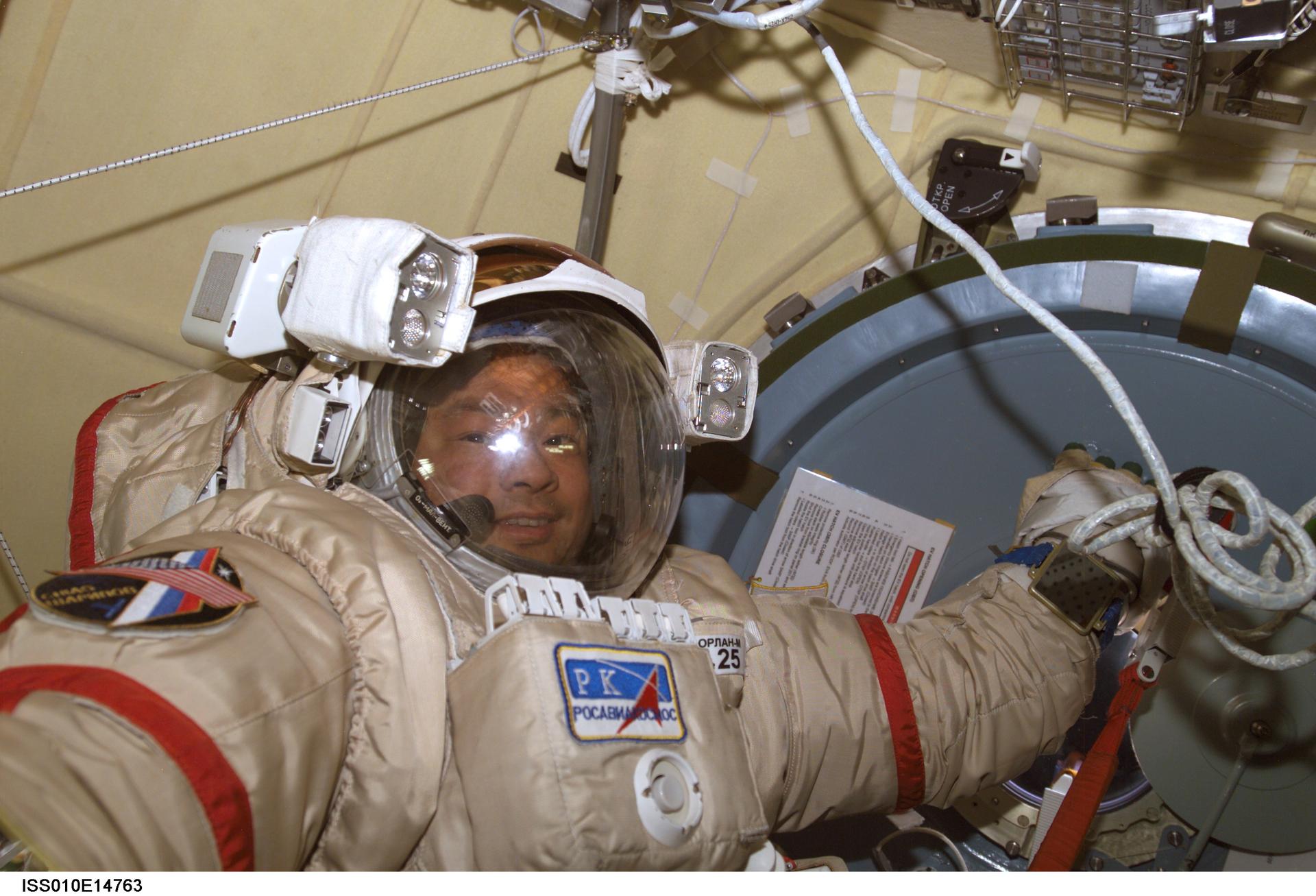
The strangest thing about the smell of space is that no one can smell space directly. Vacuum does not carry scent molecules to a human nose, and an astronaut outside the International Space Station is sealed inside a suit, breathing supplied oxygen. Yet astronauts keep describing the same odd moment after a spacewalk: the hatch closes, the airlock repressurizes, helmets come off, and something sharp and metallic seems to have followed them inside.
The description has become famous because it sounds so earthly and so impossible at once. Astronauts have compared the odor to seared steak, hot metal and welding fumes. NASA astronaut Don Pettit helped popularize that comparison in an archived NASA Science feature on the smell of space, where the scent was treated as one of the more surprising sensory details of life in orbit.
That does not mean space itself is fragrant in the way a forest, a laboratory or a machine shop can be. The smell is reported after exposure to the space environment, when materials from the outside of a suit, tool or airlock re-enter a pressurized cabin. It is less like sniffing the universe and more like smelling the chemical aftermath of equipment that has been sitting in vacuum, sunlight, radiation and extreme temperature swings.
The airlock is where the smell appears
A spacewalk, or extravehicular activity, is the work astronauts do outside a spacecraft. NASA explains on its spacewalks overview that astronauts leave the safety of the station or spacecraft to install, maintain or repair hardware, carrying their own pressure, oxygen, cooling and communications in the spacesuit.
For the astronaut, the smell arrives only after the return. During the EVA, the suit is a small spacecraft. The astronaut is not tasting the open vacuum or breathing anything from outside. Once the astronaut comes back through the airlock and pressure is restored, surfaces that were outside are suddenly surrounded by cabin air again. That is when the odor can be noticed.
This timing explains why the reports so often mention suits and hatches. The scent is associated with the gear that has been outside, not with open space acting like an atmosphere. In ordinary life, smell feels immediate and environmental. In orbit, it is mediated by hardware.
Why metal and welding make sense
The welding comparison is not random. Low Earth orbit is chemically harsh. Atomic oxygen, ultraviolet radiation, charged particles and vacuum can alter exposed materials. NASA Glenn Research Center’s atomic oxygen research describes atomic oxygen as a major environmental factor in low Earth orbit, capable of reacting with spacecraft materials and eroding surfaces.
That does not prove one single molecule causes the spacewalk smell. It gives a plausible backdrop. Materials on the outside of a suit or station are exposed to an environment that can break bonds, oxidize surfaces and create reactive residues. When those materials come back into air, some of the products may be volatile enough for the human nose to register.
The scent descriptions also fit a broader pattern of high-energy chemistry. Hot metal, welding fumes and seared meat all involve heat, oxidation and complex mixtures of compounds rather than a single simple odor. Astronauts are reaching for analogies, not laboratory identifications.
What astronauts are really reporting
Human smell is a comparison engine. A person does not identify an unfamiliar odor by naming its molecular formula. They match it to memory: a workshop, a kitchen, a campfire, a hospital corridor, a struck match, a piece of machinery. That is why one astronaut may say burnt metal while another says steak or gunpowder.
The reports still matter because they are repeated. Scott Kelly, who spent nearly a year aboard the International Space Station, said during a public question session that the smell after opening a hatch reminded him of burning metal. Other astronauts have offered versions of the same metallic, scorched comparison after EVA equipment returns inside.
There are also ordinary station odors that should not be confused with the spacewalk smell. The ISS is a sealed workplace with people, food, equipment, cleaning products and waste systems. Astronauts have described station air in many different ways. The spacewalk scent is more specific: the sharp smell that seems to cling to gear after it has been outside.
The suit is a tiny spacecraft
Spacesuits make the sensory puzzle possible. NASA’s spacesuits material describes them as protective systems that provide pressure, oxygen, cooling and micrometeoroid protection while astronauts work beyond a spacecraft. During a spacewalk, the suit is not clothing in the usual sense. It is a wearable vehicle.
That means it has outer layers, seals, gloves, bearings, metal components, connectors and tools that can all be exposed to the orbital environment. The suit’s exterior may pick up or generate trace chemistry that the astronaut cannot perceive until the suit is back inside. Once the airlock is pressurized, the human nose enters the story.
The same logic applies to tools. A wrench, tether or bag used outside the station can return with its surfaces altered or carrying residues. Astronauts do not need much material for an odor to be noticeable. Human smell can be sensitive to tiny concentrations, especially when the scent is unfamiliar in a clean, enclosed space.
Why NASA cared enough to recreate it
The smell became more than a curiosity because NASA reportedly explored reproducing it for training. The idea was not to make astronaut training theatrical. It was to make simulations more complete. A person preparing for space may benefit from knowing that some sensory details will not match ordinary expectations.
Several accounts of that effort trace the work to British fragrance chemist Steve Pearce, whose team attempted to recreate the odor based on astronaut descriptions. Smithsonian Magazine summarized the project, noting that the exercise grew out of repeated astronaut reports rather than from anyone literally collecting a jar of space.
That caveat is important. A training scent is an interpretation of testimony. It is not proof that space has a single universal smell. But it shows that the reports were consistent and vivid enough to be treated as a real part of the spaceflight experience.
A smell made by the boundary
The most accurate way to understand the scent is as a boundary phenomenon. It appears where vacuum meets air, where exposed materials return to a pressurized cabin, and where human senses encounter chemistry made in an environment that has no air of its own.
That also explains why the phrase “space smells” is both irresistible and slightly misleading. Space does not smell in the open-nose way Earth does. But things that have been in space can carry a smell back to the only place an astronaut can detect it.
There is a lovely contradiction in that. Space is often imagined as silent, empty and sterile. The astronaut’s report makes it sensory and physical. After hours outside the station, the suit comes back carrying a faint trace of the environment it has crossed: scorched, metallic, hard to name, and strange enough that the people trained to be precise still reach for steak, hot metal and welding smoke.