

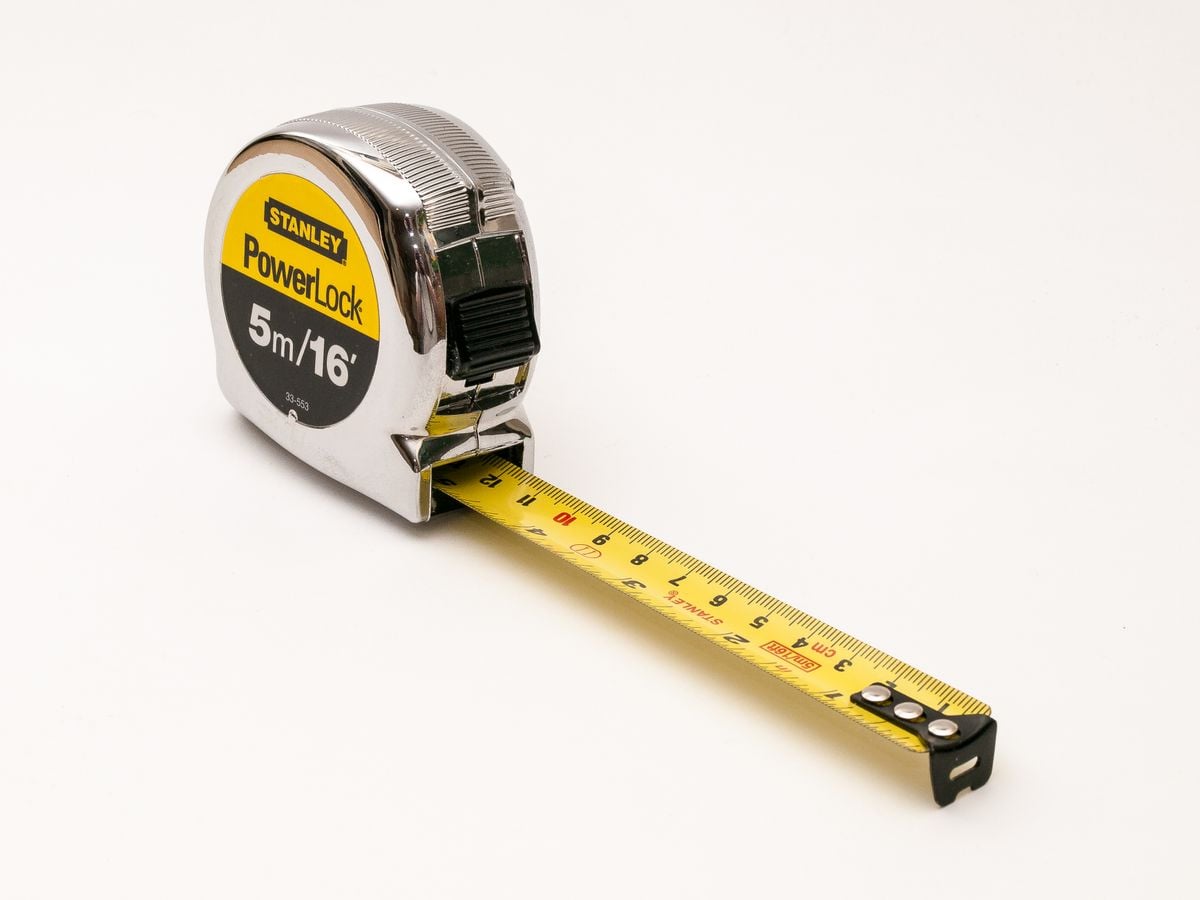
Canada’s first satellite carried an ingenious answer to a basic packaging problem. Alouette I needed long antennas to investigate the ionosphere, but those antennas had to fit inside a rocket for launch. Metal strips stored in coils could extend once the spacecraft reached orbit, taking a useful structural shape as they emerged.
Launched in 1962 with a designed lifetime of one year, Alouette transmitted useful data for more than ten years, according to the Canadian Space Agency’s anniversary account. Its longevity is striking, but the antenna mechanism is an equally revealing part of the mission: a large structure in use could be a compact package during transport.
A first satellite, launched on an American rocket
Alouette I launched on 29 September 1962 from Vandenberg Air Force Base in California aboard a Thor-Agena B. According to the Canadian Space Agency’s historical timeline, Canada became the third nation, after the Soviet Union and United States, to design and build its own satellite.
The milestone was in building spacecraft, not launching them: the vehicle that delivered Alouette to space was American.
The satellite operated around 1,000 kilometres above Earth. Its target was the ionosphere, a region of the upper atmosphere containing charged particles that can affect radio propagation. Observing that region from above offered a perspective different from measurements made entirely from the ground.
The antennas were scientific equipment as well as deployed structures.
Stored like a measuring tape
The National Research Council of Canada’s history credits inventor George Klein with developing the storable, tubular, extendible member, or STEM, antenna technology. Originally designed for military purposes, it was adapted for Alouette, which carried four of these extendible antenna elements.
NRC compares their rolled storage to a carpenter’s measuring tape: a thin metal strip occupies little room when coiled and becomes a much longer component when released through a controlled mechanism.
A NASA technical reference describing Alouette’s antennas supplies the next step. The strips passed through guides and curled into tubes as they unwound. The sounding system formed two crossed dipoles, approximately 150 feet and 75 feet from tip to tip, or about 46 and 23 metres.
Those figures are the tip-to-tip span of each dipole, not the length of individual elements. They show how a compact spacecraft could support a much wider electrical structure once it was safely beyond the launch vehicle.
A change of shape solved two different requirements
Launch and operation impose different demands on an antenna. During ascent, it must remain packed and supported. In orbit, it must extend into a configuration that can do its electrical job. A design that only satisfies one phase cannot complete the mission.
The STEM approach used the material’s changing cross-section to bridge those demands. A strip stored on a spool became a tubular member after deployment. The familiar tape-measure comparison captures the compact storage; the tubular form explains why the deployed object was more than a loose ribbon.
NRC records the technology’s use on later Canadian satellites and on the Mercury, Gemini and Apollo programmes. Its significance therefore extended beyond Alouette itself. A mechanism developed for a particular deployment problem could become useful wherever a spacecraft needed a long member that occupied little launch volume.
Small in the rocket did not have to mean small in orbit.
The long life created an extensive scientific record
The CSA’s Alouette data archive identifies the swept-frequency topside sounder as the mission’s best-known experiment. Its records, called ionograms, captured information about the ionosphere below the satellite. They were radio measurements, rather than ordinary camera photographs.
The archive reports more than a million ionograms in the first three years and about two million after ten years. Other investigations measured very-low-frequency signals, cosmic noise and energetic particles. The mission ultimately contributed to more than 300 papers in refereed scientific journals.
A long operational life can deepen a mission’s value because the environment being measured also changes with time. Repeated observations provide a record that a brief demonstration cannot supply. They also create a continuing responsibility to preserve the observations in a form that later researchers can use.
The data needed a second kind of preservation
The CSA’s account of its early space programme explains that the radio-derived ionograms were recorded as photographic images on film. The surviving archive therefore links a spacecraft in orbit to physical recording media on Earth.
The same challenge runs through Space Daily’s account of the lunar tapes restored inside a former McDonald’s at NASA Ames. A successful observation and a usable long-term archive are separate achievements. Old records can retain scientific value even after the machinery and media that produced them have become unfamiliar.
Alouette’s story contains both forms of engineering. Its antenna system turned a tightly packed launch component into a long instrument in space. Its observers and archivists turned fleeting radio returns into a record that outlasted the original mission. The satellite exceeded its planned lifetime, while the questions its data could support extended further still.