
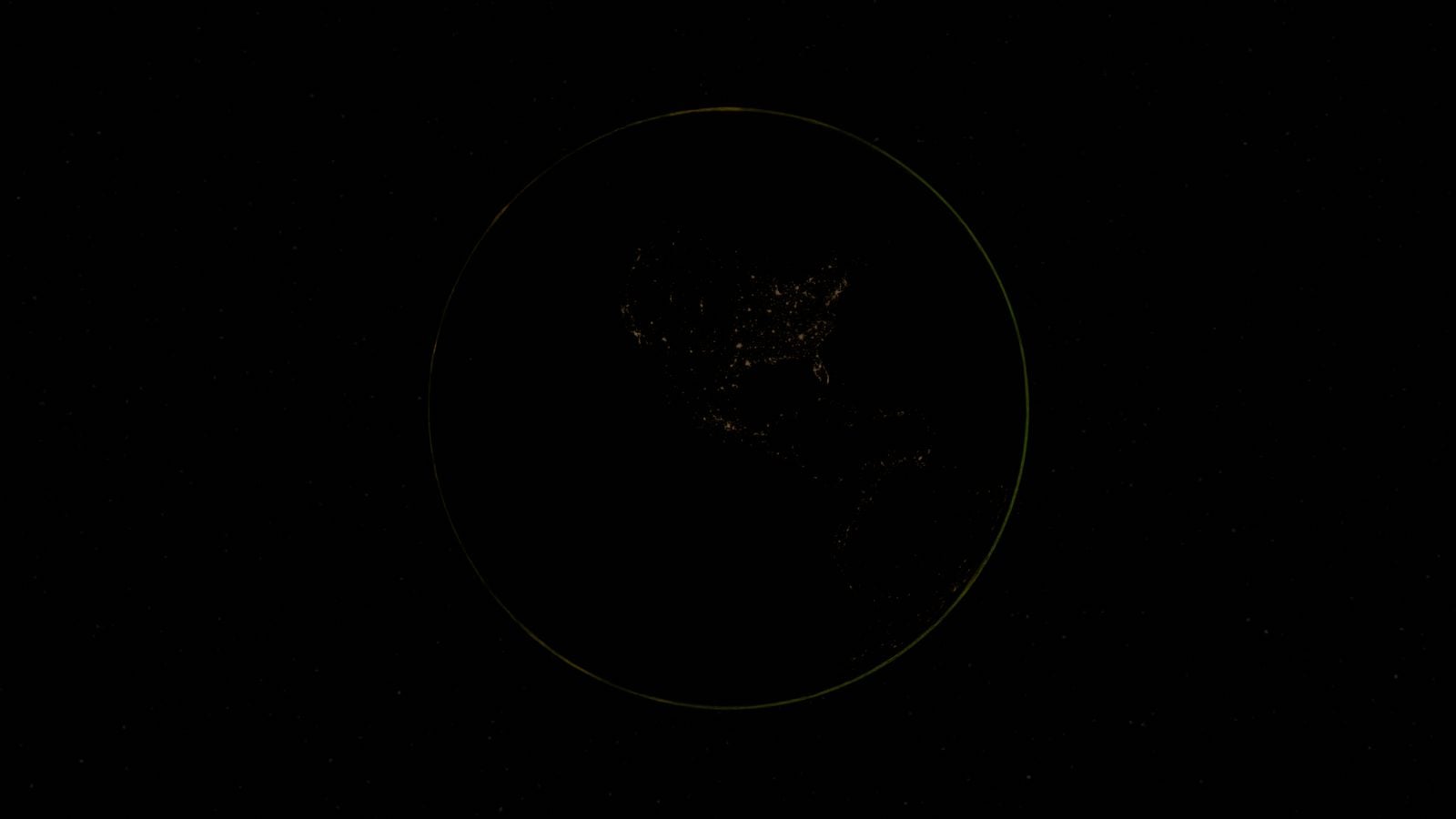
The Federal Communications Commission has authorized radio operations for Eärendil-1, a demonstration satellite built around a reflector measuring roughly 18 metres by 18 metres. If it reaches orbit and unfolds successfully, the spacecraft will redirect a moving patch of sunlight onto the dark side of Earth.
The distinction between this satellite and the system behind it matters. According to SpaceNews’ report on the authorization, the decision applies to Eärendil-1. It is not approval for the proposed constellation of as many as 50,000 reflectors that has alarmed astronomers.
Nor would Eärendil-1 be the first spacecraft ever built to reflect sunlight towards Earth. In 1993, Russia’s 20-metre Znamya 2 mirror briefly swept a patch of reflected sunlight across Europe. What is new is the attempt to turn orbital illumination into a commercial service operating at enormous scale.
What Eärendil-1 is supposed to do
Eärendil-1 is designed to deploy a sheet of reflective material in low Earth orbit and steer the reflected sunlight towards a selected location below. Seen from the ground, it would resemble an unusually bright moving object crossing the twilight sky while its beam traces a temporary illuminated area across the surface.
Reflect Orbital presents the technology as sunlight on demand. Its proposed uses include extending the operating hours of solar farms, lighting construction or agricultural work, and providing illumination during emergencies in places where conventional power is unavailable.
The company has described illuminated areas roughly five to six kilometres wide, with brightness controlled according to the customer’s needs. It says each use would be requested, approved by the relevant local authority and confined to a specified location.
The first mission is therefore an engineering and measurement test. It must show that a membrane this large can survive launch, unfold in orbit, hold its shape and direct a predictable beam while the spacecraft travels several kilometres every second.
Why one bright mirror attracts so much attention
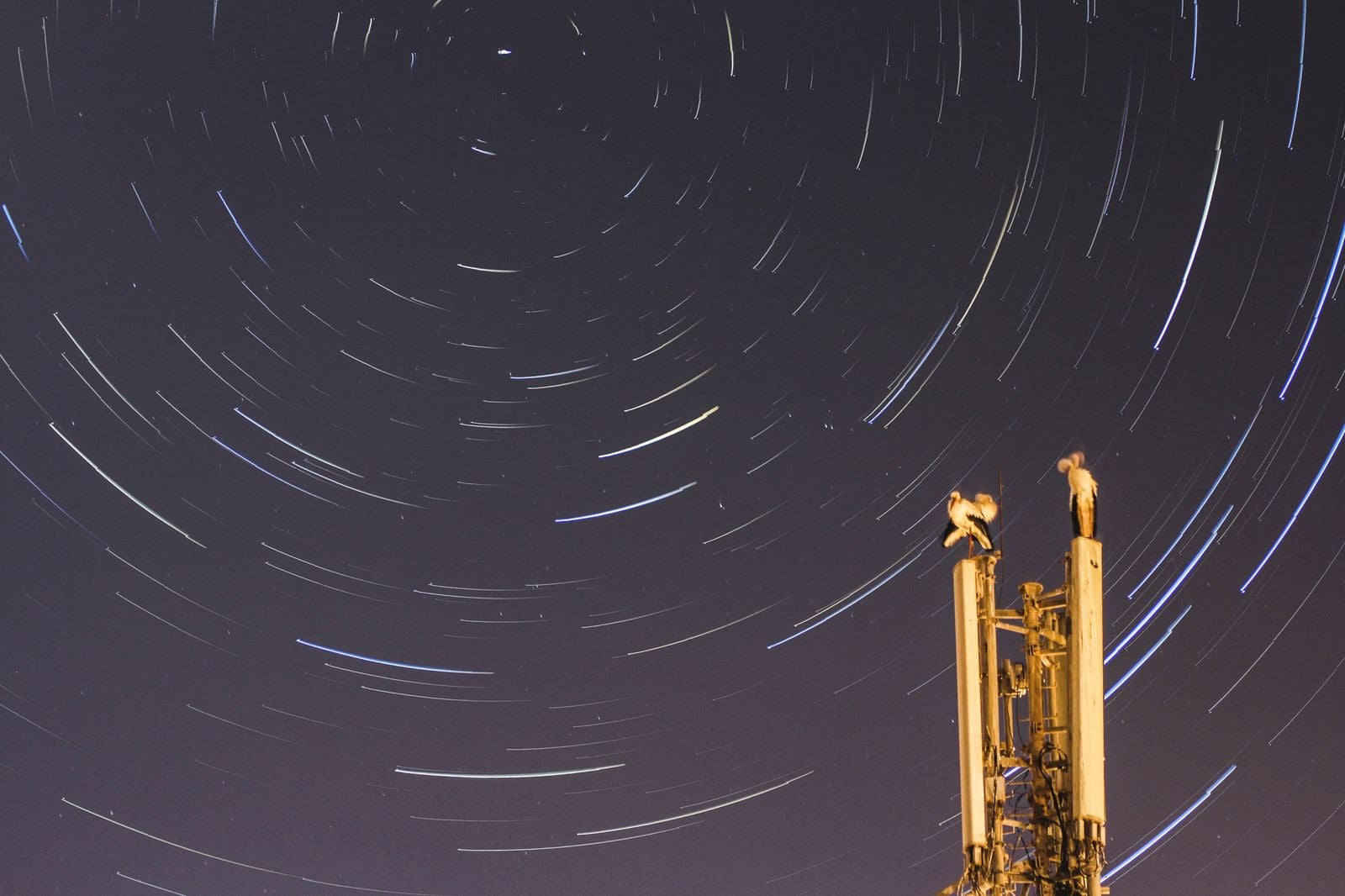
Ordinary communications satellites already interfere with astronomy by leaving bright streaks across long telescope exposures. A deliberately reflective spacecraft creates a second problem: sunlight scattered from the satellite can add to the diffuse glow of the sky even when its main beam is pointed somewhere else.
A 2021 modelling study estimated that satellites and orbital debris had already increased the diffuse brightness of the night sky by about 10 per cent over natural levels. Unlike light from a city, that orbital glow cannot be escaped simply by moving an observatory farther into a desert.
Eärendil-1 would be much brighter than a satellite designed to suppress reflections. Estimates discussed by astronomers studying the proposal suggest that it could appear brighter than Venus outside the illuminated area and brighter than the full Moon to an observer within the directed beam.
That matters because much of modern astronomy is an exercise in separating extremely faint light from the background around it. Future ground-based telescopes may attempt to photograph the reflected light of nearby planets such as GJ 251 c. Raising the background makes every such target harder to distinguish.
The same principle shaped astronomy long before digital sensors. Pluto appeared on Clyde Tombaugh’s photographic plates as one moving point in a field crowded with stars. Discoveries still depend on preserving enough contrast for the unusual point, streak or flicker to stand out.
Where the 200% to 300% warning comes from
The most dramatic number attached to Reflect Orbital does not describe Eärendil-1. It comes from a model of what could happen if the company’s much larger constellation were actually built.
In a 2026 analysis of large and unusually bright satellite constellations, European Southern Observatory astronomer Olivier Hainaut calculated that 5,000 Reflect Orbital-type spacecraft could raise the scattered background of the night sky by roughly 20 to 30 per cent. A constellation of 50,000 produced an estimated increase of about 200 to 300 per cent.
An increase of 200 to 300 per cent would leave the affected background approximately three to four times as bright as the natural baseline used in the model. It would not mean that every point on Earth suddenly experienced the illumination of daytime, and it is not a prediction of what one demonstration satellite will do.
The result depends on assumptions about the number of satellites, their dimensions, altitude, orientation and reflectivity, along with atmospheric conditions and the amount of time each mirror spends illuminated. Reflect Orbital has said it is commissioning independent research and engaging with the astronomy community, but measurements from an actual spacecraft do not yet exist.
Eärendil-1 can replace some of those assumptions with data. Astronomers will be able to measure its apparent magnitude from different angles, the amount of light escaping beyond its intended target and how its brightness changes as it enters and leaves Earth’s shadow.
The environmental questions extend beyond telescopes
Astronomy groups were not alone in objecting during the FCC process. Biological-rhythm and sleep organisations argued that a sufficiently large orbital illumination system could alter natural cycles of darkness that regulate animal behaviour, plant activity and human sleep.
Those concerns are strongest at constellation scale. As scientific societies told the FCC, navigation, migration, foraging and reproduction in many species respond to light levels and timing, sometimes at intensities that do not seem especially bright to human observers.
No one yet has field data showing the ecological effect of repeated illumination from thousands of orbital mirrors. The first satellite can help establish the duration, intensity, wavelength and geographic spread of one beam, but it cannot by itself reproduce the cumulative conditions of a mature constellation.
The regulatory question is equally unsettled. The FCC primarily governs radio-frequency use and associated satellite operations. Critics argue that a communications authorization process is poorly suited to deciding how much artificial light a commercial spacecraft should be allowed to add to the sky, particularly when the possible effects cross national borders.
What happens after the first reflector reaches orbit
The FCC’s authorization does not guarantee that Eärendil-1 will deploy correctly, deliver useful illumination or justify its operating cost. Nor does it bind the commission to approve thousands of successors. Each stage would require further technical work and additional regulatory decisions.
The mission’s earliest results will be visible rather than commercial. Observatories will record how bright the reflector becomes, how accurately it can be tracked and whether unwanted light spills far beyond the intended area. The Vera C. Rubin Observatory, now in its first year of survey operations, is among the facilities built to collect enormous numbers of sensitive wide-field exposures in which bright moving objects are particularly disruptive.
Reflect Orbital will be testing a different threshold: whether a fast-moving patch of orbital sunlight can deliver enough useful energy or illumination to compete with equipment already on the ground. A working mirror would demonstrate the physics. It would not yet demonstrate the economics of a worldwide service.
The first pass may last only minutes. A bright point will rise out of twilight, cross part of the sky and disappear into Earth’s shadow, leaving telescopes and light meters to record exactly what it did. The larger argument begins with those measurements — and with what the same light would become if one moving mirror were eventually multiplied into thousands.