
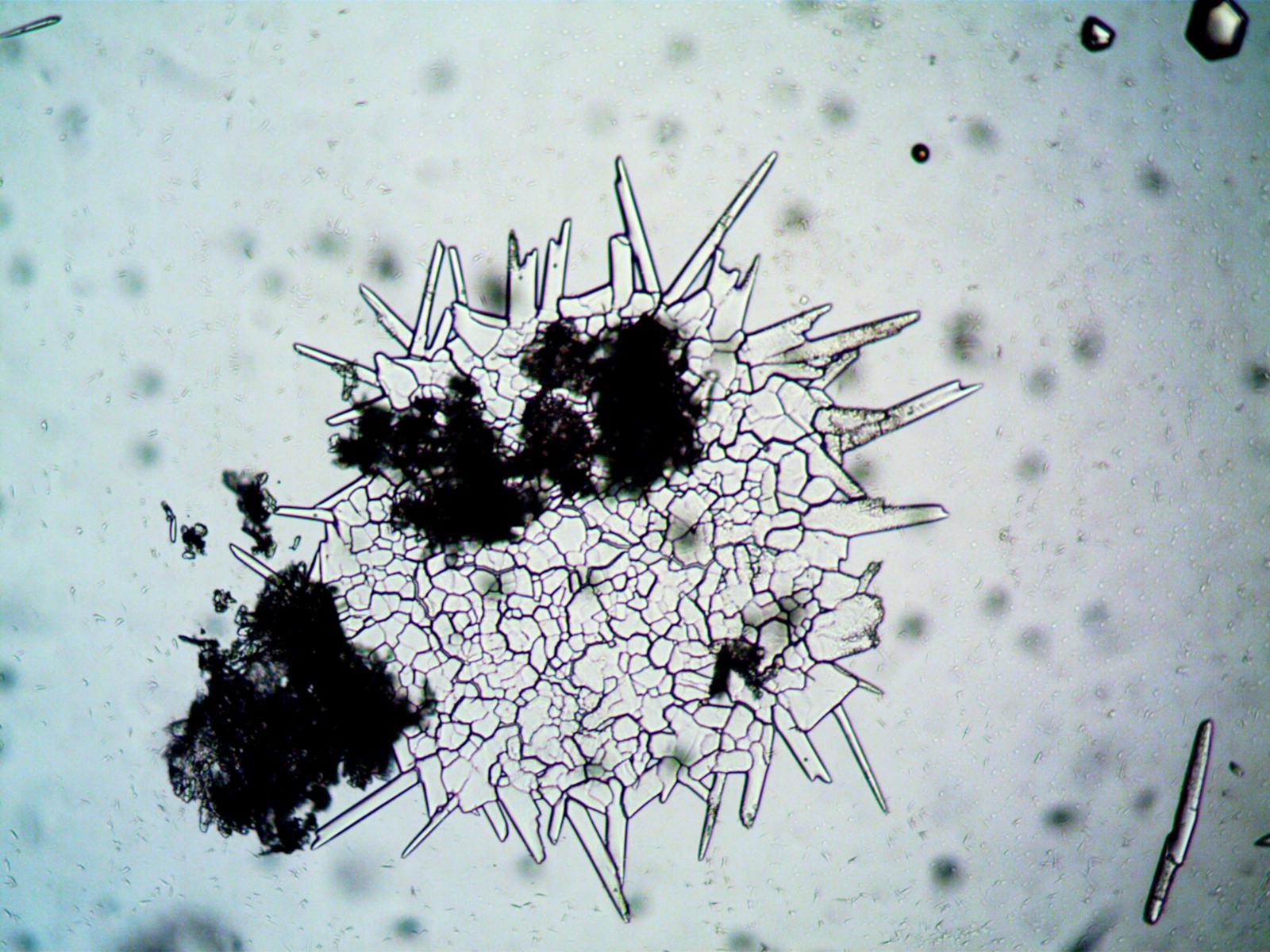
A tardigrade cooled to near absolute zero, then pulled out, then sprinkled with water, will start walking again. So will one exposed to extreme heat, one held in a vacuum chamber at the pressure of low Earth orbit, and one hit with intense gamma radiation. The trick that makes all of this possible is not toughness in the conventional sense. It is a deliberate suicide that the animal can reverse.
When conditions turn lethal, a tardigrade pulls in its eight legs, expels almost all the water from its body, and curls into a barrel-shaped husk called a tun. Inside the cell, the cytoplasm thickens until it sets like glass. Metabolism falls to something close to zero. The tardigrade is not dormant in the way a hibernating bear is dormant. It is, biochemically, almost not alive.
The glass that holds a body still
The state has a name: cryptobiosis. The Latin reads as hidden life, and that is more or less accurate. A 2017 study in Molecular Cell led by Thomas Boothby at the University of North Carolina identified the class of proteins responsible: tardigrade-specific intrinsically disordered proteins, or TDPs. As the animal dries, these proteins fill the cytoplasm and form a non-crystalline amorphous solid. Glass, in other words. Crystals would shred a cell from the inside. Glass holds everything in place.
TDPs have no fixed shape in solution. As the animal dries, they collapse around membranes, DNA, and other proteins, freezing the molecular machinery in something like the position it held when the water left. When water returns, the glass dissolves, and everything resumes from where it stopped. Boothby’s team showed that the glassy state was not incidental. When they disrupted the glassiness of the proteins, the protective effect was lost too.
This is why a tardigrade can be revived after decades. There is no slow metabolism ticking away, no clock running down. Time, in any meaningful biological sense, has been switched off.
What you can do to a tun and not kill it
The list of survivable insults reads like a torture manual written by someone who hates physics. Tardigrades in the tun state have been heated to extreme temperatures for short periods. They have been cooled to within a fraction of a degree of absolute zero. They have been placed in vacuum chambers and shot into orbit. Dried tardigrades have been exposed directly to the vacuum of space and full unfiltered solar UV. Most survived the vacuum. A smaller fraction survived the UV. Some of those went on to lay viable eggs.
Radiation is where things get strange. Research published in Nature Communications in September 2025 on the tardigrade protein Dsup showed how the molecule binds across the chromatin of yeast cells and shields DNA from the hydroxyl radicals that ionising radiation produces. Yeast engineered to express Dsup showed reduced oxidative DNA damage and extended lifespan under chronic oxidative stress. The protein is not a repair mechanism. It is a shield. It sits on the chromatin and absorbs the damage that would otherwise sever the strand.
Researchers in radiation biology have begun looking at practical extensions of this. The two most discussed are protecting astronauts on long-duration missions and shielding healthy tissue around tumours during radiotherapy. The molecule is small, transferable, and effective enough across heterologous systems (human cells, plants, yeast, fruit flies) that it has become a recurring subject in radioprotection research.
The tardigrade that went to the space station
In 2025, a tardigrade species discovered on the campus of the Indian Institute of Science flew to the International Space Station. Sandeep Eswarappa, who runs the lab that found it, set up his group at IISc in 2015 after a postdoc at the Cleveland Clinic. His team had already shown that this particular species fluoresces under ultraviolet light and that the fluorescent pigment, extracted and applied to UV-sensitive tardigrades, protected them too. As The Scientist reported, the team treats the substance as a form of natural sunscreen.
For the ISS run, the team dried the animals down into tuns, packed them into containers, and sent them up aboard the Axiom-4 mission. Astronaut Shubhanshu Shukla rehydrated them on orbit. Eswarappa and his lab watched on a live video feed from Bengaluru, waiting through a tense hour to see whether the tuns would move. They did. The tardigrades walked, fed, and reproduced in microgravity, and then came home. The team is now comparing gene expression in the space-flown animals against ground controls, looking for the molecular fingerprints of stress tolerance.
The mission made the tardigrade one of the few animals to have been to space repeatedly and across multiple agencies. They have flown on Russian, European, American, Chinese, and Indian missions. They are arguably the most well-travelled animals in human history, and they do almost all of their travelling unconscious.
What “survive” actually means
The headline claim needs a careful qualifier. A tardigrade in its active, hydrated state is not particularly tough. It can be killed by a sudden temperature change, by a dry afternoon on a moss patch, by a careless lab tech with a pipette. The superpowers belong to the tun. The animal has to see the threat coming and have time to dehydrate. A tardigrade flash-frozen while still walking does not survive. A tardigrade that dries slowly over hours, then is plunged into liquid nitrogen, mostly does.
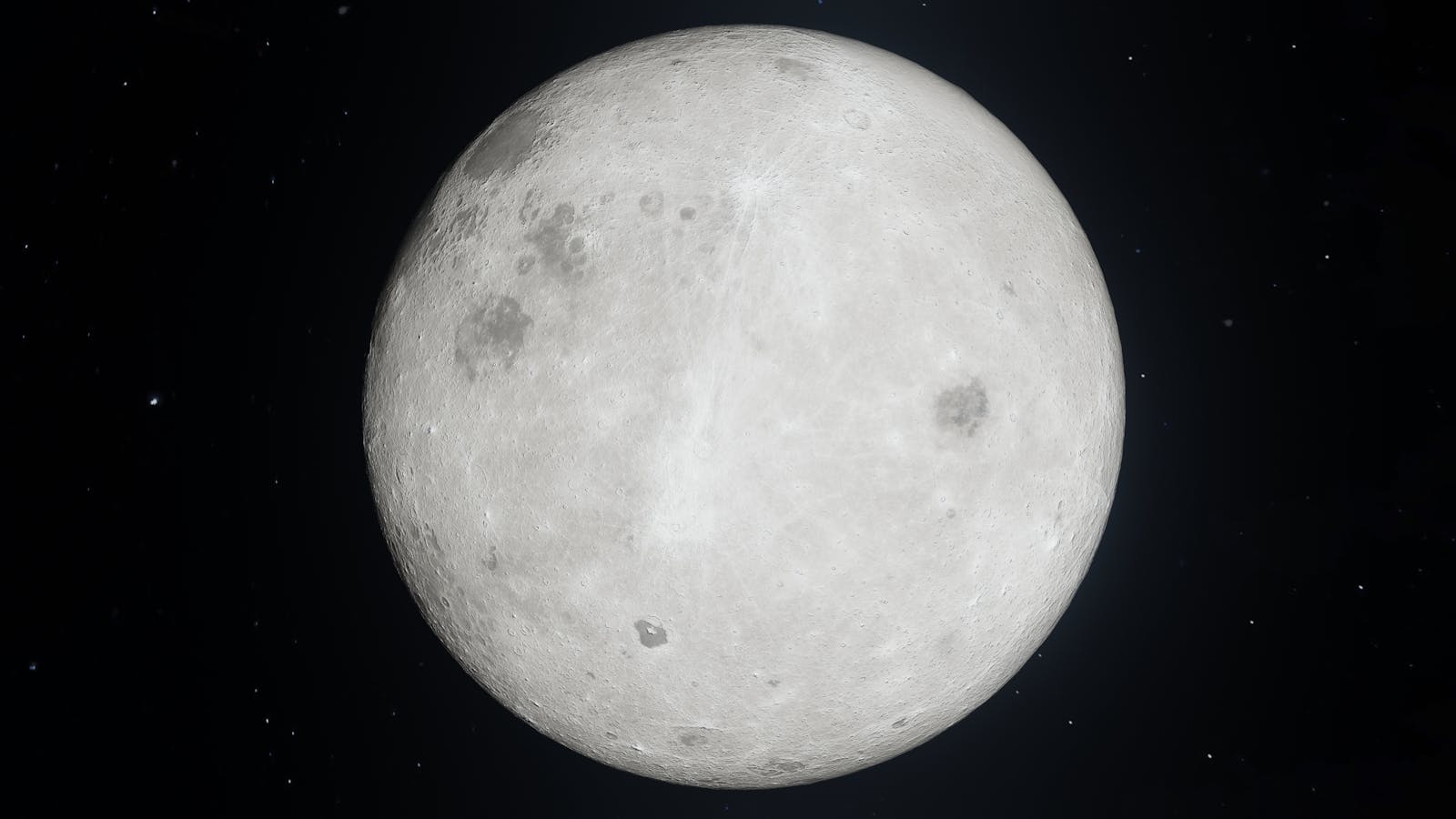
This is why the Beresheet question still hangs over the Moon. The Israeli spacecraft Beresheet crashed into the lunar surface with a payload of dried tardigrades aboard a so-called lunar library. Impact tests suggest that tardigrades have a survival limit for impact velocity that may be close to the speed at which Beresheet hit. The animals were in their tun state when they crashed, which is the only state in which any plausible survival is possible. Whether any are intact under the lunar regolith remains an open question, and one that nobody is in a hurry to answer, because lunar samples are precious and tardigrade hunts are not yet a funded science.
The 30-year wait
Japanese researchers at the National Institute of Polar Research pulled moss samples from Antarctica that had been collected decades earlier and stored frozen. Their 2016 paper in Cryobiology documented the revival of two Acutuncus antarcticus individuals and a separate egg from a sample frozen at minus 20 degrees Celsius for 30.5 years. One of the revived adults and the hatchling from the revived egg went on to reproduce successfully. The recovery was slow. The first revived tardigrade took two weeks before it could crawl and eat.
Claims of revival after a century or more, sometimes reported in the older literature, are generally considered unreliable. The samples were not stored under controlled conditions, and the species identifications were not always rigorous. Multiple decades remains the well-documented timeframe for confirmed tardigrade revival.
Tardigrades are not alone in this kind of long-pause biology. A bdelloid rotifer pulled from Siberian permafrost was revived after 24,000 years. Brine shrimp eggs can sit dry for centuries. The mechanisms are not identical, but they share the same logic: stop the water, stop the time.
Why drying is the hardest part
Most cells die when they dry. The membranes collapse, proteins unfold and clump, and DNA fragments under the oxidative damage that comes with the loss of water’s protective hydrogen-bonding network. Tardigrades have evolved a specific suite of solutions to each of these failure modes. Trehalose, a disaccharide also used by yeast and brine shrimp, replaces water molecules at membrane surfaces so the lipid bilayers do not crumple. The intrinsically disordered proteins form the bulk glass. Dsup wraps the DNA. Specific antioxidant enzymes mop up the reactive oxygen species that the drying process itself generates.
Comparative work on desiccation tolerance in tardigrades, brine shrimp, and nematode worms has shown that these animals have arrived at similar solutions through different evolutionary routes. They use different proteins, different sugar mixtures, different timing. The convergence is what makes the field interesting. Vitrification is, apparently, the most reliable way nature has found to pause a complex animal without killing it.
What people want to do with this
The Forbes science desk surveyed work on tardigrade biology as part of a broader review of longevity research by William Haseltine in November 2025, alongside the long-lived cells of whales and elephants. The interest is not in making humans tardigrade-tough. The body plans are too different. The interest is in borrowing parts. Dsup expressed in human cell lines reduces radiation damage. Trehalose-loaded mammalian cells survive freezing better. A future blood bank that stores platelets dry, at room temperature, instead of cold and wet, would be a meaningful change for trauma medicine. Vaccines that travel without refrigeration would change global health.
NASA and other agencies are also interested in tardigrades as model organisms for long-duration spaceflight. SpaceX cargo missions have carried water bears to the ISS specifically to study how stress responses change in microgravity. The premise is straightforward. If you want to know which genes make a body resilient, study the body that is most resilient and watch what it turns on.
The animal in the gutter
For all the lunar payloads and gamma irradiators and orbital experiments, the tardigrade itself is mundane. It lives in the film of water that clings to moss after a rain. It lives in lichen on a roof tile, in the leaf litter of a city park, in the sediment at the bottom of a puddle. It is around half a millimetre long. It walks on eight stubby legs and eats algae and plant cells by piercing them with a pair of stylets.
The reason it can do all of this is that its world has always been temporary. Moss dries every few days. A lichen patch on a wall freezes every winter. A tardigrade that could not survive its puddle disappearing would not last a season. Cryptobiosis is not an exotic adaptation to extreme environments. It is the ordinary adaptation to a small, wet life that keeps ending.
The animals on Beresheet, if any are intact, are doing what they have always done. They are sitting still, glass inside glass, waiting for water that is not coming.
