

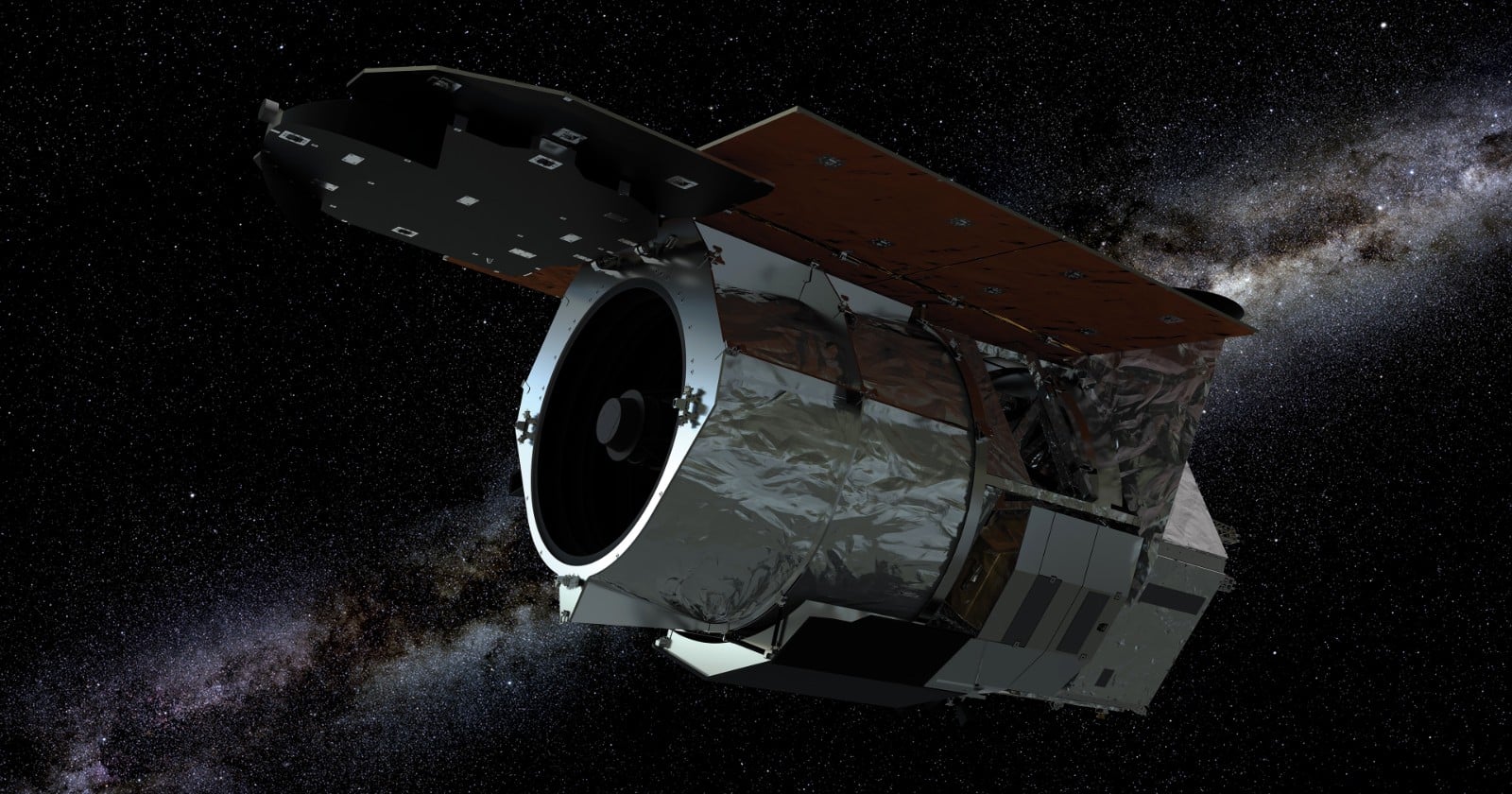
NASA’s Nancy Grace Roman Space Telescope arrived at the agency’s Kennedy Space Center in Florida on June 21, beginning the final stretch of preparations before a launch now expected in late summer. NASA is targeting liftoff no earlier than Aug. 30 on a SpaceX Falcon Heavy rocket from Launch Complex 39A, a date the agency says puts the observatory eight months ahead of schedule.
The nearly 18,000-pound spacecraft made the trip from NASA’s Goddard Space Flight Center in Maryland, where it was assembled and tested, traveling by road to Baltimore and then by sea aboard the agency’s Pegasus barge, which carried it down the Atlantic coast to Kennedy’s Payload Hazardous Servicing Facility.
A roughly 70-day march to the pad
At the servicing facility, Roman faces a prelaunch campaign that NASA’s program team puts at about 70 days. Technicians plan to test the observatory’s six solar panels, inspect its insulation and thermal blankets, and load roughly 290 gallons of hydrazine propellant before encapsulating the telescope inside the Falcon Heavy’s payload fairing.
The Pegasus barge did double duty on the trip south. Alongside Roman, it carried a weather cover for the Artemis III core stage of NASA’s Space Launch System rocket, letting one voyage support two of the agency’s flagship programs at once.
What Roman is built to see
After launch, Roman will travel to the second Sun-Earth Lagrange point, a gravitationally stable spot about 1.5 million kilometers from Earth on the side away from the Sun. Its main instrument, a 300-megapixel Wide Field Instrument with 18 detectors, gives it a field of view at least 100 times wider than Hubble’s at the same sharpness, which lets it survey the sky far faster than older telescopes.
Over its primary mission, NASA expects Roman to reveal billions of galaxies, hundreds of thousands of new exoplanets, and hundreds of black holes, and to help pin down what is driving the universe’s accelerating expansion. A second instrument, a coronagraph built by NASA’s Jet Propulsion Laboratory, is a technology demonstration designed to block a star’s glare so the telescope can image faint planets and planet-forming disks directly. The observatory is built to run for at least five years, and program officials say the propellant on board could keep it working for a decade or more.
What “eight months ahead” does and does not mean
The Aug. 30 target is a date to aim at, not a guarantee. NASA describes it as “no earlier than,” and the launch can still move if the prelaunch campaign turns up a problem with the spacecraft, the rocket, or the range. The eight-months figure is NASA’s own, measured against the mission’s formal commitment to launch by May 2027; the program had more recently been targeting September, so the new date also moves the launch up by a few weeks from that nearer goal.
The journey itself was a reminder that hardware this delicate leaves little margin. The team traveling with Roman has said its two onboard cooling units struggled to hold the observatory below its temperature limit during the voyage, forcing an unscheduled stop to add rental cooling units before the barge continued. Nothing about the mission is settled until the telescope is on orbit and its instruments check out.
Roman is named for Nancy Grace Roman, NASA’s first chief of astronomy, often called the “Mother of Hubble” for the role she played in making that telescope happen. If the schedule holds, the survey instrument she long argued for will begin mapping the infrared sky before the year is out.