

In 1898 a young researcher at Indiana University sat children down at a table fitted with two fishing reels and asked them to drive a small flag along a silk cord as fast as they could. Each child did it twice over: once alone against the clock, and once side by side with another child doing the same thing. About half of them turned the reel faster when a rival was working beside them.
That modest result, published as The Dynamogenic Factors in Pacemaking and Competition, is now widely treated as the first laboratory experiment in social psychology. Its author, Norman Triplett, had set out to explain something he had noticed on the racetrack, and ended up demonstrating that the simple presence of another person competing can change how hard someone tries.
A hunch from the bicycle records
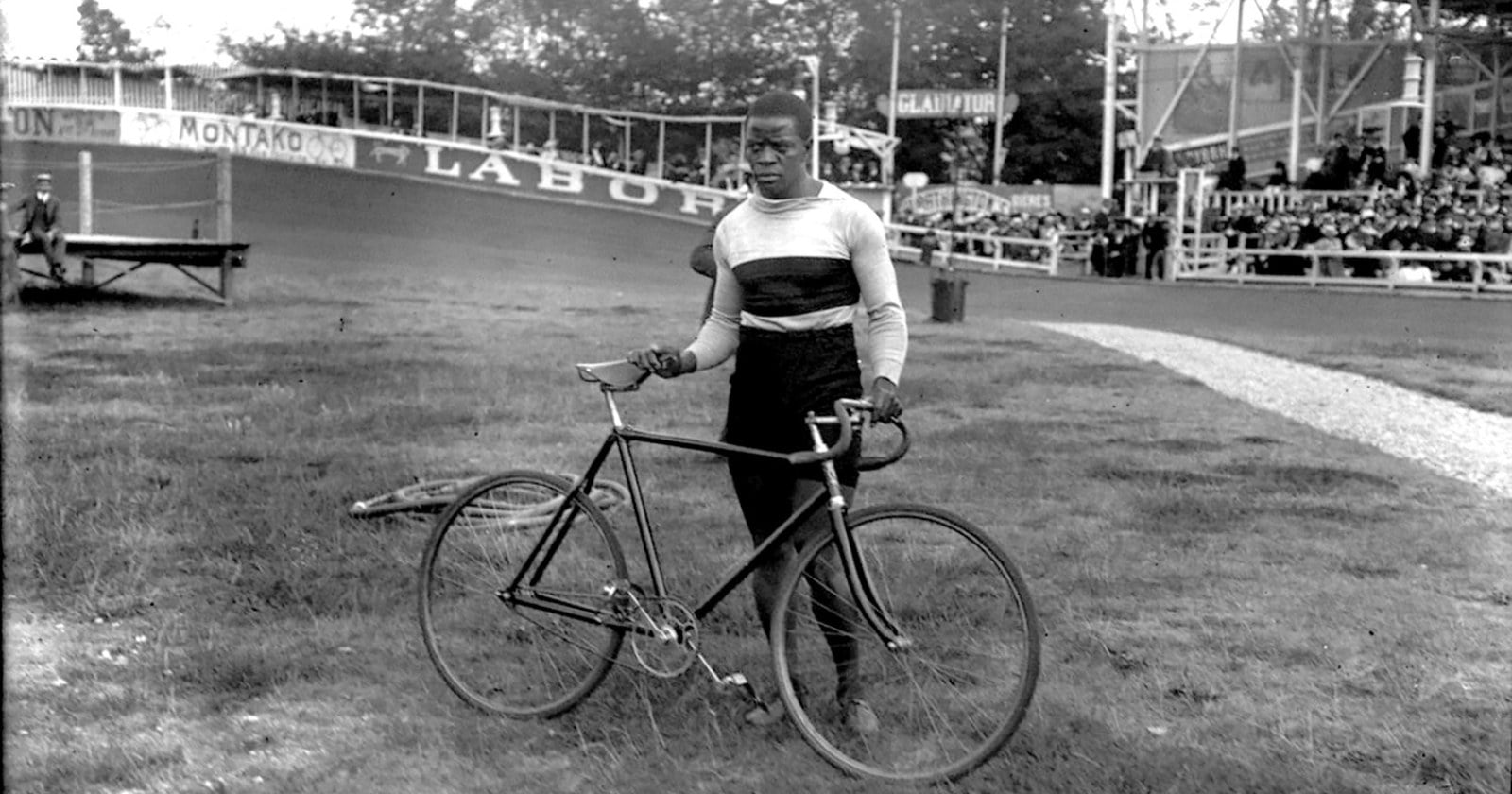
Triplett did not begin with children. He began with bicycles. He obtained the official racing records of the League of American Wheelmen through the close of the 1897 season and laid out the times for three kinds of events. There were riders racing the clock alone, riders racing the clock while a fast multi-rider machine set the pace ahead of them, and riders racing the clock while also competing against rivals.
The paced and competitive rides were faster, and not by a little. Over twenty-five miles, paced competition races came in about five seconds per mile quicker than paced races against the clock alone. Riders of the era already believed a good pace was worth twenty to thirty seconds a mile.
The obvious explanations were physical. A rider tucked behind a pacing machine is sheltered from the wind and may even be pulled along by the partial vacuum in its wake. Triplett worked through these mechanical theories carefully, along with several others circulating at the time, including the idea that the leader suffers more “brain worry” and that the follower rides almost automatically. But he suspected something else was also at work, something purely psychological: that the bodily presence of a rival “liberates latent energy” a person cannot summon alone.
The reel-winding machine
To isolate that idea from wind and drafting and exhaustion, Triplett built a tabletop apparatus. Two fishing reels were mounted on a Y-shaped frame so two people could sit and turn the cranks at the same time. A band of silk cord ran from each reel over small pulleys two meters away, carrying a little flag. A trial meant turning the crank until the flag had traveled four laps of the four-meter course, roughly sixteen meters, which took about forty seconds. A stopwatch timed each run, and a rotating drum traced the speed of every turn.
A trial that brief strips away most of the racetrack explanations. There is no wind to shelter from, no draft to ride, and too little time for any automatic rhythm to set in. What remains, in Triplett’s words, is an “intensely voluntary” effort, more like a sprint than a distance race.
He tested around 225 people of all ages in the course of the work, but based his published tables on forty children. Each child made six runs, alternating between turning alone and turning in competition, with five-minute rests in between to keep fatigue from muddying the picture.
What the children actually did
The forty children did not all respond the same way, and this is the part the popular retelling tends to flatten. Triplett sorted them into three groups. Twenty children turned the reel faster in competition, the result he was looking for. Ten were, in his term, “overstimulated,” and in one or more of their races they actually slowed down, sometimes gripping the crank so tightly that their arms stiffened. The last ten seemed barely affected by the presence of a rival at all.
The overstimulated group is the most human part of the paper. Triplett described flushed faces, labored breathing, and children so wound up by the desire to win that they lost control of the very movement they were trying to speed up. One adult Triplett also tested, an athletic young man who excelled at tennis and handball, kept losing time in competition because excitement made him recruit his larger, clumsier shoulder muscles instead of his quick forearm.
From the children who did speed up, Triplett drew his conclusion: the bodily presence of another contestant “serves to liberate latent energy not ordinarily available.” He added that the mere sight or sound of the rival’s movement seemed to spur subjects on, a separate effect he tied to the idea that picturing a faster pace helps produce one.
How sure can we be about the reel results
The honest answer is: less sure than a century of textbooks implies. Triplett’s experiment was real and genuinely novel, but it was not the clean demonstration it is often remembered as.
The numbers are small and the picture is mixed. Only half of the forty children clearly sped up, a quarter were unaffected, and a quarter sometimes got worse. The first part of the paper, the bicycle analysis, was not an experiment at all but an interpretation of existing race records, and Triplett himself granted only that it had “almost the force of a scientific experiment.”
Modern statistics make the caution sharper. When the psychologist Michael Strube reanalyzed Triplett’s original reel data in 2005, a comparison between the two groups of children showed no significant effect of competition. A within-subject comparison, of each child against their own solo trials, was marginal at best, and the improvement amounted to a reduction of less than two percent in time. The effect Triplett saw appears to have been real and small, not the dramatic boost the founding-myth version suggests.
None of this erases the achievement. The broader phenomenon Triplett was reaching for, that performing alongside or in front of others changes performance, has been studied ever since under the name social facilitation, and the picture that emerged is itself more complicated than “an audience makes you better.” Sometimes it does, on simple or well-practiced tasks, and sometimes it makes you worse, on hard or unfamiliar ones, which is more or less the split Triplett stumbled into with his three groups of children.
Why the fishing reels still matter
What Triplett did that was new was not the finding but the method. Before him, claims about why people speed up around rivals were argued from racing lore and physiology. He brought the question into a laboratory, built an apparatus to control the variables, timed the result, and counted. That move, taking a social hunch and putting it on a kymograph drum, is what earns the paper its place at the start of social psychology.
It is worth remembering that the founding study of the field was, at its core, a few dozen children racing each other to spin a fishing reel, and that even then the children refused to behave uniformly. Some rose to the contest, some came apart under it, and some did not seem to care. The science of how people affect one another started not with a tidy law but with that ordinary, untidy spread.