
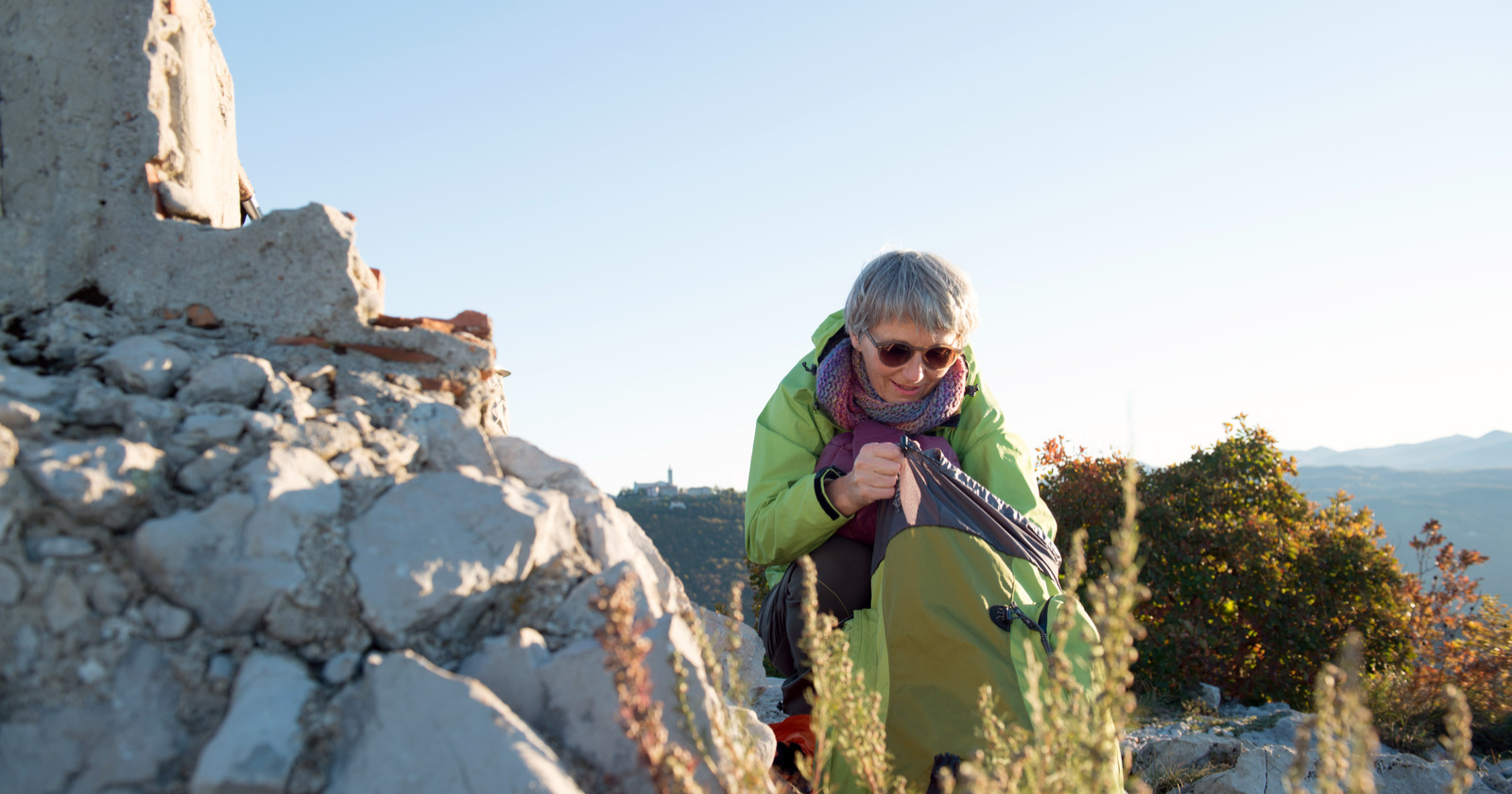
Most people who set out to walk more than two thousand miles of mountain footpath carry a tent, a sleeping bag, a compass, and a map at the very least. Emma Gatewood carried none of those things.
She was 67, a mother of eleven, and she left home with a sack over one shoulder and a plan she had told almost nobody. This is less a survival story than a lesson in how little a determined person actually needs.
The bare facts sound invented. In 1955, Gatewood became the first woman to solo-hike the entire Appalachian Trail in a single season, at an age when most of her peers were settling into rocking chairs.
Here is how she did it, piece by improbable piece.
She told her family only that she was “going for a walk”
Gatewood didn’t announce a grand expedition. She told her grown children she was “going for a hike in the woods”, and then she did, all the way from Georgia to Maine.
Her reasons stayed vague even after she became famous. When a reporter asked why she wanted to hike the trail, she answered simply, “Because I wanted to.” Her biographer, Ben Montgomery, offered a darker reading. Montgomery has written, “I’m not sure she was walking toward something so much as she was walking away.” His 2014 book made public that Gatewood had survived decades of domestic abuse. That fact turns a cheerful walking story into something heavier. We won’t pretend to know her mind.
She swapped a tent and pack for a shower curtain and a denim sack
The gear list is the part that makes modern hikers wince. No tent. No sleeping bag. When the weather turned, she slept under a plastic shower curtain. She carried her supplies in a drawstring bag she’d sewn herself. The whole load weighed about 17 pounds, slung over one shoulder rather than strapped to her back.
That’s roughly what a well-stocked day hiker carries now for an afternoon out. Gatewood carried it for nearly five months. She had no compass and no map, so when the paint marks on the trees ran out or contradicted each other, she was finding her way on nerve.
She hiked in canvas Keds and wore through seven pairs
She didn’t wear boots. She wore canvas Keds, ordinary drugstore sneakers, and she wore out seven pairs of shoes before she reached the end. Over 146 days she averaged close to 14 miles a day, which on the rougher stretches of the trail is a long, punishing day even in good boots.
What strikes us is how little of this was about equipment and how much was about tolerance for discomfort. Blistered feet, soaked clothes, a shower curtain for a roof. She just kept walking.
She had already failed once and come back anyway
The 1955 hike wasn’t her first try. She had attempted the trail earlier, starting from the Maine end, and it went badly. She broke her glasses, got lost, and was found and sent home by rangers. Most people would have taken that as a clear verdict.
She took it as a rehearsal. When she started again in 1955, she went south to north, setting out from Mount Oglethorpe, Georgia, on May 3, 1955. Her daughter later summed up the spirit of the thing. Gatewood, she said, figured that “If those men can do it, I can do it.”
She lived off the land and the kindness of strangers
Without a stove or much food weight, she got by on what she could find and what people would give her. She knew which wild plants were safe to eat and gathered them as she went. She knocked on doors, asking for a meal and a place to sleep, and often got both.
This is the part that dates the story in a good way. A 67-year-old woman walking alone through the southern mountains in 1955, relying on farmhouses and small-town generosity, is a picture of a trail culture that barely exists now. She was, by necessity, sociable. The walk depended on it.
She finished at 67, then did it twice more
She reached the summit of Mount Katahdin on September 25, 1955. As recounted in Montgomery’s book, she is said to have declared at the top, “I said I’ll do it, and I’ve done it.” Later, asked by a Sports Illustrated reporter about the ordeal, she said, “I never would have started this trip if I had known how tough it was, but I couldn’t and wouldn’t quit.”
Most people would have framed that photo and stopped. Gatewood hiked the entire trail again in 1957, becoming the first person to walk its full length twice, then walked it a third time in sections in 1964. She wasn’t doing it to prove a single point. She seems to have simply liked to walk, and kept liking it into her seventies.
Her walk helped shame a neglected trail into repair
Gatewood didn’t just hike the trail. She complained about it, loudly and to reporters, when stretches were overgrown, badly marked, or falling apart. That criticism landed at a moment when the footpath needed the attention. The trail’s stewards started focusing on upkeep in the years that followed.
How much credit she deserves for that depends on how you frame it. The publisher’s description of Montgomery’s biography puts it strongly: her criticism “led to bolstered maintenance, and very likely saved the trail from extinction.”
Women made up only about 15 percent of end-to-end hikers in the early decades, a share that had climbed to roughly a third by 2018. Gatewood didn’t start that trend alone, but she stood at the front of it in a pair of Keds. What lingers, for us, isn’t the mileage or the records. It’s the shower curtain, the denim sack, the seventeen pounds. She proved the whole enormous feat could be done with almost nothing at all.
