
On July 8, 2011, Space Shuttle Atlantis lifted off from Kennedy Space Center on STS-135 carrying four astronauts and a logistics module called Raffaello, and when its wheels stopped on the runway thirteen days later NASA no longer had a way to put a human, or even a bag of groceries, on the International Space Station. The orbiting laboratory kept circling overhead at roughly 28,000 kilometers per hour, completing a full lap of the planet every ninety minutes, and the country that had built most of it suddenly had to buy seats from Russia at a price that eventually climbed past $90 million per astronaut.
The gap lasted nearly a decade for crew. For cargo it was shorter, because one private company, founded by a South African internet entrepreneur who had never built a rocket before 2002, stepped into the breach with a capsule called Dragon and a rocket called Falcon 9.
A lab the size of a football field, 400 kilometers up
The ISS is the largest structure humans have ever assembled in space. Its main construction ran from 1998 to 2011, stitched together across more than thirty assembly flights by the Space Shuttle and Russian Proton rockets. It weighs roughly 420 tonnes. Its pressurized volume is comparable to a six-bedroom house. It hosts a rotating crew of seven, drawn from NASA, Roscosmos, ESA, JAXA and the Canadian Space Agency, working in a laboratory that travels the equivalent of a trip to the Moon and back every day.
And every gram of food, every spare filter, every science experiment, every replacement urine pump has to be flown up to it.
Before 2011, NASA had three ways to do that: the Space Shuttle, Russian Progress freighters, and European and Japanese cargo vehicles. After Atlantis rolled into a museum in Florida, NASA had two ways, and none of them were American.
The retirement nobody had a replacement for
The Shuttle was retired for reasons that had been clear since the Columbia accident in 2003: it was expensive, it was aging, and two catastrophic accidents had killed fourteen astronauts. Challenger broke apart during ascent in 1986 after a solid rocket booster seal failed in the cold; Columbia disintegrated on reentry in 2003 after a breach in the orbiter’s heat shield let superheated gas into the wing. The Bush administration’s 2004 Vision for Space Exploration set the retirement date. The replacement vehicle, the Constellation program’s Ares I rocket and Orion capsule, was supposed to be flying crews by 2014.
It wasn’t. The Obama administration cancelled Constellation in 2010 after a review panel concluded the program was years behind and billions over budget. Orion survived in a slimmer form, eventually flying around the Moon uncrewed in 2022 on Artemis I, but it was never aimed at the ISS. The station, in other words, had been left without an American ride before the Shuttle even stopped flying.
NASA’s answer was something the agency had never tried at this scale: hand the job to industry, on fixed-price contracts, and buy the service rather than the spacecraft.
The contract that bet on a company that had blown up three rockets
In December 2008, NASA awarded the Commercial Resupply Services contract to two companies. One was Orbital Sciences, an established aerospace firm in Virginia. The other was SpaceX, then a six-year-old startup in Hawthorne, California, whose Falcon 1 rocket had failed on its first three attempts before finally reaching orbit in September 2008, just three months before the contract was signed.
The SpaceX award was worth $1.6 billion for twelve flights. The company had to design and build a pressurized capsule capable of berthing with the ISS, a heat shield capable of bringing experiments and hardware back down through reentry, and a rocket capable of putting both into the correct orbit. None of that hardware existed yet.
Dragon flew to the station for the first time on May 25, 2012. Astronaut Don Pettit reached out with the Canadarm2 robotic arm and grappled the capsule as it drifted alongside the ISS, the first time a private spacecraft had ever connected to the station. SpaceX has been flying cargo Dragons there ever since. In May 2026, the company launched its 34th commercial resupply mission, carrying 6,500 pounds of cargo on a Falcon 9.
The crew gap, and how long it actually lasted
Cargo was the easier half of the problem. Crew was harder, because the safety bar for a human-rated spacecraft is set higher than for anything else NASA buys.
From July 2011 onward, every American, European, Japanese and Canadian astronaut who reached the ISS got there on a Russian Soyuz launched from Baikonur Cosmodrome in Kazakhstan. NASA paid Roscosmos for seats under a series of contracts whose per-seat price kept climbing. By 2018 the agency was paying more than $80 million per astronaut. The arrangement was politically uncomfortable, financially painful, and operationally fragile — a single Soyuz failure, like the abort that cut short the MS-10 launch in October 2018, briefly left no humans able to reach the station at all.
NASA had launched the Commercial Crew Program in 2010 to fix this. In September 2014 it awarded two contracts: $4.2 billion to Boeing for a capsule called Starliner, and $2.6 billion to SpaceX for a crew version of Dragon. First flights were planned for 2017.
SpaceX got there in May 2020, when Doug Hurley and Bob Behnken launched on Crew Dragon Demo-2 from the same Kennedy Space Center pad — 39A — that had launched Apollo 11 and the final Shuttle. The gap between American crew launches from American soil was eight years and ten months.
Boeing’s Starliner did not get there on schedule. Its 2019 uncrewed test ended in the wrong orbit. Its 2024 Crew Flight Test reached the ISS but suffered thruster problems serious enough that NASA brought the astronauts home on a SpaceX Dragon instead, leaving Starliner to undock empty. The follow-up cargo version of the spacecraft remains under review, with NASA continuing to work through the technical issues uncovered during the crewed flight.
For the moment, the United States has exactly one operational crew vehicle to the ISS, and it is the one a private company built on a fixed-price contract.
What “private” actually means here
SpaceX did not invent commercial spaceflight on its own. The company that came closest to closing the gap was joined by Northrop Grumman, whose Cygnus cargo freighter flies on a mix of Antares and, more recently, Falcon 9 rockets. In April 2026, a Falcon 9 launched the NG-24 Cygnus mission to the ISS, an arrangement that would have seemed implausible a decade earlier — one private launcher carrying another private company’s cargo ship to a station the U.S. government built.
The model has spread beyond NASA’s resupply contracts. Three private companies — Axiom Space, Vast, and now Voyager Technologies — are flying or preparing to fly private astronaut missions to the ISS, paying NASA for access and using SpaceX Dragons to get there. The same companies are building the commercial stations meant to replace the ISS after it is deorbited in 2031.
The orbital ballet, every ninety minutes
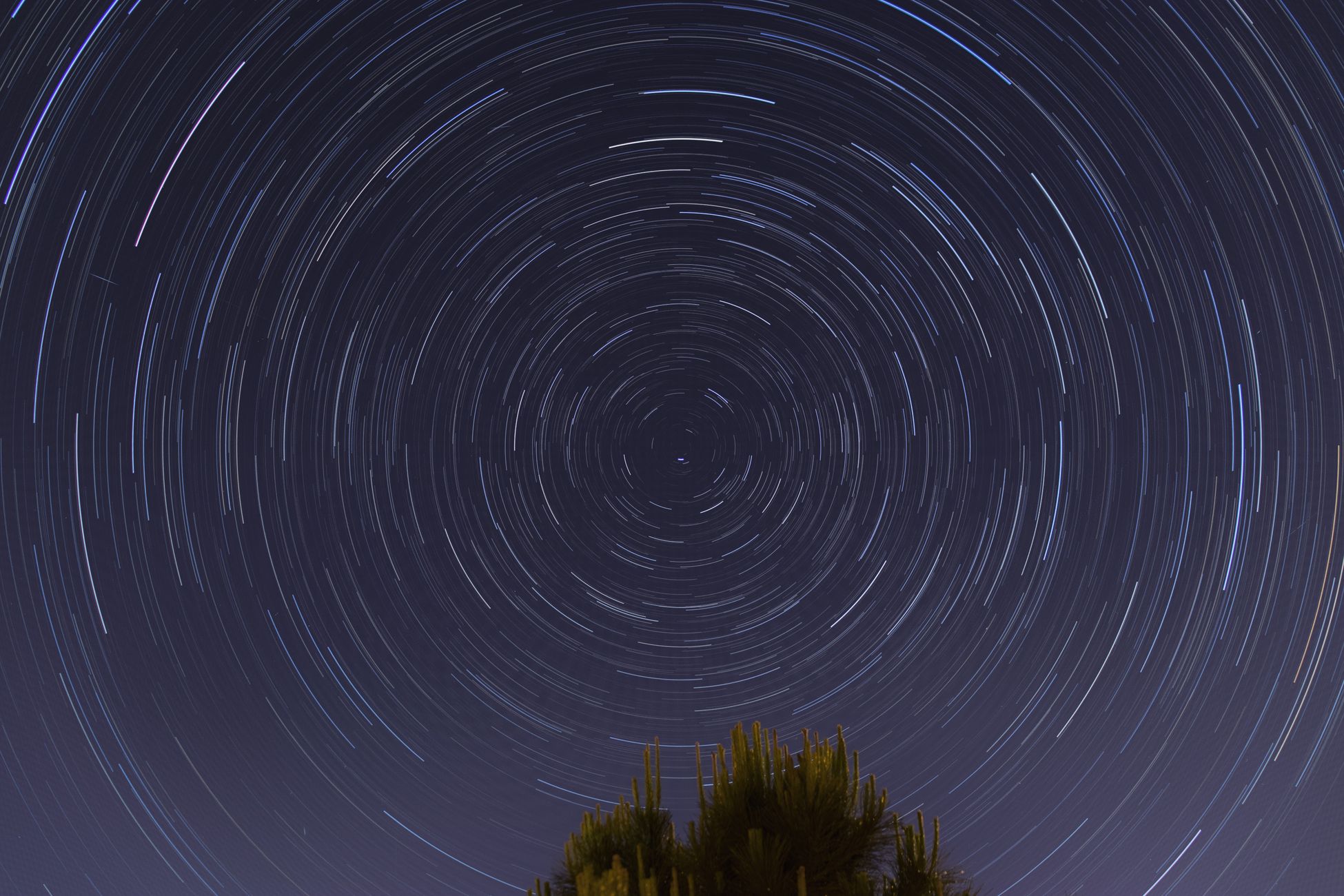
The station itself does not care who is launching to it. It travels at about 7.66 kilometers per second, fast enough to circle Earth roughly every 90 minutes. Each lap, the crew sees a sunrise and a sunset. Each lap, the station drifts a little lower into the thin upper atmosphere and has to be boosted back up by visiting spacecraft firing their thrusters. For years that boost came from Russian Progress freighters and the European ATV. The Cygnus has done it. Dragon has done it. The job, like every job at the station, is now shared.
NASA’s next round of crew flights is already on the schedule. The agency has named the four astronauts assigned to Crew-13, the thirteenth operational Dragon flight to the ISS, continuing a cadence that has now exceeded a flight every six months for five years.
The gap, in numbers
From the moment Atlantis touched down on July 21, 2011, to the moment Crew Dragon Demo-2 docked on May 31, 2020, 3,237 days passed. During that stretch, the ISS completed roughly 51,800 orbits of the Earth. American astronauts continued to live and work onboard for almost every one of them, brought up and returned on Soyuz capsules launched from a Soviet-era pad in Kazakhstan, in deals brokered through a Russian space agency whose relationship with NASA grew steadily more strained.
The station kept circling. The lab kept running experiments. The view from the cupola — sixteen sunrises a day, oceans and continents rolling beneath — never paused. And the country that had welded most of the structure together watched its astronauts reach it on someone else’s rocket for nearly nine years, until a company that started in a warehouse in El Segundo finally got one of its own to dock.
