

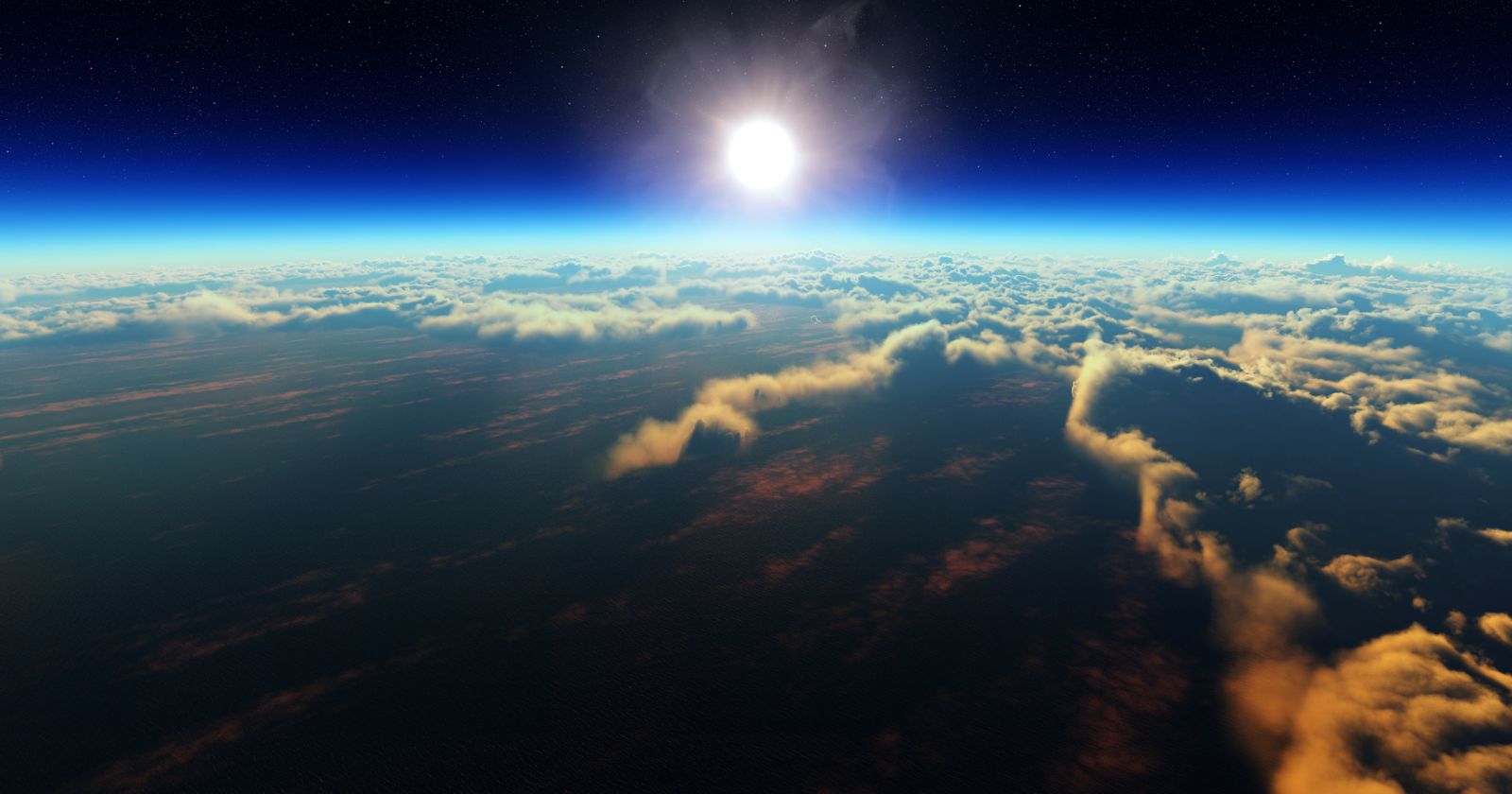
Aboard the International Space Station right now, crew members are watching the Sun drop below Earth’s limb roughly every 45 minutes, then climb back over it 45 minutes later. The station orbits at about 7.66 kilometres per second — close to 5 miles every second — and completes a full lap around the planet every 90 minutes or so. That works out to 16 sunrises and 16 sunsets in a single 24-hour period, a fact NASA confirms on its station overview page and that crews mark on their schedules using Coordinated Universal Time, because day and night up there have stopped meaning anything useful.
The number sounds invented. It is not.
The station flies at roughly 408 kilometres above the surface, low enough that atmospheric drag still tugs at it and high enough that the curve of Earth dominates the view from the cupola. At that altitude the orbital period sits between 92 and 93 minutes. Divide 1,440 minutes in a day by 92.68 and you get 15.54 orbits. Round up for the partial sunrises caught at the edges of the day and the crew reliably tallies 16 dawns before the next calendar date arrives.
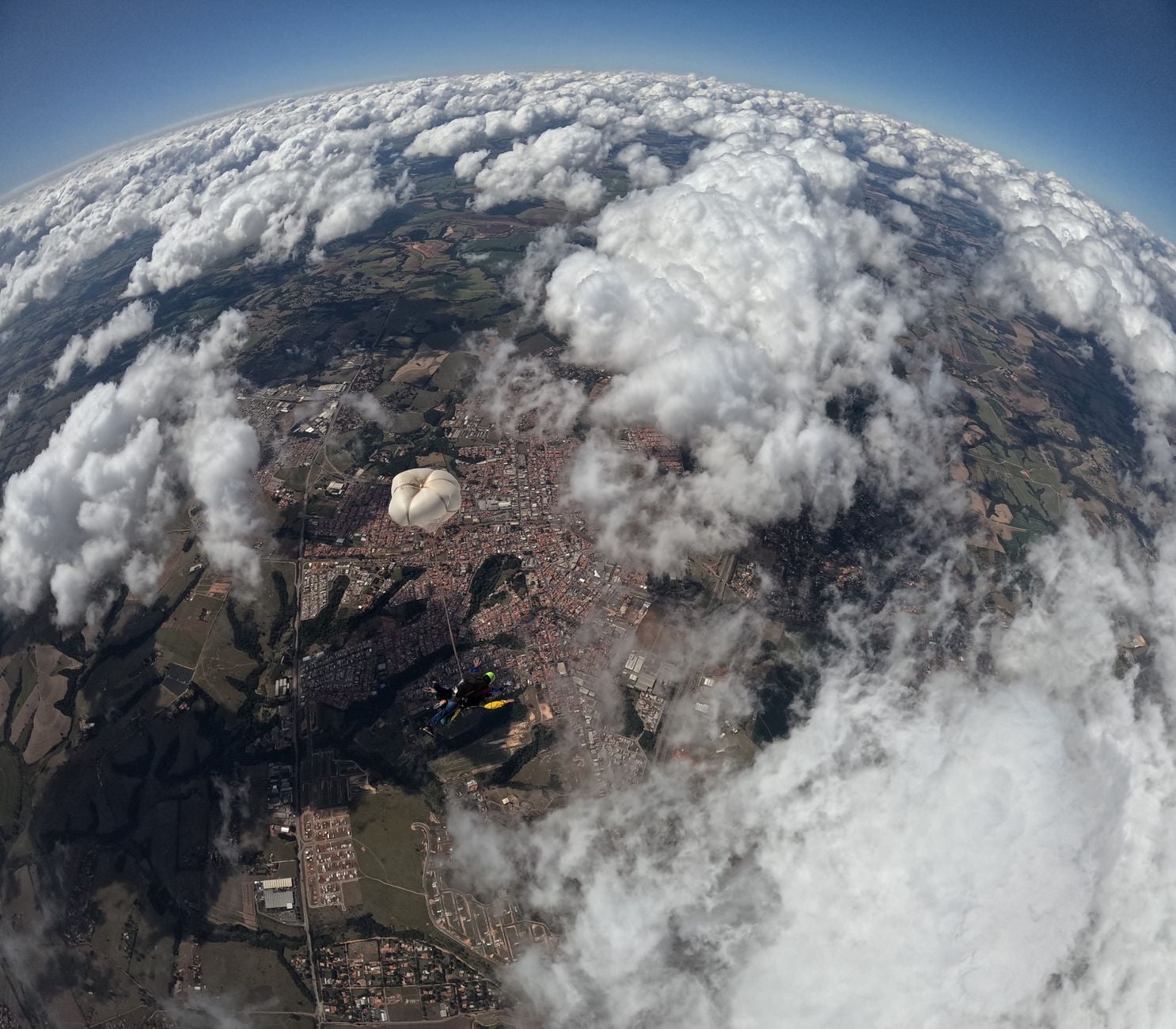
What a sunrise looks like at 28,000 kilometres per hour
From inside the seven-windowed cupola module, the terminator — the line between day and night on Earth’s surface — sweeps past in seconds. Astronauts describe a thin band of blue and orange rolling toward them, then over them, then behind. The whole sunrise, from first glow to full sunlight, lasts under a minute.
On the ground, sunrise is a slow event. The Sun’s disc takes two to three minutes just to clear the horizon, and the colour change drags on for half an hour. In orbit, the geometry collapses. The station is moving so fast that the Sun appears to leap above Earth’s edge rather than rise through it.
Each pass through Earth’s shadow lasts about 35 minutes. Each pass through daylight runs closer to 55. The asymmetry depends on the season and the angle of the orbital plane against the Sun, which is why some weeks the station enters a stretch of full-Sun orbits where it never crosses into darkness at all.
Why the crew runs on UTC instead of sunlight
With 16 day-night cycles per 24 hours, sunlight is useless as a clock. Mission control in Houston and the Russian flight control centre outside Moscow both coordinate on Coordinated Universal Time, and the crew lives by it — wake at 06:00 UTC, exercise blocks, science blocks, the evening conference, sleep at 21:30 UTC.
The shades over the sleep station windows matter. Without them the rapid light cycling wrecks circadian rhythm. Sleep researchers studying flight crews have documented that even with strict UTC scheduling, astronauts average about six hours of sleep per night, well below the eight hours scheduled. The biology of circadian regulation evolved on a planet with one sunrise per day, and 16 sunrises overwhelm the system.
The station’s interior lighting was upgraded to a tunable LED system that shifts colour temperature through the day. Bluer light in the morning, warmer light in the evening. The hardware is essentially trying to fake a single planetary day inside a tin can that is experiencing sixteen of them.
Five miles a second, in numbers
The orbital velocity figure — 7.66 km/s, or about 17,150 miles per hour — is hard to feel. Some comparisons help.
A rifle bullet leaves the muzzle at around 900 metres per second. The ISS moves more than eight times that fast. A commercial airliner cruises at roughly 250 metres per second. The station is moving at thirty times that speed.
At 7.66 km/s, the station crosses the continental United States in about ten minutes. It crosses the Atlantic in under fifteen. A crew member who looks out the cupola at the Florida coastline and then turns to make a sandwich will be over Senegal by the time they sit back down.
The orbit is not a circle, and it does not repeat
The ISS orbit is inclined 51.6 degrees to the equator — a choice made so that Russian launches from Baikonur could reach it as easily as American launches from Florida. That inclination means the station’s ground track sweeps between roughly 51.6 degrees north and 51.6 degrees south latitude, covering most of the inhabited world but never passing directly over the poles.
Because Earth rotates underneath the orbit, every pass crosses a different stretch of ground. The crew sees the Sahara on one orbit, the Pacific on the next, then northern Europe, then the South Atlantic. Over the course of a day, the 16 orbits trace a slowly drifting sine wave across the planet’s surface.
The station’s altitude is also not fixed. Atmospheric drag at 400-plus kilometres is small but real, and the ISS loses roughly 100 metres of altitude per day. Periodic reboosts — usually fired by a docked Progress or Cygnus cargo vehicle — push it back up. Without reboosts, the station would re-enter the atmosphere within a year or two.
What 16 sunrises do to a human body
The vestibular system — the inner-ear apparatus that tells a body which way is up — has nothing to work with in freefall. Astronauts arriving on the station typically spend the first two or three days with what flight surgeons call space adaptation syndrome: nausea, disorientation, the sensation of being upside down regardless of body position.
Taste changes too. A 2025 study published in npj Science of Food on simulated microgravity environments confirmed what astronauts have reported since the Skylab era: aromas and mouthfeel shift in orbit. Fluid redistribution in the head congests the sinuses. Food tastes blunter. Hot sauce and shrimp cocktail are persistent crew favourites because they cut through the dullness.
Then there is the view. The cognitive shift astronauts report after watching Earth turn beneath them for weeks has come to be known as the overview effect. Sixteen sunrises a day, ninety-six a week, more than a thousand over a six-month rotation. The Council on Foreign Relations covered the phenomenon in its Earth Month feature earlier this year, noting how consistently returning crews describe a sense of planetary fragility that did not exist before they left.
Some of that comes from the lack of borders visible from orbit. Some of it comes from the sheer repetition. Watch the planet rotate beneath you sixteen times a day for half a year and the abstraction of a globe stops being abstract.
The 90-minute schedule that runs everything
Every experiment aboard the ISS is timed around the orbital period. Earth-observation cameras have 45-minute windows of usable daylight per orbit. Solar arrays generate power for about 55 minutes per orbit, then draw from batteries for 35 minutes in eclipse. Thermal control systems cycle as the station swings between roughly +120°C in direct sunlight and -150°C in shadow.
Spacewalks are choreographed against the same clock. Astronauts on EVAs work through alternating bands of brilliant sunlight and absolute darkness, switching helmet lights on and off as the station carries them around the planet. A six-hour spacewalk, like the robotic-arm maintenance work performed by ISS crews, will see the crew cross through four complete day-night cycles before they re-enter the airlock.
A quarter-century of sixteen-sunrise days
People have been doing this without a break for more than two decades. The continuous human presence aboard the ISS has now run more than 25 years. Every one of those days, somewhere between two and seven people have woken up, exercised, eaten, worked, and gone to sleep against the rhythm of 16 sunrises.
The math adds up to extraordinary totals. Across 25 years of continuous occupancy, the rotating crew has collectively witnessed somewhere north of 146,000 orbital sunrises. Peggy Whitson alone, who flew aboard the Axiom-4 mission in 2025, has logged more than 11,000 sunrises from orbit over her career.
Valeri Polyakov, during his 437-day stay on Mir in 1994-1995 — still the longest continuous spaceflight in history — saw close to 7,000.
The view does not get old
Astronauts asked what they did with their rare free hours aboard the station almost always give the same answer: floated to the cupola and watched the planet. Six windows arranged in a dome at the nadir-facing side of Node 3, looking straight down. Aurora curling over the Southern Ocean. Thunderstorms flickering across the Congo basin. Cities glowing in chains along coastlines.
Then the terminator rolls in, the cabin lights brighten automatically, and the Sun drops behind the limb of Earth in something like fifteen seconds. Forty-five minutes later, it comes back. Then again. Then again. Sixteen times before the date on the wall clock changes.
The crew sleeps through most of them. Earth keeps turning underneath either way.