
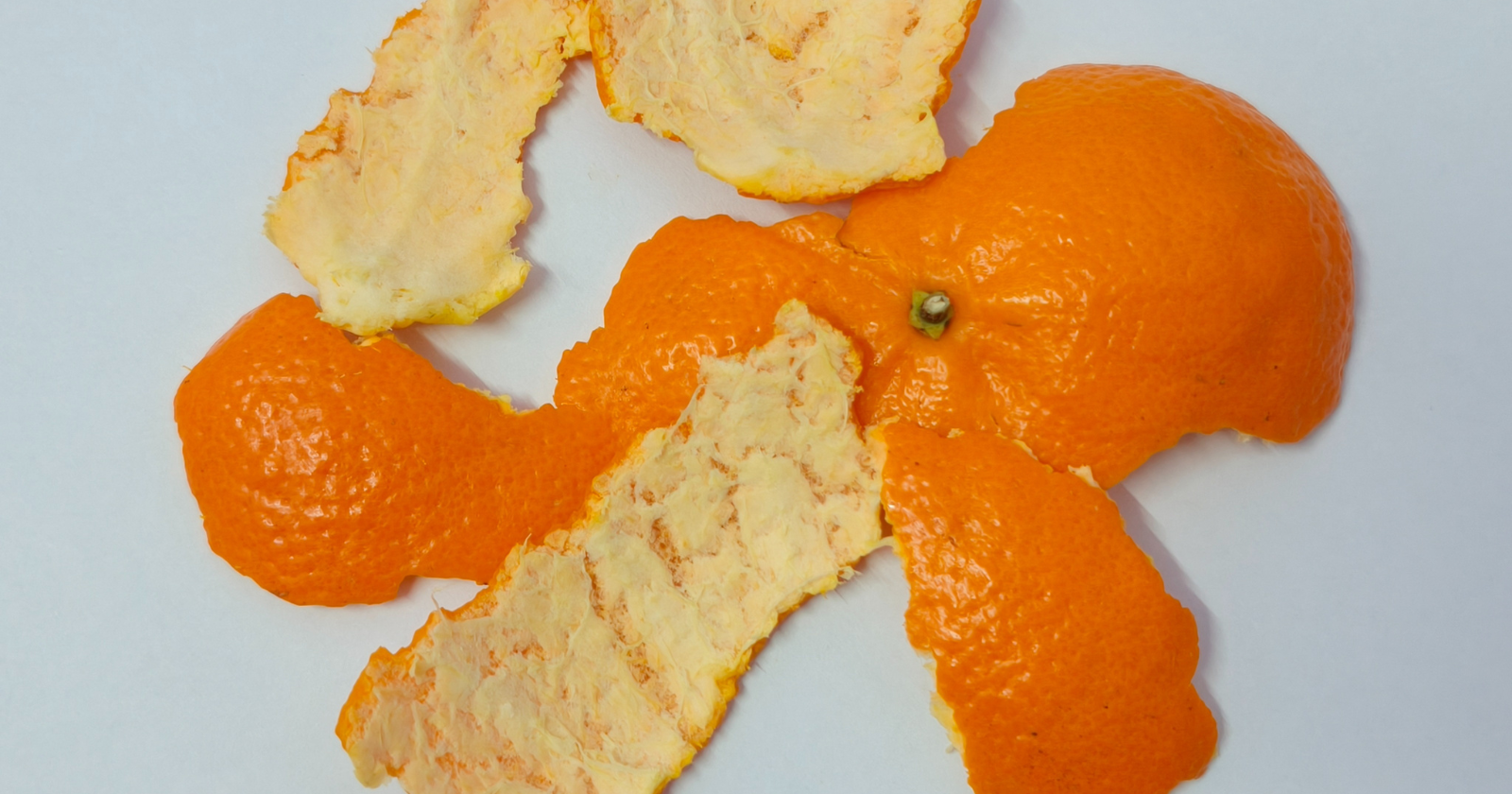
Somewhere in Singapore’s industrial west, a tank of shredded batteries is soaking in a solution that smells faintly of marmalade.
The liquid, derived from discarded orange, lemon and pineapple peel, strips cobalt, lithium, nickel and manganese out of dead lithium-ion cells so the metals can be sold back to battery makers. It recovers roughly 90 per cent of them. Two waste streams, food and electronics, quietly cancelling each other out.
Fruit peel is an unlikely industrial reagent. That is rather the point.
What the peel is doing in there
Battery recycling begins violently. Spent cells are shredded into a grey powder called black mass, and plastics, copper and aluminium are pulled out of the mix. What survives is dissolved in acid so the valuable metals come out one at a time.
Acid on its own struggles. Cobalt and nickel sit in the cathode in oxidation states that resist dissolving, so recyclers add a reducing agent to loosen them. The industry standard is hydrogen peroxide, which works, behaves badly in bulk and creates pollutants that then need their own cleanup.
Orange peel, as it turns out, is a reducing agent that grows on trees. Cellulose, sugars and antioxidants in the skin donate electrons about as obligingly as peroxide does, without the explosion risk or the hazardous run-off. In a 2020 paper published in Environmental Science & Technology, a team led by Zhuoran Wu, working with Dalton Tay and Madhavi Srinivasan of Nanyang Technological University, milled orange peel into powder and mixed it with citric acid. The mixture leached out 80 to 99 per cent of the nickel, manganese, cobalt and lithium locked in the battery waste. The team then pulled cobalt back out of the solution, built coin cells with it, and found the regenerated batteries charged and discharged in much the same range as commercial ones.
That is one paper, from one lab, on one battery chemistry, and it deserves to be read that way.
From a beaker to two thousand litres
Dalton Tay has called the approach “an immediate and scalable solution” for tackling food waste and electronic waste at once, the sort of line a researcher reaches for once a result has left the lab bench. His has. NTU partnered with Se-cure Waste Management, a Singapore battery recycler, to build a pilot plant at Neythal Road off Pioneer Road North. It has been running since the final quarter of 2022, takes up to 2,000 litres of shredded battery mixed with peel-derived solvent per batch, and was built modular so other metals can be targeted later.
Scale matters more than novelty here. Se-cure handles about 18 tonnes of spent batteries a day, as reported by The Straits Times, the gap between a tidy chemistry result and an actual business. Argus Media noted that the peel route performs comparably to the peroxide route while skipping most of the secondary pollution, and that is the entire commercial pitch compressed into a sentence.
The stated plan in 2023 was commercialisation by 2024.
Why almost nothing gets recycled anyway
Most dead phone batteries end their days in a kitchen drawer, somewhere behind the takeaway menus and an old remote. Fewer than five per cent of spent lithium-ion batteries are recycled globally, per figures cited by NTU and Se-cure, with the world’s pile of spent cells projected to reach 11 million tonnes by 2030.
That gap is mostly logistics rather than chemistry. Batteries are heavy, flammable and legally hazardous, so collecting them costs real money long before anyone gets to dissolve anything.
Supply is lumpier than it looks, too. The International Energy Agency’s Recycling of Critical Minerals analysis expects manufacturing scrap, not old EVs, to supply roughly two-thirds of what recyclers process in 2030. Worn-out electric vehicle and storage batteries are not expected to overtake it as the main feedstock until sometime after 2035. Plants being built today are largely chewing through factory offcuts while waiting for the real wave to arrive.
Cobalt prices set the limit
So why isn’t every recycler already soaking black mass in citrus?
Because the sums are brutal. The IEA’s Global Critical Minerals Outlook found that recyclers relying on market pricing are exposed to swings in metal prices and need strong balance sheets to survive the downturns, a polite way of saying that when cobalt gets cheap, recyclers go under. China alone accounts for two-thirds of the growth in global battery-recycling capacity since 2020, the same outlook found, setting the price any newcomer has to beat.
The prize is genuine. The agency’s modelling suggests an aggressive recycling scale-up could shrink new mining requirements by as much as 30 per cent by 2040, with more conservative scenarios closer to 5 per cent, still a lot of unopened pits either way.
There is one more wrinkle, further up the supply chain. A plant that runs on citrus peel still needs a steady, dried and milled supply of it. That means juice factories, trucks and warehouses lining up behind the recycler. Singapore’s pilot currently draws its fruit waste from a partner supplier. Multiply that by an entire industry and peel stops being rubbish anyone is glad to hand over.
Dead batteries are about to arrive in volumes nobody has handled before. Whether they end up dissolved in something that grew on a tree or something that came out of a chemical plant will be settled by accountants, not chemists.
