

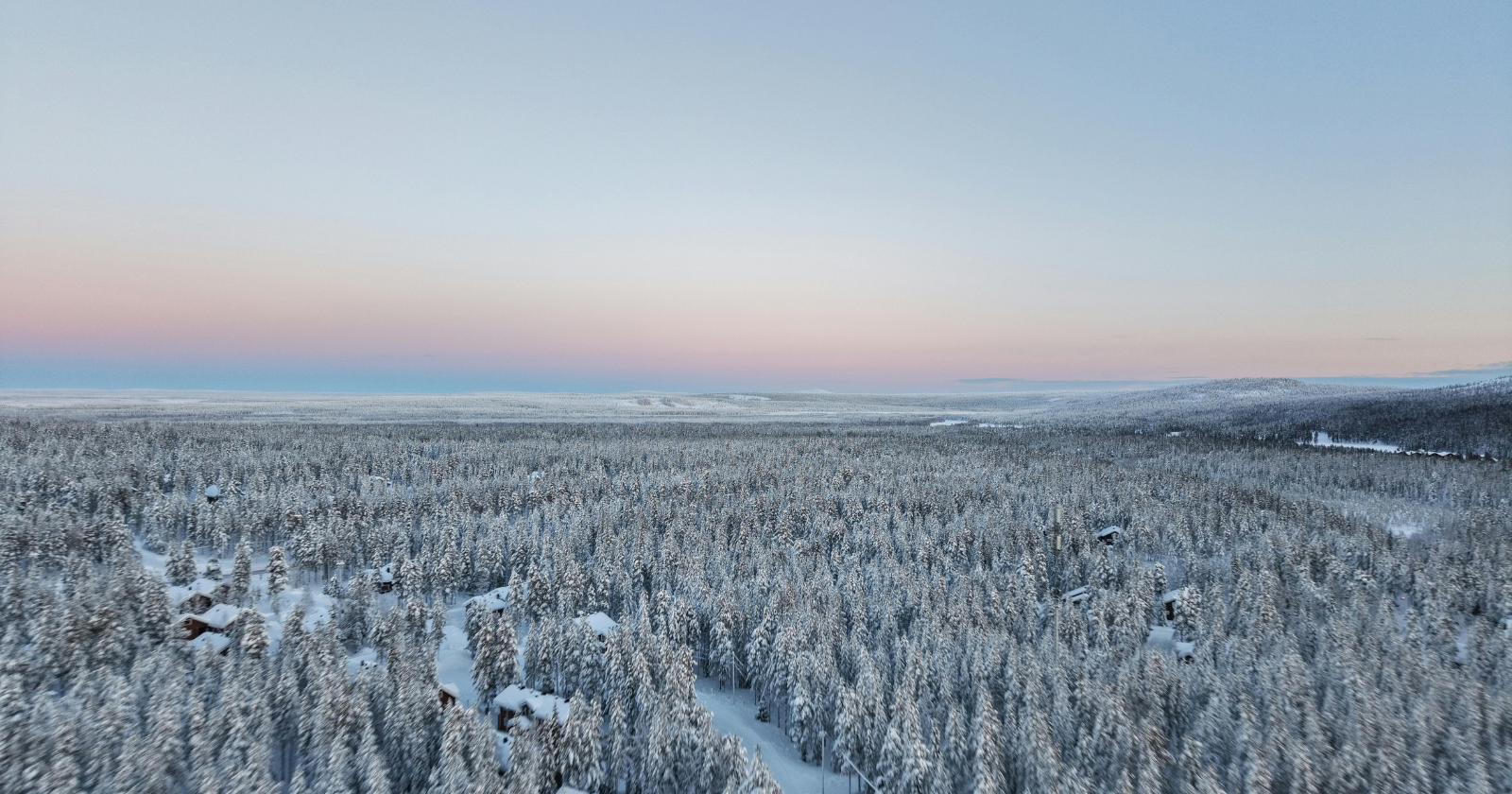
Stalin had expected to reach Helsinki in two weeks. He never reached it. The specific mechanism by which a country of approximately 3.7 million people successfully defended itself for 105 days against an invasion by a country of approximately 170 million people is, on the accumulated 86 years of subsequent military-historical analysis, one of the more substantial single case studies in modern warfare of the specific ways in which a substantial numerical and material disadvantage can be offset by terrain familiarity, climatic adaptation, and the specific tactical creativity of a defender fighting on its own ground. Finnish forces were outnumbered approximately three-to-one in personnel, approximately eighty-to-one in tanks, approximately ten-to-one in aircraft, and approximately five-to-one in artillery pieces at the outbreak of hostilities. The Finnish military possessed 32 tanks in total against the approximately 2,500 the Soviet forces had committed to the invasion. What Finland did possess, and what Soviet military planners had substantially failed to account for in their pre-invasion assessments, was one of the coldest winters in Finnish recorded meteorological history — with temperatures across the forested landscapes of Finnish Karelia falling to −43°C (−45°F) at multiple recorded moments during the December-February conflict period — and a national tradition of small-unit ski-borne infantry tactics that the Finnish Defence Forces had been systematically developing across the interwar period for exactly the geographic and climatic conditions the Soviet invasion had chosen to occur in.
According to Warfare History Network’s detailed reconstruction of the Winter War and the specific role of Finnish sniper Simo Häyhä within it, the Soviet forces that crossed into Finland on 30 November 1939 were substantially unprepared for the specific tactical environment they encountered. Approximately three of five Soviet marshals and 220 of 264 division-level Soviet commanders had been executed or imprisoned during Stalin’s Great Purge of 1937-1938, meaning that the Soviet officer corps at every level from divisional command downward was operating with substantial replacement officers who lacked the experience to adapt to the unexpectedly aggressive Finnish defensive tactics. Soviet troops were issued standard brown uniforms that stood out substantially against the white Finnish snow. Soviet units advanced in dense predictable columns along the limited road network, providing repeated targeting opportunities for the small mobile Finnish ski units that operated freely across the wooded terrain. Finnish troops used a tactic subsequently known as motti — encircling and immobilising Soviet armoured columns on narrow forest roads, then progressively eliminating them across days of small-unit engagements — that produced Soviet casualty rates the Soviet high command had not anticipated and could not initially credit.
What the farmer with the rifle did
The single most substantial individual military performance of the Winter War was produced by a 34-year-old subsistence farmer named Simo Häyhä, from the small Karelian village of Rautjärvi approximately 40 kilometres from the Soviet border, who at the outbreak of hostilities was called up from the Finnish Civil Guard reservist rolls to join the 6th Company of Infantry Regiment 34 at the Battle of Kollaa. As detailed in Military.com’s 2026 retrospective on Häyhä’s Winter War service, Häyhä stood approximately 5 feet 3 inches tall, had completed his 15-month mandatory military service in 1925-1926 as a member of a bicycle battalion, had received formal sniper training at the Finnish Army’s Utti training centre in 1927, and had spent the intervening 12 years hunting small game in the Karelian forests around his family farm and participating in local marksmanship competitions. His military equipment consisted of a Finnish-manufactured SAKO M/28-30 rifle (a variant of the Russian Mosin-Nagant, in 7.62x53R calibre) that he had been issued during his 1925-26 military service and had retained across the subsequent years of Civil Guard reservist duty. Most substantively, his rifle had no telescopic sight. Häyhä preferred iron sights on the specific grounds that a telescopic sight required the sniper to raise his head slightly above the rifle stock to align the scope (presenting a larger target silhouette to counter-snipers), that telescopic lenses reflected sunlight in ways that could betray a sniper’s position, that scopes tended to fog or freeze in the extreme cold of the Finnish winter, and that he had never trained with them and saw no substantive reason to change methods in the middle of a war.
Across the 100 days between 30 November 1939 and 6 March 1940 — when Häyhä was shot in the jaw by a Soviet counter-sniper’s explosive bullet and temporarily left for dead among Finnish battlefield casualties before being noticed alive by a passing soldier — Häyhä conducted his sniper operations from concealed positions in the snow-covered Karelian forests around the Kollaa River front. Per All That’s Interesting’s summary of Häyhä’s Winter War methodology and equipment, he wore white camouflage clothing, built compact snow-mounds to conceal his position and dampen the muzzle blast of his rifle, held snow in his mouth to prevent his exhaled breath from producing visible vapour that would betray his location, and carried approximately 60 rounds of ammunition and one day’s food supply on each mission. The contemporaneous Finnish military kill-count records varied substantially: his division commander reported 219 confirmed sniper-rifle kills, a military chaplain attached to Häyhä’s regiment kept a private diary documenting 259 confirmed by early March 1940, a subsequent Finnish Army document credited him with 505 confirmed sniper kills, and additional casualties from his Suomi KP/-31 submachine gun (used when close-range Soviet infantry assaults reached his positions faster than he could pick off attackers with the rifle) have been estimated at approximately 200 in subsequent Finnish military historiography. Häyhä’s own private war memoir — written in 1940 during his recovery from the jaw wound, hidden by his family for the subsequent 77 years, and discovered by Finnish historians in 2017 — recorded his personal estimate of “around 500” enemy killed across the 100-day campaign period, an estimate the Finnish military historian Risto Marjomaa (writing in the authoritative National Biography of Finland) has subsequently questioned as substantially inflated by wartime Finnish propaganda and unconfirmed body-count difficulties.
What the 105 days actually meant
The specific outcome of the Winter War was, in the strict territorial sense, a Finnish defeat. As reported in War History Online’s summary of the Winter War strategic outcome and Häyhä’s role within the broader Finnish resistance, the Moscow Peace Treaty of 13 March 1940 required Finland to cede approximately 11 percent of its territory to the Soviet Union — including the substantial majority of Finnish Karelia (Häyhä’s home region), the Hanko Peninsula, and parts of the Salla region — displacing approximately 400,000 Finnish civilians from their homes. What the 105 days had accomplished, however, was that Finland retained its national sovereignty, its constitutional government, its army, and its independent international standing — all of which the Soviet Union had entered the war explicitly intending to eliminate. The Soviet Union had, by contrast, lost between 130,000 and 180,000 soldiers killed in action, damaged its international reputation substantially (leading to its expulsion from the League of Nations in December 1939), demonstrated to Nazi Germany that the Soviet military was substantially less formidable than pre-war German intelligence estimates had suggested (a lesson that substantially informed Hitler’s Operation Barbarossa planning of June 1941), and gained a strip of Finnish territory that provided essentially no defensive value against the German invasion that would come 15 months later. Simo Häyhä recovered from his March 1940 jaw wound over several years of subsequent surgical reconstruction, returned to his family farm at Rautjärvi (which had, in the meantime, become Soviet territory under the Moscow Peace Treaty, forcing him to relocate), continued hunting moose into his 80s, gave essentially no substantive interviews about his Winter War service across the subsequent 60 years, and died on 1 April 2002 at the age of 96 — 62 years after the Soviet counter-sniper’s explosive bullet had failed to complete the task of killing the specific Finnish farmer that no other Soviet effort during the 105-day Winter War had been able to accomplish.