
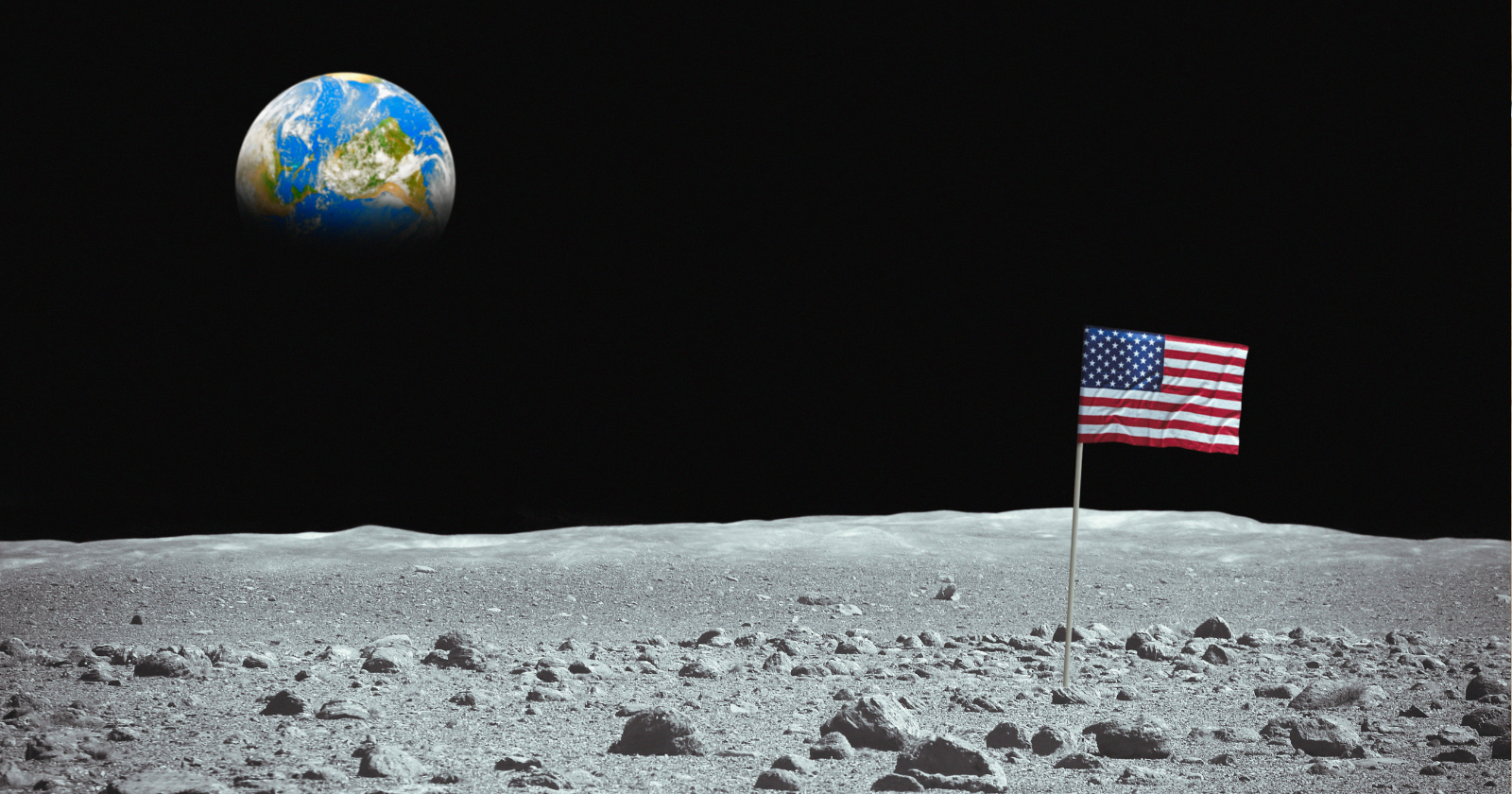
For $995 you could buy a decent second-hand lawnmower, a mid-range mattress, or, if a government spreadsheet has a bad day, a piece of Apollo 11 with moon dust still caught in its seams.
That last one happened. In February 2015, an online auction held on behalf of the US Marshals Service listed a white zippered pouch stamped “Lunar Sample Return”. Nancy Lee Carlson of Inverness, Illinois, bid $995 and won. She knew it had flown on something. What she did not know was that it had ridden along on the first crewed landing on the Moon.
How a moon bag ended up in a garage in Kansas
Blame starts with Max Ary, who ran the Kansas Cosmosphere and Space Center in Hutchinson from 1976 to 2002 and was convicted in November 2005 on twelve federal counts, including theft of government property, wire fraud and money laundering. Investigators searching his garage two years earlier had found a box, and the bag was inside it. As documented by The Hutchinson News, Ary was ordered to pay more than $132,000 in restitution for the space artefacts he had taken, a mix of property belonging to NASA and the museum itself. He always maintained he had simply muddled his own collection with theirs.
His forfeited property went to auction to cover the bill. That is where the mix-up happened. Per the Associated Press, government officials later said two lunar bags had been merged into a single entry when their inventory numbers were combined on spreadsheets. One was from Apollo 17. The other had been to the Sea of Tranquility, and nobody caught the difference before the gavel came down.
What the fabric was hiding
Carlson did the sensible thing and posted the pouch to NASA’s Johnson Space Center for authentication.
Terrible idea, as it turned out. Curators tested the cloth, found lunar material embedded in the fibres, and established that the pouch had served as the outer decontamination bag around the first rocks Neil Armstrong scooped up during the Apollo 11 moonwalk. Then NASA kept it, arguing the bag was government property that should be on public display, not sitting in someone’s living room, and asking the Justice Department to reverse the forfeiture.
Carlson sued. Twice, in two states.
The ruling nobody at NASA wanted
In December 2016, Judge J. Thomas Marten of the US District Court for Kansas ruled that Carlson was “a good faith purchaser, in a sale conducted according to law,” as reported by Robert Pearlman at collectSPACE. Marten went out of his way to say NASA had done nothing wrong here, and that the bag only mattered at all because of what NASA’s own people had pulled off in 1969. He also said he had no power to unwind a sale that had already gone through. Space.com later reported that NASA handed the bag back in February 2017.
Sold at Sotheby’s, well short of the estimate
Sotheby’s offered the pouch on 20 July 2017, 48 years to the day after Armstrong used it. NPR put the hammer price at $1.5 million, or $1,812,500 once Sotheby’s premium was added, which sounds enormous until you notice the house had estimated $2 million to $4 million. The buyer stayed anonymous.
Plenty of people thought the sale should never have happened at all. Michelle Hanlon of For All Moonkind, a group campaigning to protect the Apollo landing sites, said in a statement carried by Smithsonian magazine that the bag belonged in a museum where the world could share in the achievement it represents. Carlson told CBS News she decided to sell because she no longer felt it was safe in her home.
The dust went on to have its own career
NASA’s testing had lifted particles off the bag onto carbon tape mounted on aluminium stubs, and the agency held on to them after returning the pouch. collectSPACE reported that Carlson sued again in January 2019, claiming the testing had damaged the bag, dragged down its market value and caused her real distress, and demanding the return of the lunar material itself. That dispute settled out of court, and the samples went to her.
Which is how, in April 2022, five aluminium stubs, each topped with a 10-millimetre disc of carbon tape, came up in a New York saleroom. Bonhams sold them for $504,375, well under a pre-sale estimate of $800,000 to $1.2 million. Bidding opened at $220,000, seven bids came in, and the hammer fell at $400,000. Independent testing found four of the five stubs carried particles matching Armstrong’s first sample.
NASA still holds almost all of the 382 kilograms of rock, dust and core material brought home by the six Apollo landings. Its position on the rest hasn’t shifted in half a century: this material belongs to the public, not to private collectors. That stance holds up fine, right until two rows get merged on a spreadsheet.
Somewhere out there is a collector nobody can name, holding a cloth bag worth more than most houses, backed by a government receipt for $995 confirming the sale was done by the book.
