
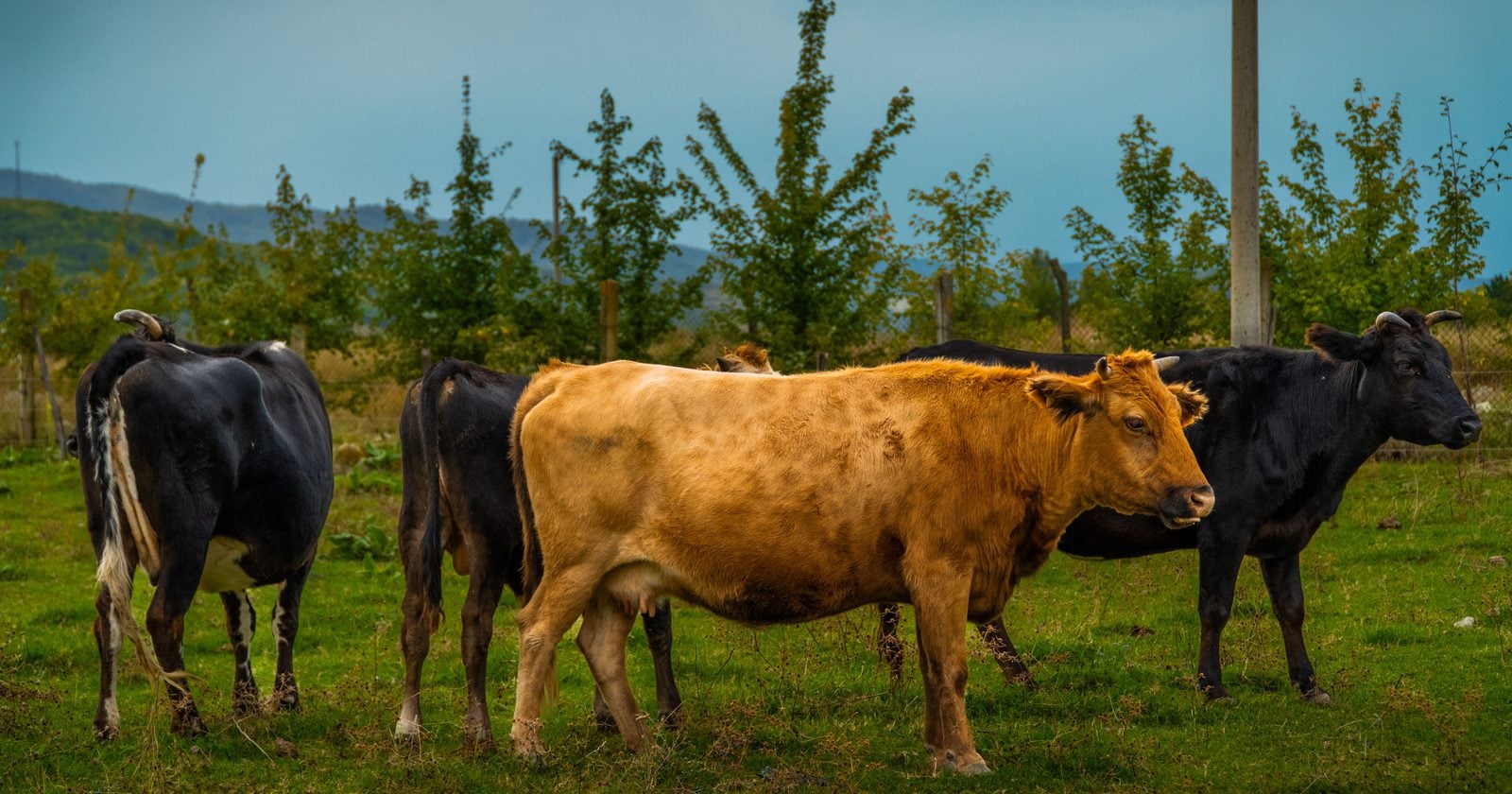
The farmer is Jeff Melin. His family started a cattle operation after they arrived in Griffin in 1951. Three generations later, the county wants a slice of that land for a new airport built mostly for private and corporate planes.
What three generations kept whole
The striking thing in Melin’s account isn’t the farming so much as the refusing. His grandfather, his father, and Jeff himself held the property together through decades when selling would have been the easy money. Melin has said his family turned down offers to sell the farm for housing, again and again, to keep it whole.
Those offers are worth pausing on. A developer would have carved the land into lots, and the farm would have vanished a piece at a time, by choice, for a price the family agreed to. Melin’s father said no, over and over, for years, so the land stayed a working whole rather than a grid of houses. That’s the version of the property the family chose to protect.
There’s a bitter twist in how Melin sees what’s happening now. In his view, that care ultimately made the land more attractive for seizure because it stayed open and undeveloped. It’s not a rule of law, but you can see where it comes from. The land works as an airport site precisely because it’s large, intact, and undeveloped, which is exactly what the family spent three generations preserving.
What a strip from the middle takes
The county’s plan is a 730-acre facility with a 6,000-foot runway and 124 hangars, built for corporate and private jets, not commercial passenger flights. For scale, the existing county airport, about three miles away, has a 3,100-foot runway on 198 acres. The new facility is much bigger, on much more ground.
The shape of the take is where it turns cruel for Melin. This isn’t a corner being clipped. The county is taking the 225-acre middle section of the 450-acre farm, which leaves his land on either side of the airport cut off.
A farm isn’t a stack of interchangeable acres. It’s a system of access. Cattle move between pastures. Equipment travels from a shop to a field. Water, fencing, and roads all assume you can get from one part of the property to another. Cut a runway through the center and the acres left on the far side aren’t just fewer, they’re stranded.
The disruption is already physical. Melin describes a 90-day order to vacate one of his shops while he scrambles to move decades of equipment and shrink his cattle herd. Trees more than a century old have already been felled, and concrete poles for power lines are going up. Construction is expected to begin in 2026 and finish by 2031. A herd doesn’t shrink and rebuild on that timeline easily.
Two accounts of the same public good
The county and the state describe this as a benefit to everyone: jobs, activity, a facility a growing region can point to. The airport is pitched as a regional facility for corporate aviation and business hangars, not a favor to jet owners.
Melin hears it differently, and he’s blunt. He has stated said; “Force me to sell, take my land, and fly in the billionaires and big companies.” That framing is his own, and worth naming as such. But he’s drawing a real distinction that the law itself draws: between land taken because the public will use it, and land taken because someone else’s use of it will help the local economy.
He also separates this from past takings he accepted. Melin says his family stepped aside before, for what he calls genuine public good, when roads were widened, because they cared about people’s safety. This, he argues, is not that. That accusation is his, not ours, and Melin himself has said he can’t prove any wrongdoing by officials. It’s the anger of someone watching the ground go, not a finding.
Where Georgia draws the public-use line
What makes this more than a private grievance is where it lands in Georgia law. The state constitution has long held, in the 1976 wording quoted in the Georgia Law Review, that “Private property shall not be taken, or damaged, for public purposes, without just and adequate compensation being first paid.” That article argues Georgia only allows takings for genuinely public use, though that reading is one author’s view rather than settled law.
The sharper point is what Georgia did after the U.S. Supreme Court’s 2005 Kelo decision, which let a city take homes for private economic development. Georgia pushed back hard. Its 2006 reforms, as the Institute for Justice’s summary of Georgia law puts it, established that economic development on its own is not a public use that justifies eminent domain. A constitutional amendment approved by nearly 85 percent of voters added a rule that elected officials must vote before property is taken for redevelopment. The Georgia Law Review’s reading of the same reforms notes the state amended its constitution to bar governments from backing redevelopment plans “except for public use, as defined by general law.”
An airport built and run as public infrastructure is a different legal thing from a shopping center handed to a developer, and courts have generally treated public airports as a public use. So this isn’t a simple Kelo case. But the corporate-jet purpose and the economic-benefit reasoning sit close to the line Georgia voters tried to draw, and that’s the ground any challenge would be fought on.
What’s left when the middle is gone
The two visions don’t reconcile. One values the land for staying intact and productive across generations. The other values it for what a runway across it could do for the county’s balance sheet. Both can be sincere. Only one of them can happen on this ground.
Melin learned his farm was even a candidate back in 2012, from a newspaper article showing it as one of four or five possible sites. Fourteen years is a long time to farm land you’ve been told the county might one day want. Now the timeline has caught up, the trees are down, and the herd is being cut to fit what’s left.
