
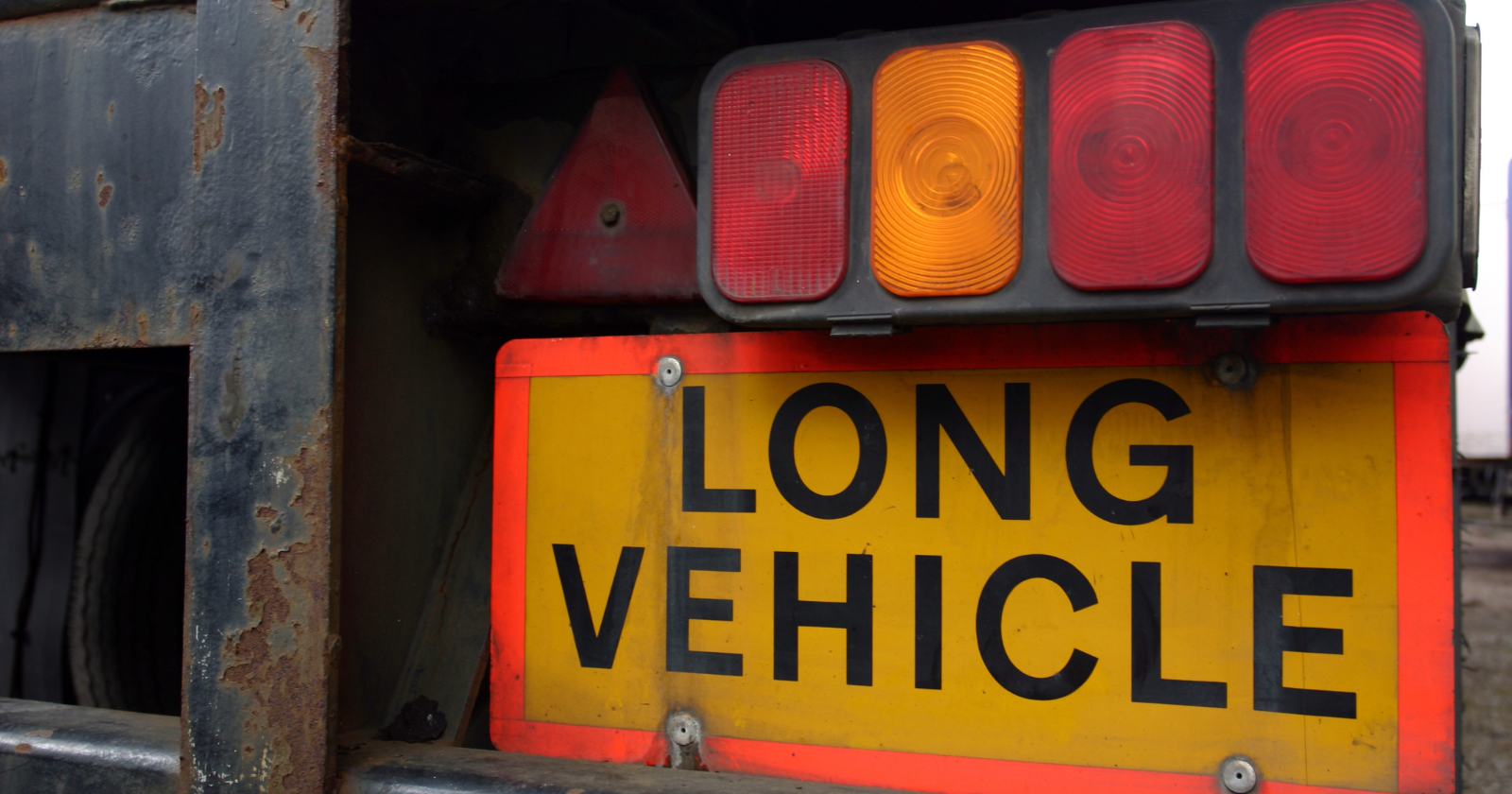
A truck wedged under a bridge, its roof peeled back like a sardine can, is such a familiar sight that the Australian city of Melbourne turned one bridge into a folk legend. The Montague Street rail bridge has claimed so many trucks that someone built a website tracking how many days since it was last hit. Bridge strikes are not exotic. They are one of the most repetitive failures in road transport.
Which brings us to a stretch of Central New York in the spring of 2026, and a load that never should have been on the road at the height it was.
What happened over 60 miles of the Thruway
On March 18, 2026, a tractor-trailer hauling an over-height excavator on a flatbed struck multiple overpasses as it traveled west on the Thruway.
The scope is what makes it notable: more than a dozen overpasses hit across roughly 60 miles between Exits 30 and 36.
The driver, 38-year-old Oleksander Tarakanovskyi of North Carolina, was apparently unaware that his load had struck the bridges. After the Thruway Authority alerted State Police, troopers found the truck and stopped it at the Mattydale tandem lot in the town of Salina.
Tarakanovskyi was charged with reckless endangerment in the second degree and issued more than 20 traffic tickets, including violations of federal commercial motor vehicle safety regulations. He was released with an appearance ticket returnable to Salina Town Court on April 8.
The reaction from officials was blunt. Frank G. Hoare, executive director of the Thruway Authority, said, “How a tractor trailer driver could be unaware that his load hit more than a dozen bridges is beyond comprehension.” State Police Major Brian T. Ferrone added, “Reckless, egregious behavior will not be tolerated.”
Why bridge strikes keep happening
The public record does not explain how Tarakanovskyi failed to notice the impacts. But the larger bridge-strike problem often starts before a truck reaches the bridge: with the vehicle’s height and route.
A Network Rail survey in the UK, part of its “Wise Up, Size Up” campaign, found that 43 per cent of lorry drivers admitted they did not measure their vehicle before setting off, while 52 per cent said they did not take low bridges into account. That’s UK data, not a direct explanation for this New York incident, but it shows why height checks and route planning are central to bridge-strike prevention.
Where the safeguards are supposed to catch it
In the US, there is no single federal vehicle-height limit; state limits for standard commercial vehicles commonly run from 13 feet 6 inches to 14 feet. On the New York State Thruway, loads 13 feet 7 inches or higher require a special hauling permit.
Permits, approved routes, escorts and height poles are all meant to move the moment of discovery to before the trip, rather than after a bridge is hit.
Take the King Street Bridge over the Hutchinson River Parkway in Westchester County. It was
The wider problem has been documented for years. A 2013 City College of New York study found that bridges in the state were experiencing roughly 200 strikes annually at the time, with many concentrated on a much smaller group of repeatedly hit bridges.
A solvable problem that stays unsolved
At a 2018 meeting about bridge strikes on the Hutchinson River Parkway, Westchester County Executive George Latimer captured the exasperation. “This is a solvable problem,” he said, adding, “If government can’t solve a problem like this, then government can’t do anything.”
The engineering measures are familiar: know the vehicle’s height, plan a legal route, use permits and escorts where required, and install detection systems where repeated strikes justify them. The hard part is making those checks work consistently across a large road network.
The 2026 Thruway incident stands out because one over-height load allegedly produced a 60-mile trail of damage before police stopped it. But the underlying failure was not new. Bridge strikes are repetitive precisely because the safeguards depend on measurements, route choices and warnings being acted on before the truck reaches the bridge.
