
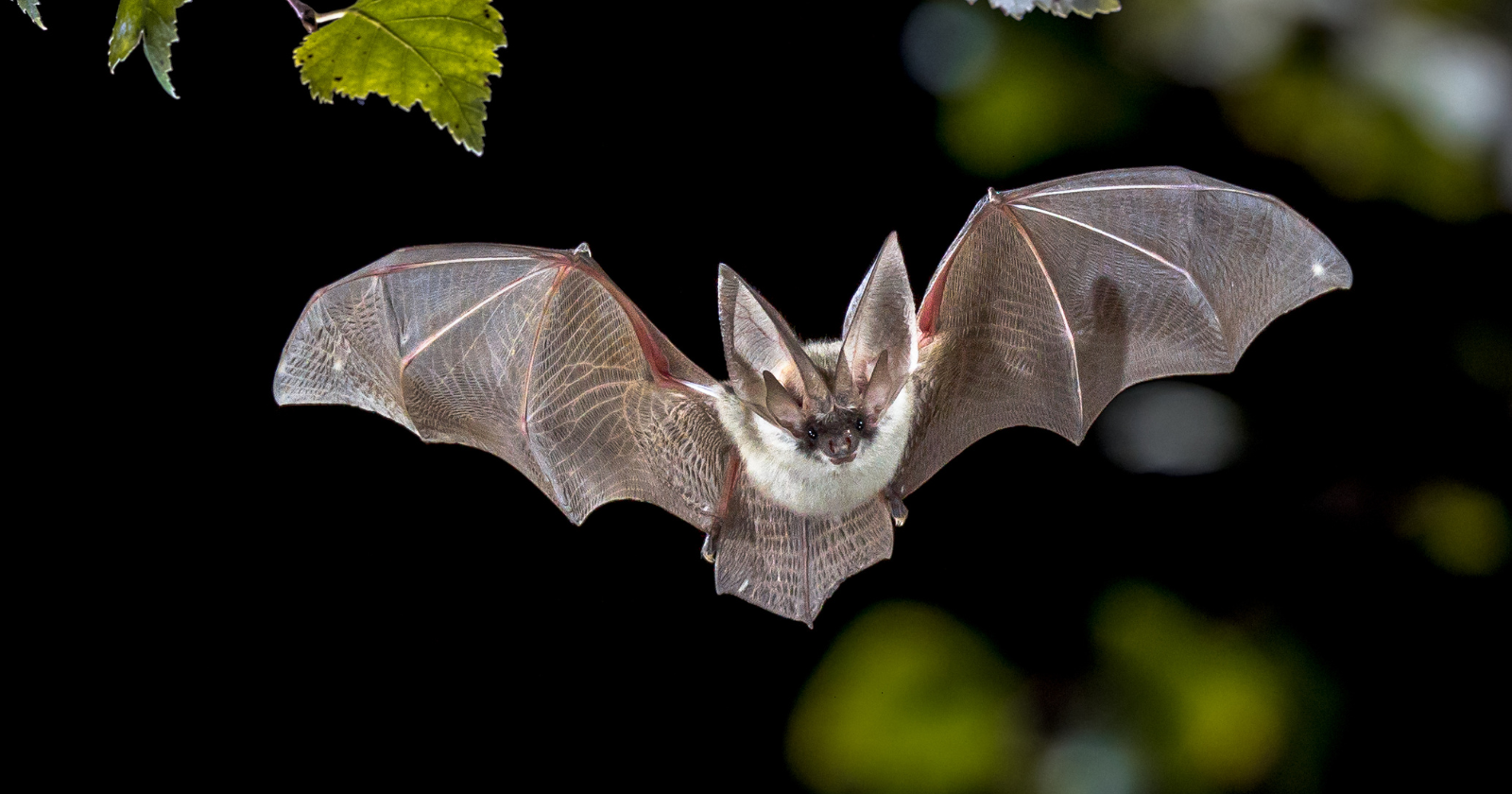
In September 2024, the journal Science published one of the more striking pieces of quasi-experimental economics to appear in a peer-reviewed venue that year. Eyal Frank, an assistant professor at the University of Chicago Harris School of Public Policy, used the county-by-county spread of an invasive fungal disease across the North American bat population as a natural experiment to quantify the economic and public health consequences of losing an ecosystem service. The results, tested across multiple methodological approaches and defended over a year of what the author himself described as “kicking the tires” against every plausible alternative explanation, were substantial enough to draw commentary from outside scientists calling them the most convincing evidence to date that the loss of a wild species can produce measurable population-level effects on human health.
The natural experiment
The fungal disease in question is white-nose syndrome, caused by the pathogen Pseudogymnoascus destructans, an invasive species believed to have arrived in North America via contaminated European caving equipment sometime around 2005. It was first documented in a cave near Albany, New York, in February 2006. The fungus colonises hibernating bats during the winter months, disrupts their metabolic cycles, causes them to burn through fat reserves before spring, and typically results in death rates of around 73 per cent in affected colonies. Local populations have gone effectively extinct within five to six years of first detection at multiple sites. According to the University of Chicago Harris School of Public Policy’s own press release on Frank’s Science paper, the disease has spread across at least 40 US states in the two decades since first detection, with the timing of its arrival in any particular county effectively random from an epidemiological standpoint.
That randomness is what made the outbreak useful to Frank as an economist. Because the fungus did not arrive in counties selected on the basis of any variable that would correlate with either agricultural practice or infant health, its county-by-county spread constituted an unusually clean natural experiment. Counties that received the fungus at time T could be compared, on any outcome variable of interest, against otherwise-similar counties that had not yet received it. The comparison isolates the effect of the bat die-off itself from the confounding influences that normally frustrate observational studies in ecological economics.
Watch here: The parasite that infects between 30-50% of the population comes from one of our most beloved household pets…
The insecticide response
Bats are efficient consumers of agricultural pest insects. A single bat can consume up to 40 per cent of its own body weight in insects during a single night of foraging, and a healthy colony above a working farm can suppress moth, beetle, and true bug populations sufficiently to reduce the need for chemical intervention on the surrounding crops. When the colonies collapsed, farmers in the affected counties responded exactly as economic theory would predict. They substituted chemical pest control for the biological pest control they had lost. Frank’s analysis found that insecticide application in white-nose-syndrome-affected counties increased by 31.1 per cent relative to the comparable unaffected control counties, or approximately 2.7 kilograms per square kilometre of additional pesticide load applied to the agricultural landscape.
Even so, the substitution was incomplete. Chemical insecticides did not reproduce the pest suppression the bats had been providing. Crop revenue in the affected counties declined by roughly 28.9 per cent, or $7.96 per square kilometre, indicating that farmers were paying more for pest control while achieving worse pest outcomes than they had under the previous ecological configuration. Total agricultural revenue losses across the affected counties between 2006 and 2017 came to approximately $26.9 billion.
The human health signal
The pesticide substitution had a second-order effect that Frank was in a position to test empirically. Multiple prior epidemiological studies have documented associations between environmental pesticide exposure and adverse infant health outcomes, including elevated rates of low birth weight, congenital anomalies, and perinatal mortality. Infant mortality (defined as death before the first birthday) is a standard population-level indicator used in environmental health research because it is well-measured, geographically resolvable, and responsive to short-term changes in ambient environmental conditions. Frank compared county-level infant mortality data against the same white-nose-syndrome exposure timeline he had used for the pesticide analysis.
The result was a 7.9 per cent increase in the internal infant mortality rate (that is, deaths excluding accidents and homicides) in the affected counties, or approximately 0.54 additional infant deaths per 1,000 live births. Applied across the 245 counties affected by white-nose syndrome between 2006 and 2017, the estimated total additional infant deaths attributable to the bat die-offs and the resulting pesticide response came to 1,334. Frank calculated the corresponding monetised damages, applying standard US Environmental Protection Agency valuations, at approximately $12.4 billion. Combined with the agricultural revenue losses, the total societal cost estimate from the collapse of the bat populations in the affected counties came to approximately $39.6 billion over the eleven-year study period.
The wider pattern
According to Smithsonian Magazine’s September 2024 coverage of the study by science journalist Rudy Molinek, external scientists have characterised the finding as unusually robust. Winifred Frick, chief scientist at Bat Conservation International, said her “jaw dropped” upon reading the results. Paul Ferraro, a sustainability scientist at Johns Hopkins University who was not involved in the research, called the study “the most convincing evidence to date” that the loss of a wild species can produce measurable economy-wide and health-wide impacts. Frank’s earlier work has documented a similar pattern in India, where the collapse of vulture populations after diclofenac contamination was estimated to have caused approximately 500,000 additional human deaths between 2000 and 2005 through the resulting increase in feral dog populations and associated rabies transmission.
The Science paper’s broader implication for environmental policy is that individual pesticide regulation, which assesses chemicals product by product against safety thresholds, may systematically understate the aggregate health cost of the compounds’ cumulative use. Frank noted in interviews subsequent to publication that the farmers in the affected counties were operating within existing legal pesticide use limits throughout the study period. The additional infant mortality did not result from any single farmer exceeding permitted application rates. It resulted from many farmers, all operating within the law, collectively increasing their pesticide use in response to the loss of a biological pest control service that regulatory frameworks had not previously assigned a monetary value to at all.
This piece draws on the September 2024 paper by Eyal Frank in Science (DOI: 10.1126/science.adg0344), the University of Chicago Harris School of Public Policy’s press release on that paper, and Smithsonian Magazine’s September 2024 coverage by science journalist Rudy Molinek.
Correction, 15 September 2026: An earlier headline said researchers counted 1,334 additional infant deaths. The paper estimated that total statistically; it did not identify and count individual deaths as caused by the bat decline.
