

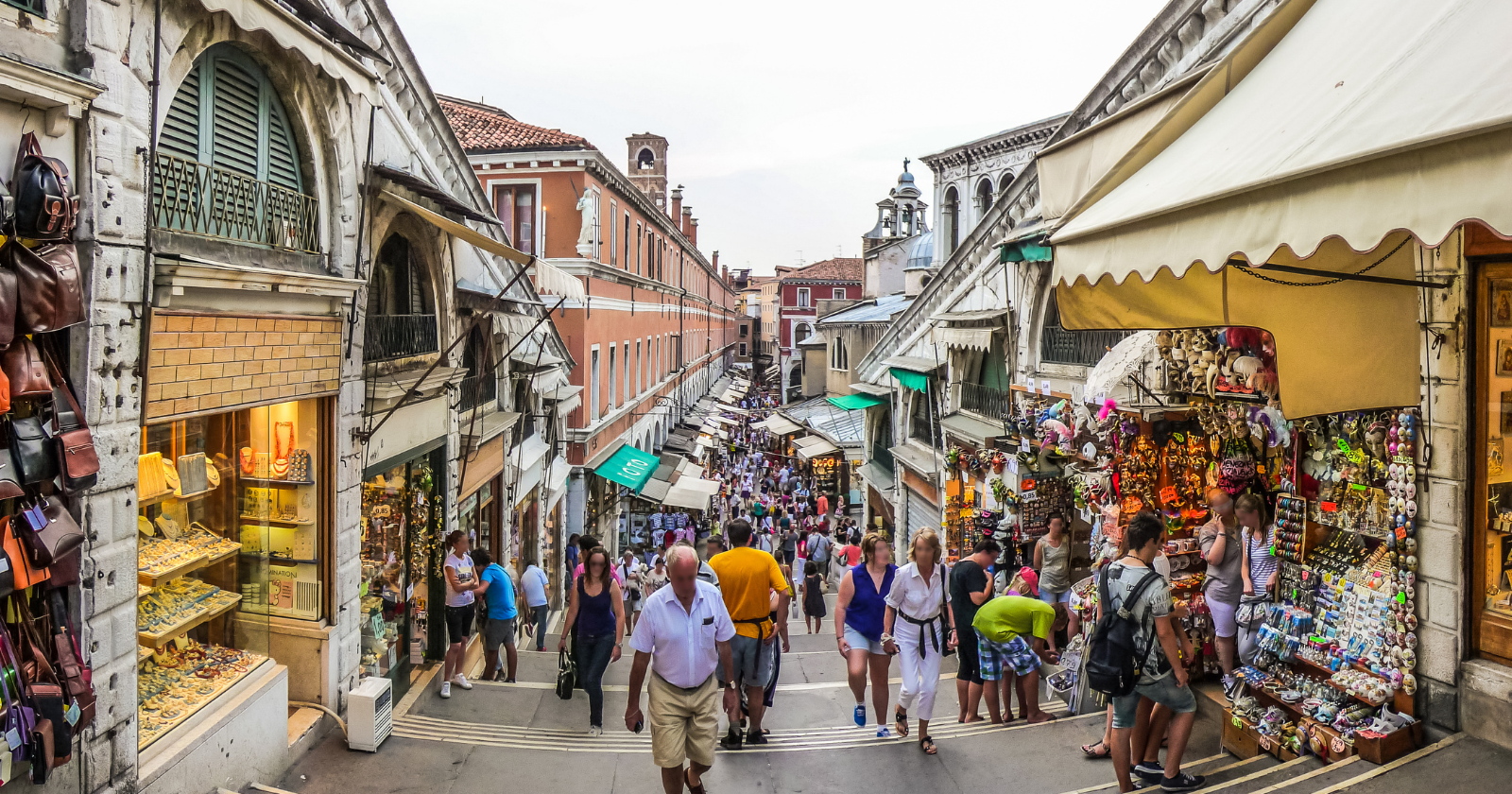
On the first Friday of May, 24,951 people paid to enter central Venice for the day. That is more than half the number of people who actually live there.
Venice’s historic centre now has just under 48,000 permanent residents, a figure that has been falling for decades and recently slipped under that line for the first time. On 54 separate days in 2025, day-trippers arriving on foot, by car, or by train were charged for the right to walk the same bridges and campi those residents cross to get to work, school, or the pharmacy. Almost three-quarters of a million tourists paid. The residents, obviously, did not.
That is the contrast the Comune di Venezia has spent two years trying to manage with a single policy tool: a day-tripper access fee, officially the contributo di accesso, that is now finishing its second year of operation. The city has fresh numbers on what it collected. Whether those numbers mean the policy is working depends on who at city hall you ask.
How the fee actually works
The contributo di accesso is not a general admission charge to Venice. It applies only on a set list of pre-announced peak days, mostly weekends and holiday periods clustered in spring and early summer, and only during daytime hours, roughly 8:30 a.m. to 4 p.m. In 2025 the city applied it on 54 of those days, up from 29 in the 2024 trial run.
Residents, commuters, students, property owners, and overnight guests who are already paying Venice’s separate tourist tax are exempt, along with children under 14 and people simply passing through to a train, a cruise terminal, or the outlying islands. Everyone else booking a same-day visit during a charged period has to register online for a QR code before arriving. Booking at least four days ahead costs 5 euros. Booking within three days, or showing up without having booked at all, costs 10 euros. The city says it fielded roughly 140 staff a day, stewards, inspectors, and local police, checking codes at entry points and issued around 2,500 violation notices over the season.
What the 2025 numbers show
Across those 54 days, 723,497 people paid the fee, according to figures published in August. That generated 5,421,425 euros, close to 5.4 million. The 2024 trial, run over 29 days, brought in about 2.4 million euros from 485,062 payments. So 2025 nearly doubled the number of charged days and more than doubled the total revenue.
The daily average tells a less dramatic story than the headline totals. Averaged across the days it was charged, the fee drew 13,046 paying visitors per day in 2025, down from 16,676 per day in 2024, a drop of roughly 22 percent. The busiest single day was Friday, May 2, ahead of Italy’s spring holiday weekend, when 24,951 people paid. The quietest was Friday, July 4, with 8,689. Those figures cover only the day-trippers captured by the fee, not the city’s total tourist traffic, which also includes overnight visitors, cruise passengers on shore excursions, and exempt categories the fee was never designed to touch.
The argument over whether it changed anything
City officials describe the second year as a success on its own terms. Michele Zuin, the councillor overseeing the city’s budget, said the system “has functioned in this second experimental year, demonstrating it can regulate daily tourist flows while maintaining accessibility and transparency.” Venice has pledged to put at least 1.5 million euros of the net proceeds toward cutting residents’ waste disposal taxes, alongside other spending aimed at local services.
Opposition councillor Monica Sambo takes a different view. She has argued that the fee, “presented as a tool to manage tourist flows on the busiest days,” has not produced any significant reduction in how many people actually show up. A 22 percent drop in the daily average, in a year when tourism to the wider Veneto region also cooled for reasons unrelated to the fee, is hard to credit entirely to the policy. Untangling how much of that dip came from the charge itself, rather than broader travel trends, is not something the city’s own figures can settle.
The population data cuts against the official framing more directly. Venice’s historic centre held 48,489 residents at the end of 2024, according to the city’s own statistics office. By September 2025, Venessia.com, an activist group that has tracked the count against municipal registry data for 25 years, put the figure at 47,995, below 48,000 for the first time on record. The fee was never pitched as a fix for depopulation, and city officials have been careful not to claim it as one. But residents watching neighbours leave for the mainland over rent and grocery prices see something else in the numbers: a policy that raises money from tourists while the population living among those tourists keeps shrinking looks, to them, like a toll booth on the way out.
What stays true either way
Venice will run the fee again. A version returned in 2026 on an expanded calendar covering 62 days from April through late July, and the city’s own messaging treats the mechanism as a fixture rather than an experiment nearing its end. The debate over its purpose, crowd management or revenue collection, has not been resolved by two years of data, and the numbers from 2025 support both readings depending on which one a reader started with.
On the day Venice took in its largest single haul from the fee, close to 25,000 paying visitors passed through checkpoints that the city’s own residents, now numbering fewer than 48,000, walk past for free, assuming they can still afford to live behind them.