
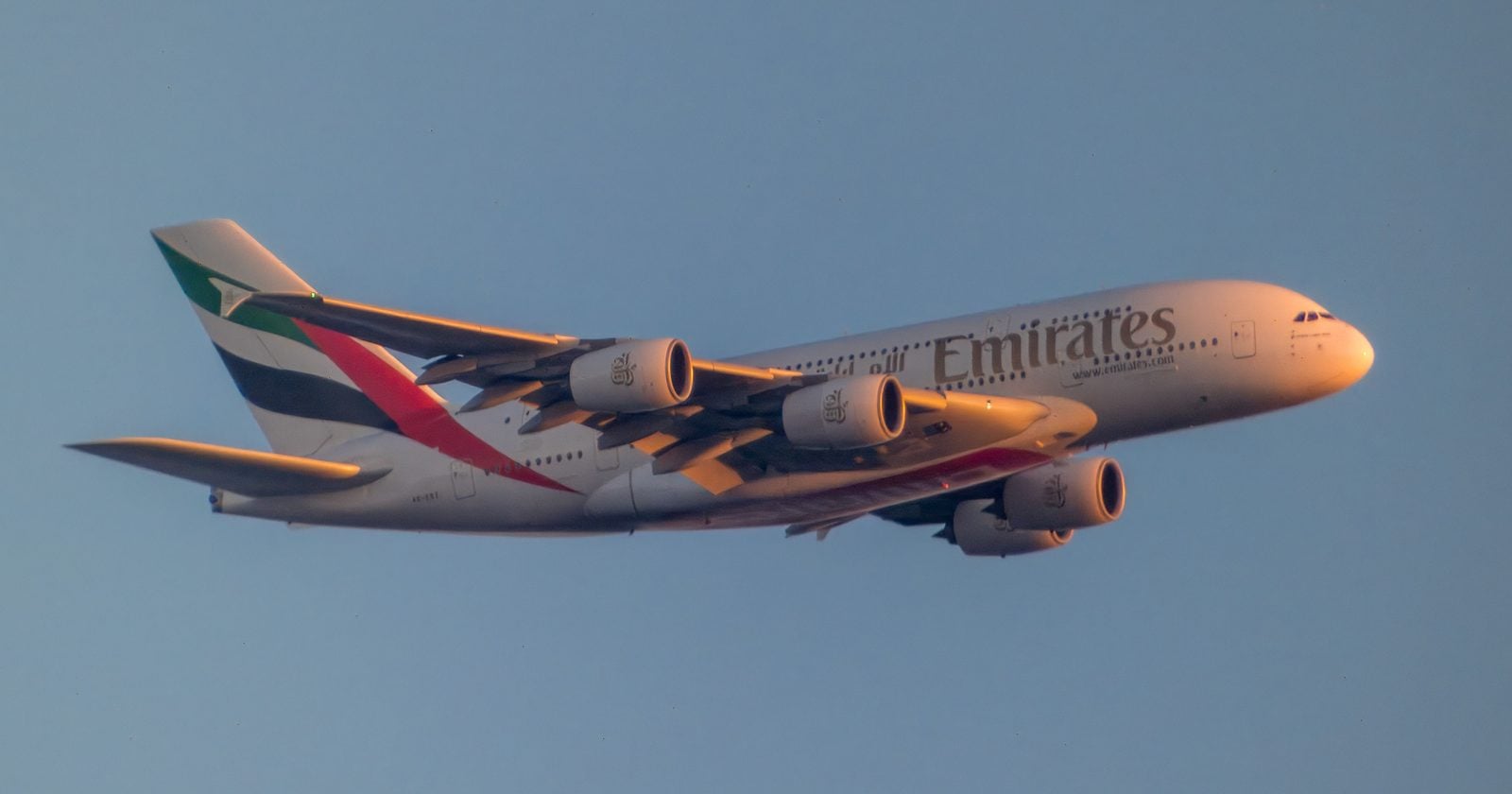
European regulators told airlines to urgently inspect 16 specific Airbus A380s after finding cracks in their wing spars.
A wing spar is not a bolt or a panel. It is one of the long beams that run the length of a wing and carry the main structural load. Aerospace engineering professor Brian Falzon has described spars as “beam-like structures running along the length of the wing that are the main load-carrying structure of the wing”. When a wing bends upward in flight, the spar carries most of that force. A crack there is not the same as a crack in a floor panel. It sits in the part that matters most.
That is why we spent time reading what regulators actually said, rather than just the headline.
We are not aircraft engineers, structural analysts, or aviation safety inspectors. What follows is our reading of the regulator’s own documents and the reporting around them, not a technical assessment. If you want an authoritative answer on any specific aircraft, the airline and the regulator are the people to ask.
What the regulator actually found and ordered
In June 2026 the European Union Aviation Safety Agency (EASA) issued an emergency airworthiness directive, numbered 2026-0119-E, covering the wing mid-spars on a defined set of Airbus A380s. According to aviation outlet AeroTime, the order named 16 aircraft, 15 flown by Emirates and one by Qantas.
The trigger was not a dramatic discovery in the air. EASA reviewed the results of an earlier inspection order, directive 2025-0280 from December 2025, which had required mid-spar checks on A380s coming back into service after long storage.
Reading through those results prompted the emergency step. In the directive’s own words, EASA said that “following the review of the results of those inspections, it has been determined that the cracks found on certain aeroplanes could reduce the structural integrity of the wing.”
Two phrases stand out: “certain aeroplanes” and “could reduce.” This is not a finding that every A380 wing is compromised. It is a finding that some specific ones showed cracking serious enough to warrant a closer look. The remedy, as the directive put it, was that “Airbus determined that an additional special detailed inspection has to be accomplished.”
Why the deadline was split
The most telling detail is how EASA sorted the 16 jets. Five aircraft, all Emirates jets (serial numbers MSN 190, 202, 203, 209 and 228), had to be inspected before their next flight. The other 11 were given a window of 25 more takeoff-and-landing sequences to complete the check.
That split is the interesting part. A blanket “ground everything now” order would suggest regulators could not tell one aircraft’s risk from another’s. A single relaxed deadline would suggest they saw no urgency at all. Instead they drew a line: this small group first, that larger group soon. Our read is that this is triage rather than panic. The regulator believed it had enough information to rank the aircraft by how far each had progressed toward a problem, and to act accordingly.
To move the five grounded jets without passengers, ferry flights were authorized to reposition them for maintenance. Operators were told to report results back to Airbus within seven days.
Qantas, with its single affected jet, said the aircraft was already in the shop. A Qantas spokesperson said: “We have one A380, which requires additional inspections. The aircraft was already in scheduled maintenance, and we will comply with any additional requirements as a result of this airworthiness directive.”
How worried should a passenger be?
Perhaps, the most useful thing to keep in mind is the gap between “could reduce structural integrity” as an engineering phrase and “about to fail” as an everyday reading.
Aircraft wings are built with a wide safety margin, designed and tested to carry loads well beyond anything a normal flight puts on them. The point at which a defect starts eating into that margin is likely a long way from the point at which anything actually breaks. A directive is the tool for catching a defect while it is still inside the margin, not after.
What does offer some perspective is scope. EASA did not ground the wider A380 fleet, which runs to roughly 120 to 130 aircraft still in service, and it said it had no indication of a broader safety risk. Emirates alone flies around 116 of the type, which is probably why 15 of the 16 flagged jets are theirs. It is simply the largest operator, not a sign the airline’s fleet is uniquely troubled.
Where this fits in the A380’s history
This is not the A380’s first run-in with wing inspections. The 2012 rib-feet episode led to a repair program that reportedly cost around $330 million across roughly 120 aircraft. Later inspection campaigns from 2019 onward looked at other spar areas.
The aircraft is large, its wings are unusually big, and its structure has been watched closely across its service life. For a fleet of this size and age, a running inspection program is closer to the normal state of affairs than a departure from it.
An emergency airworthiness directive sounds like an alarm, and in the narrow sense it is one: it forces action on a fixed clock. But the machinery around it, an earlier order that generated data, a review of that data, a ranked list of aircraft, a split deadline, ferry flights and a seven-day reporting rule, is the same unglamorous process that keeps aging aircraft flying safely. The split deadline in particular suggests the regulator felt it understood the risk well enough to grade it.
That looks more like a system doing its job than a crisis breaking out.
