
A splinter of bone barely two centimetres long sat in a Siberian collection for years, unlabelled among thousands of unidentified scraps, and it turned out to be a birth certificate.
It had been dug up in 2012 at Denisova Cave in Siberia’s Altai Mountains: a stubby scrap of long bone that could just as easily have belonged to a reindeer, a wolf or a woolly rhino as to a person. What rescued it was a technique with a deeply unglamorous name, collagen peptide mass fingerprinting, which reads the protein signature still surviving in old bone and sorts it by animal family. Samantha Brown, then at Oxford, pushed more than 2,000 fragments from the cave through the process and, writing in Scientific Reports, reported that exactly one of them came back human.
What the genome said
That fragment went to the Max Planck Institute for Evolutionary Anthropology in Leipzig, where it was catalogued as Denisova 11 and, less formally, as Denny. Bence Viola of the University of Toronto worked out from the thickness of the bone wall that she had been at least 13 years old when she died. Everything else came from DNA.
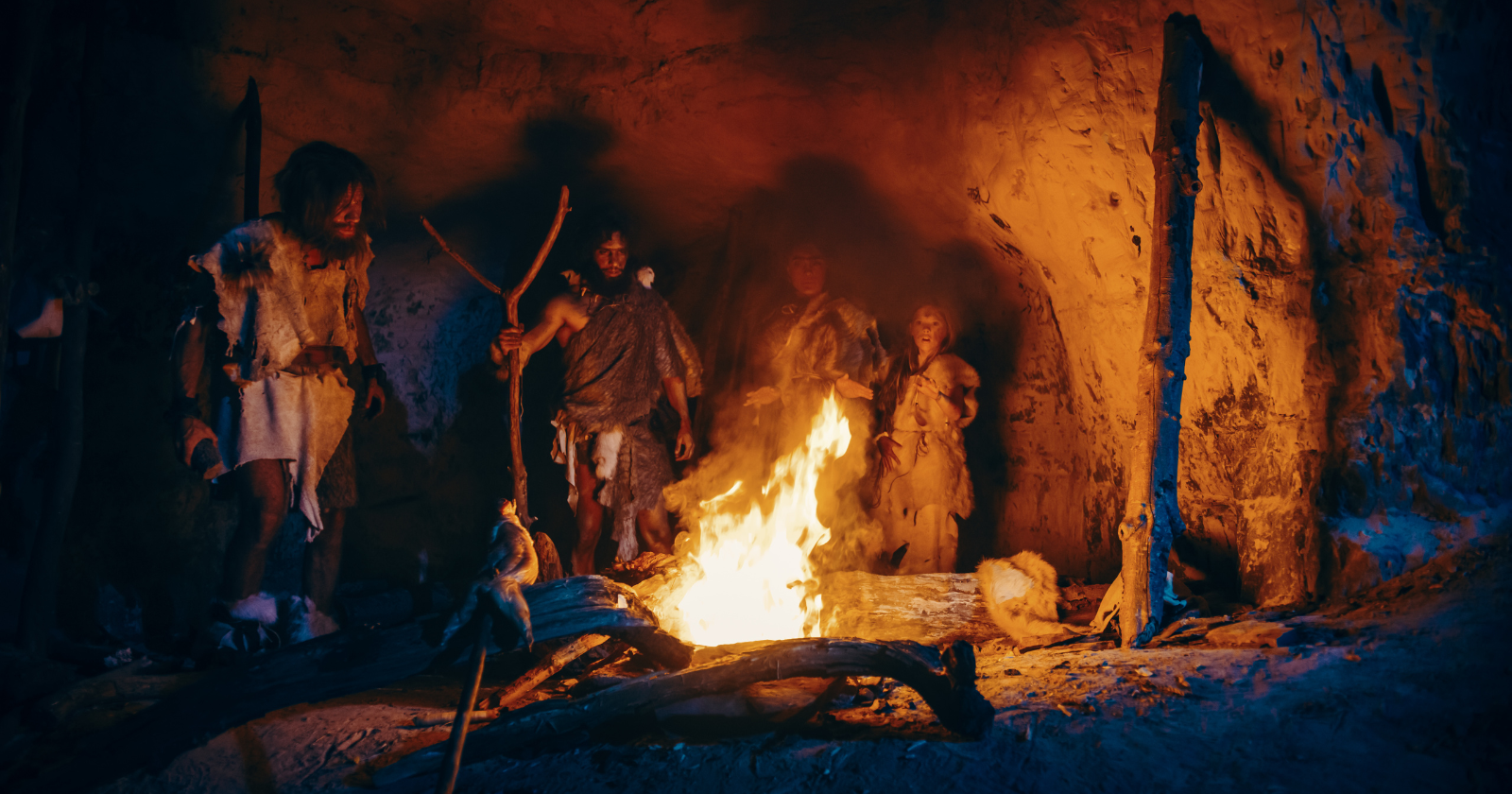
Viviane Slon, Svante Pääbo and their colleagues sequenced her genome and published the result in Nature in 2018. Roughly half of her genetic variants matched Neanderthals and half matched Denisovans, two groups that had gone their separate ways more than 390,000 years earlier. Two explanations fit that ratio. Her parents might have come from a population that had been mixing for generations, or she had one parent drawn from each group. The way those variants clustered across her chromosomes strongly pointed to the second, and her mitochondrial DNA, which is inherited down the maternal line, was Neanderthal.
Her mother was a Neanderthal and her father was a Denisovan.
Slon later said, in a statement put out by the Max Planck Institute, that she had never expected to be lucky enough to find an actual child of the two groups.
How old she actually was
Older than radiocarbon dating could confidently pin down: that was the first read on Denny’s age. The method puts a floor under her bone at more than 50,000 years, which is roughly the point where it throws up its hands. A Bayesian model of the cave’s layers, published in 2019 and led by Katerina Douka and Tom Higham, narrowed Denny and the cave’s Neanderthal fossils to between 80,000 and 140,000 years ago. Most summaries settle on about 90,000, fair shorthand for a wide range.
Dad had a family tree too
The father carried some Neanderthal ancestry of his own, tucked far back in his lineage: his genome showed traces from somewhere between 300 and 600 generations before he was born, meaning Denny’s parents were only the latest chapter in a longer history of mixing between the two groups.
Her mother was the stranger half. The Neanderthals she most closely resembled genetically were not the ones who had lived in that same cave some 20,000 years earlier, but ones who lived later in western Europe, evidence that Neanderthals moved between the two ends of Eurasia before they died out.
Where the Denisovans came from
So where did the Denisovans come from in the first place? Nobody knew they existed until 2010, when a team led by David Reich and Pääbo sequenced DNA from a finger bone in the same cave and found a population that was neither Neanderthal nor modern human. That paper reported something else that tends to get forgotten: Denisovans contributed 4 to 6 per cent of the genetic material carried by present-day Melanesians. For a decade and a half, the group stayed a genome without a face. That changed in June 2025, when Qiaomei Fu’s team in Beijing identified the Harbin cranium, a large, heavy-browed skull from northeast China, as Denisovan. Mitochondrial DNA recovered from dental calculus, the hardened plaque on one of its teeth, and separate protein evidence from the bone itself both pointed the same way, as reported by Science.
Old DNA survives only as fragments a few dozen letters long, tangled with soil bacteria and the DNA of everyone who has since touched the specimen, and reassembling a genome from that wreckage is heavy statistical work. Fewer than two dozen archaic human genomes have been sequenced to any useful depth, and one of them belongs to a first-generation hybrid. Pääbo put it more bluntly: the two groups met rarely, but when they did, they mated readily.
Denny is proof the overlap went further than geography. Neanderthals and Denisovans had children together, and more than once, if her father’s own ancestry is any guide.
