
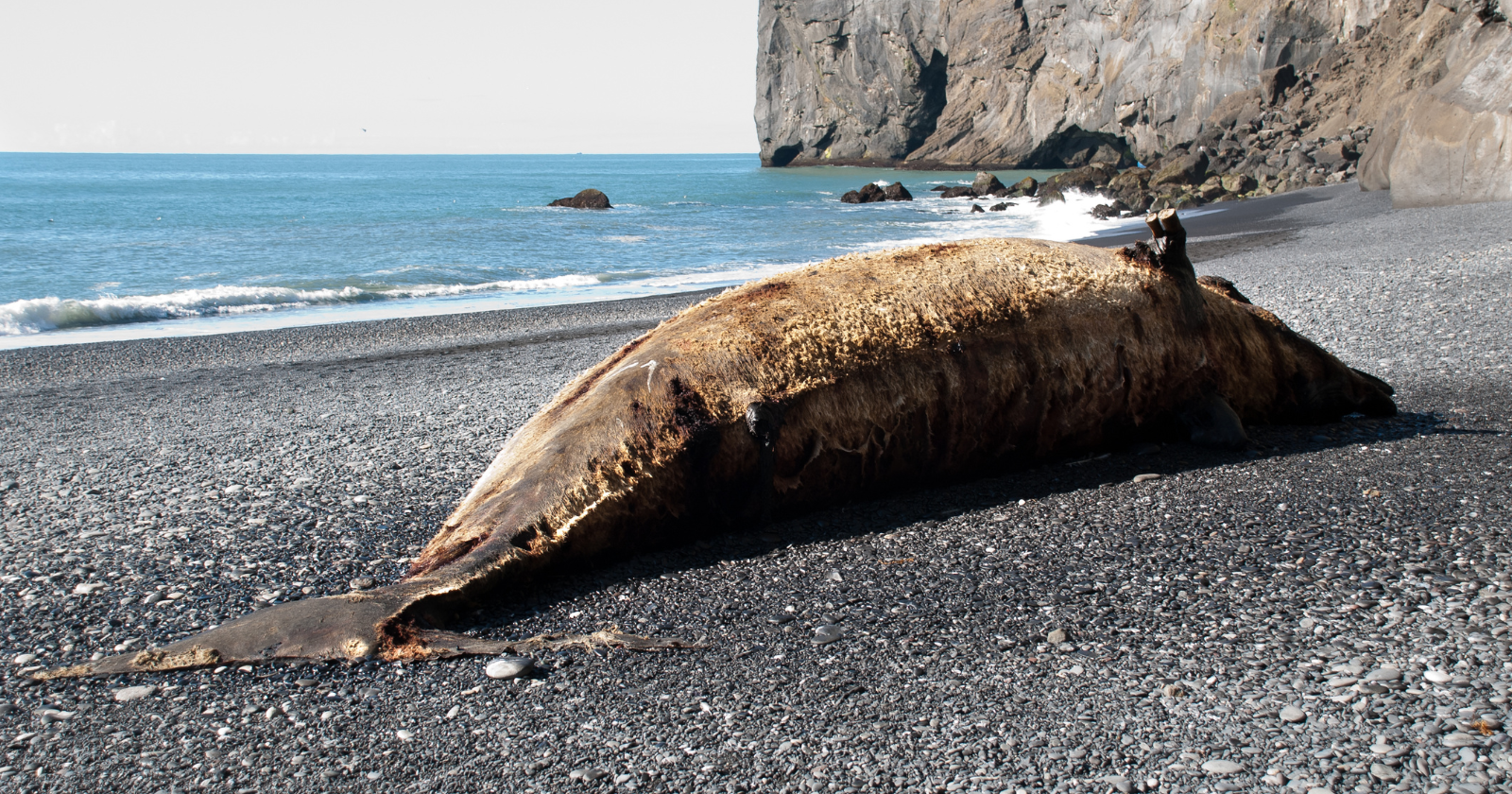
The problem, in fairness to everyone involved, was genuinely hard. In November 1970, a sperm whale 45 feet long and weighing about eight tons washed up dead on the beach near Florence, on the central Oregon coast, and began to rot at industrial scale. It was too big to bury where it lay — the surf would only uncover it — too big to drag away, and too fragrant to ignore; the town could smell it, and crowds kept arriving to poke it.
Jurisdiction fell, by a quirk of Oregon law, to the Highway Division, because Oregon’s beaches were legally public highway. And highway engineers, confronted with an eight-ton obstruction, reached for the tool highway engineers trusted most.
Dynamite.
The plan, such as it was
The officer on the spot was assistant district engineer George Thornton, and his logic was not insane, merely unprecedented. Burying the whale wouldn’t hold. Cutting it up — nobody volunteered. But blast the carcass toward the Pacific, the thinking went, and the whale would leave as small pieces, most sailing into the water, the rest reduced to scraps the seagulls and crabs would clean up like a road-killed rabbit. Thornton conceded to a local TV crew that they weren’t sure exactly how much explosive it would take; the whale, after all, was a first.
They settled on twenty cases — half a ton.
Among the spectators was a Springfield man named Walter Umenhofer, who had, of all things, military demolition training, and who warned the crew that the job wanted perhaps twenty sticks of dynamite, not twenty cases: enough to nudge, not vaporize. The advice was noted and declined. Umenhofer retreated to what he judged a safe distance, near his brand-new Oldsmobile 88 — purchased, local legend insists, during a Eugene dealership promotion advertising “a whale of a deal.”
Thar she blows
At 3:45 in the afternoon of November 12, 1970, with spectators and a KATU news camera watching from the dunes a quarter mile back, the charge fired.
The famous footage records what the plan had not: a column of sand and whale rising hundreds of feet, a moment of cheering — and then the cheering changing character as the sky was heard to whistle. The blast had not sent the whale to sea. It had distributed the whale, in chunks, across every compass point, and the pieces were coming down among the audience. Reporter Paul Linnman’s narration entered broadcasting history as blubber thudded around his crew: “The blast blasted blubber beyond all believable bounds.”
Nobody was injured, which remains the event’s genuine miracle. The largest documented casualty sat in the parking area a quarter mile from the blast: a coffee-table-sized slab of blubber descended onto the roof of a parked car and flattened it. The car was Walter Umenhofer’s new Oldsmobile — the one belonging to the single person on the beach who had correctly predicted the outcome. The whale of a deal had been recalled.
And the whale itself? Mostly still there. The explosion had removed the smaller half; the seagulls, far from feasting, had been frightened out of the county. Highway crews spent the rest of the day doing what they might have done that morning: burying the remains.
The afterlife of a bad afternoon
The story should have died with the local news cycle, and nearly did. It survived as regional legend until humorist Dave Barry saw the tape and wrote it up in 1990, after which the KATU footage became one of the internet’s first true viral videos, passed around on early websites and mailing lists, eventually clocking millions of views in every era of the web since. Thornton, promoted not long after the blast, maintained to the end that the operation had gone essentially as planned, give or take distribution. Oregon’s actual policy went the other way: beached whales are now buried or composted, and no one has dynamited one since.
Florence, after decades of official embarrassment, chose the only dignified remaining option: ownership. In June 2020 — the blast’s fiftieth-anniversary year — the city opened a new park overlooking the Siuslaw River and let the public vote on its name. The winner, by landslide, gives this story its closing line on the town’s own signage: Exploding Whale Memorial Park.
It is, in its way, a perfect civic monument — not to a triumph but to the fully documented moment a government agency solved a problem by making it rain whale. The engineering lesson has been taught in classrooms ever since: energy goes where it wants, not where the plan says. The municipal lesson took fifty years longer but landed just as well: if the internet will never let your town forget something, build a park with a plaque, and charge nothing for parking.
