

Black Arrow’s successful orbital flight arrived after its future had already been decided. On 28 October 1971, the British rocket launched Prospero from Woomera, Australia. Three months earlier, Parliament had been told that the programme would end once that mission was complete.
The next vehicle, R4, never launched. Its eventual place in the Science Museum gives the story a physical ending: one rocket carried a satellite into orbit, while its successor became an object through which later generations could examine the programme.
The final flight was explicitly allowed
The written parliamentary answer of 29 July 1971 is unusually clear. Responding to a question about the National Space Technology Programme, Frederick Corfield confirmed plans to launch the X3 satellite later that year. He then stated that Black Arrow would be terminated after the launch.
That matters because it distinguishes an authorised final mission from a launch carried out in defiance of cancellation. The decision and the permission appeared in the same answer. The engineers could complete the flight, but a successful result was not accompanied by a promise of further launches.
Corfield’s stated rationale concerned resources and capability. Maintaining a national launcher with comparatively limited capacity, he argued, consumed too much of the available programme while restricting its broader scope. The answer also said satellite technology research would continue, with X4 planned for a NASA Scout launch in 1974.
The launcher was ending; satellite work was continuing.
A British vehicle launched from Australia
ESA’s historical account confirms the date, the Woomera launch site and Prospero’s alternative designation, X3. Black Arrow’s development had begun in 1964 under the Royal Aircraft Establishment. Its achievement was the delivery of a satellite by a British-developed launcher, not a launch from British soil.
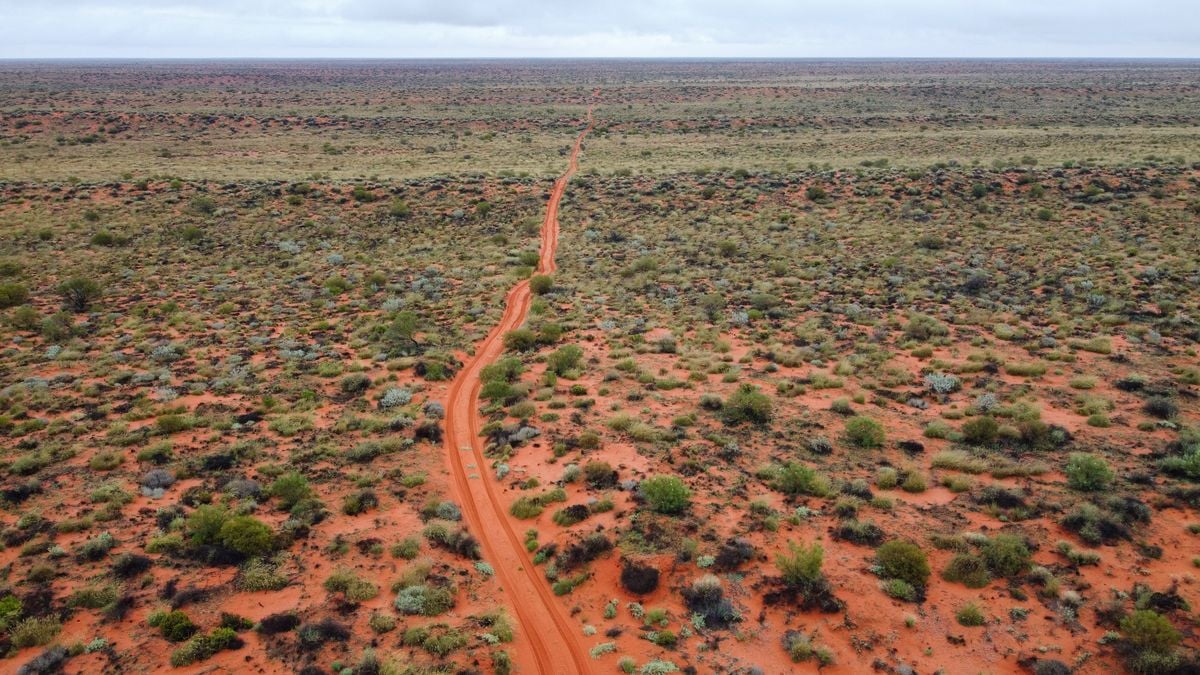
That distinction is easy to lose in a compressed account of national space achievements. The origin of a rocket, the origin of its payload and the territory from which it flies are separate facts. Here, the Australian desert was part of the infrastructure that made the British programme possible.
A UK Space Agency retrospective describes the wider effort behind the vehicle: rocket and engine development, assembly and test facilities in Britain, and launch and range facilities at Woomera. Black Arrow drew on earlier Royal Aircraft Establishment research and technologies using high-test peroxide and kerosene.
The agency describes a three-stage rocket about thirteen metres tall, with an eight-chamber engine in the first stage and a solid motor in the third. Those modest dimensions can obscure the range of systems required to produce an orbital flight. A launch vehicle is also a programme of testing, ground support, control and integration.
R4 records the launch that did not happen
The Science Museum Group’s collection record for Black Arrow R4 identifies it as the final vehicle built, with minor assembly and pipework incomplete. Its intended satellite, Miranda, eventually went into orbit on an American Scout rocket in 1974.
R4 is therefore more than a representation of the rocket that flew. It is surviving hardware from the next step that the programme did not take. Its parts preserve engineering decisions even though they never experienced a launch.
The museum records four Black Arrow launches, two successful, including the flight that orbited Prospero. That is a short development history, and it invites competing readings: a capability achieved just as support ended, or a limited programme whose costs had to be weighed against other space priorities.
The records establish the sequence without settling every argument about the decision. A successful flight demonstrates that a particular mission worked. It does not, on its own, calculate the costs, demand or reliability of an extended operational service. Equally, a decision to stop funding that service does not undo the technical achievement.
Becoming an exhibit required another decision
A Science Museum Group Journal study of R4 follows the vehicle’s transition into a museum object. It describes discussions soon after Prospero’s launch, when the departments responsible for Black Arrow were working towards winding up the programme by the end of March 1972.
Acquiring the rocket involved practical arrangements, not simply declaring it historic. The article records an estimated £5,000 to prepare it for transfer, to be met by the Department of Trade and Industry, with the museum responsible for transport from the Isle of Wight to its west London store.
The preservation of a cancelled project is itself work. Large objects need space, handling equipment and decisions about what to retain. Without those choices, the next rocket might have survived only in drawings and photographs.
R4 became evidence that people could stand beside.
Success and continuation were different questions
Black Arrow’s ending is often compelling because the chronology seems reversed: the programme was told to stop, then achieved its orbital goal. But the parliamentary statement shows that both outcomes had already been accommodated. The final flight could proceed while the longer-term launcher commitment ended.
Space Daily’s account of Project West Ford’s orbiting copper needles describes another space experiment whose technical demonstration did not lead to an enduring operational system. The reasons differed, but both histories reward separating what hardware proved from what institutions chose to continue.
Prospero’s launch and R4’s preservation mark those two questions in different places. One was answered above the Australian desert in October 1971. The other left a rocket on Earth, retaining the shape of a next flight that never came.