
How does an island buy itself? It sounds like a riddle, but on the Isle of Eigg, off the west coast of Scotland, it has a fairly precise answer. On 12 June 1997 the residents took ownership of the ground under their feet, and they did it with other people’s money, given freely.
The price was £1.5 million, all of it raised through public donations. At the time the island had about 68 residents.
What strikes us is how lopsided those numbers are: a tiny population, a national fundraising drive, and a purchase closed without the islanders having to put up the money themselves. The single largest gift, as far as we can tell, came from an anonymous donor who gave on the condition of staying unnamed.
What the islanders were buying their way out of
The years before the buyout were not happy ones, at least in the islanders’ own telling. Maggie Fyffe, secretary of the Isle of Eigg Heritage Trust, recalls that “in the 1990s, the whole community suffered from the poor management and bad decisions of several private landlords.” That is her account, not a neutral record, and it is worth reading as the testimony of someone who lived through it.
When the money finally came together, the relief was plain. Fyffe put it this way: “The news that we eventually raised, through private donation, the £1.5 million to buy the island was absolutely fantastic.”
What replaced the landlords
The practical answer to “who owns Eigg now” is the Isle of Eigg Heritage Trust, a partnership of the islanders, Highland Council and the Scottish Wildlife Trust. Instead of a single owner making decisions from a distance, the land is held by a body the residents sit inside.
The buyout became a reference point for the wider Scottish community land movement. Linsay Chalmers of Community Land Scotland argued that the islanders “quickly demonstrated what can be achieved when a community owns its land and has control over its own destiny.” That view comes from an organisation set up to promote community ownership, so read it as encouragement rather than a neutral verdict. Still, the population has grown from those 68 residents to around 110 today, which is not nothing on an island where the trend usually runs the other way.
How do you power an island with no mains cable?
Eigg has no connection to the national grid. There is no undersea cable feeding it from the mainland, so for years electricity meant diesel generators running in individual homes, on their own schedules. That changed on 1 February 2008, when the island switched on its own stand-alone grid and had 24-hour electricity for the first time.
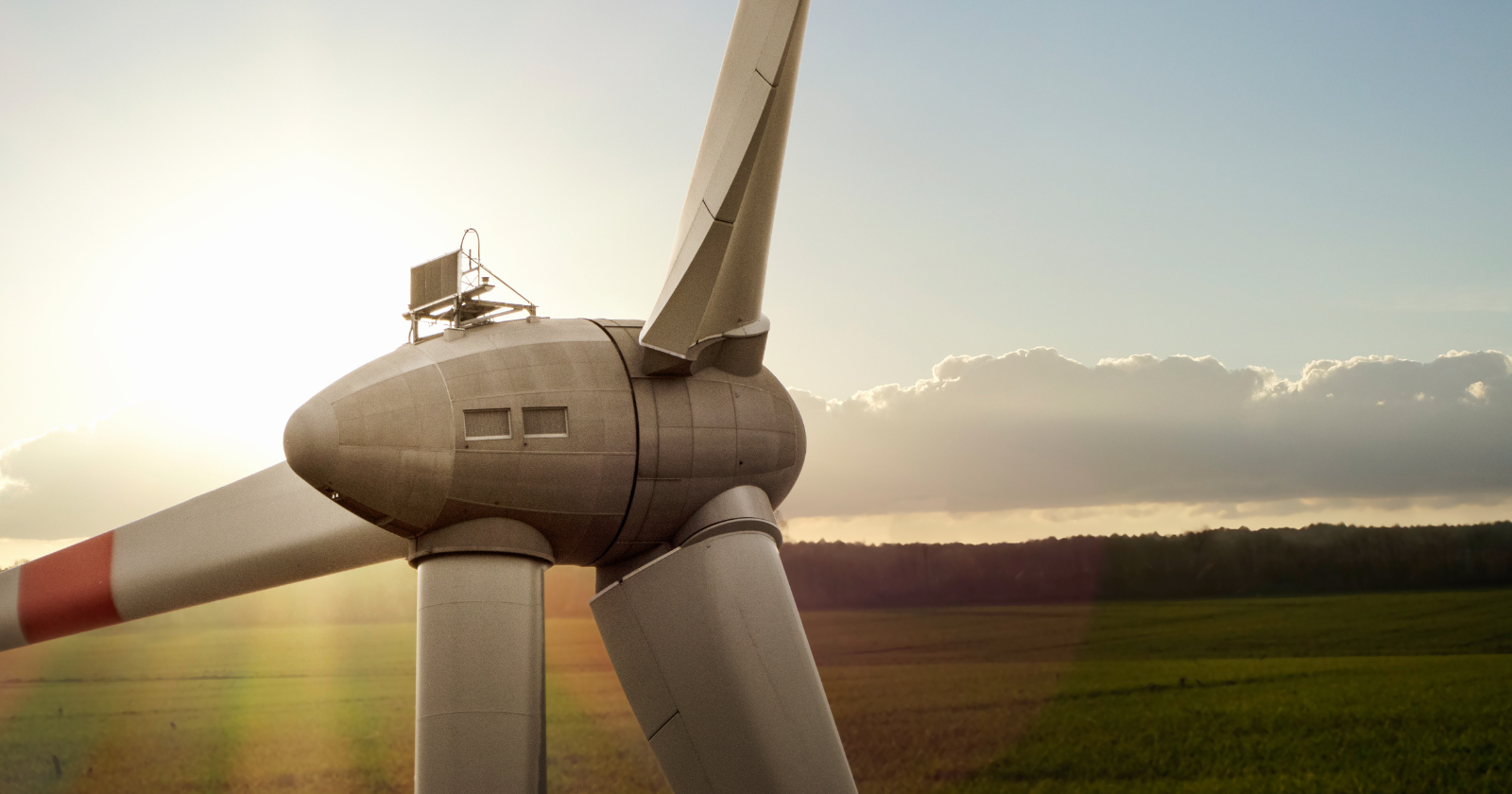
The system is deliberately mixed. By 2025 it combined 112kW of hydro, 170kW of solar and 24kW of wind, the wind coming from four small turbines. Spreading generation across three sources makes sense once you think about Scottish weather: rain feeds the hydro, sun feeds the panels, wind feeds the turbines, and the three rarely fail at the same time. Power runs around the island through roughly 11km of buried cable. Across a normal year that mix supplies 90 to 95 percent of the island’s electricity, with the diesel generators kept as backup for the gaps.
The whole thing is community-owned, run through Eigg Electric. John Booth, a former director, described it simply: “The whole thing is run by and for the island.” That is a director talking up his own scheme, so read it in that spirit, but the ownership fact underneath it is real enough.
What keeps it running
A grid this size cannot behave like a mains connection you never think about. Storage does part of the work. The control building holds a bank of batteries that can power the whole island for up to 24 hours when generation drops.
The more interesting part is the cap on how much power each user can draw. According to Eigg Electric, “to ensure nobody goes short, each house has a maximum use limit at any one time of 5kW, each business 10kW.” That is the operator’s own policy, published on the island’s website.
In practice it means you cannot run every power-hungry appliance at once, and households watch energy monitors to stay inside the limit. The result, according to the Ashden Awards, is that a household on Eigg uses roughly 50 percent less electricity than the UK average. The ceiling achieves savings that price signals and good intentions often fail to.
A working example, not a fable
The island’s advantages are specific. It is small, its residents chose this system together, and the cap works partly because the community that agreed to it is the community that lives with it. A limit of 5kW per house is easier to sustain when your neighbours are the grid operators and the grid operators are your neighbours.
What we take from it is less a blueprint than a demonstration. A self-governed off-grid system can run reliably on rain, sun and wind for the better part of two decades, as long as the people using it accept limits and manage the thing themselves.
The less dramatic version of the story is quieter than a triumph. An island bought itself with strangers’ money, then spent the following decades learning to live inside the limits of its own weather. The interesting thing is not the switch-on in 2008. It is that the discipline held.
