

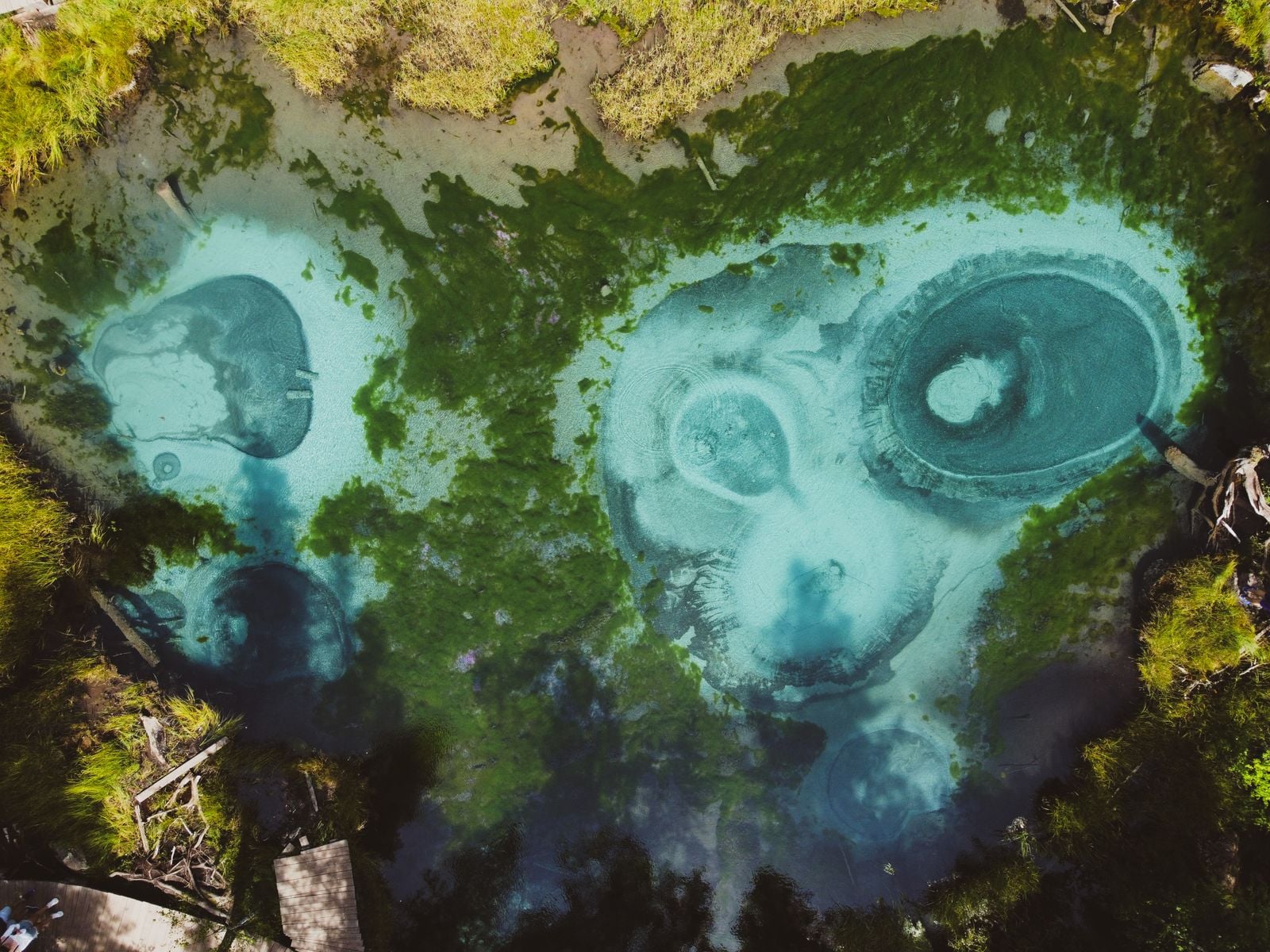
At about ten metres depth off the volcanic island of Kueishantao in eastern Taiwan, hot acidic vent fluid rises through a seafloor that still receives sunlight. In the same vent habitat, algae and phytoplankton capture light while sulfur-oxidising microbes fix carbon using chemical energy carried up from below.
That overlap is what makes shallow hydrothermal vents different from their deep-sea counterparts. Their food webs can draw on photosynthesis and chemosynthesis at the same time, and the animals living around the vents can carry the isotopic signatures of both.
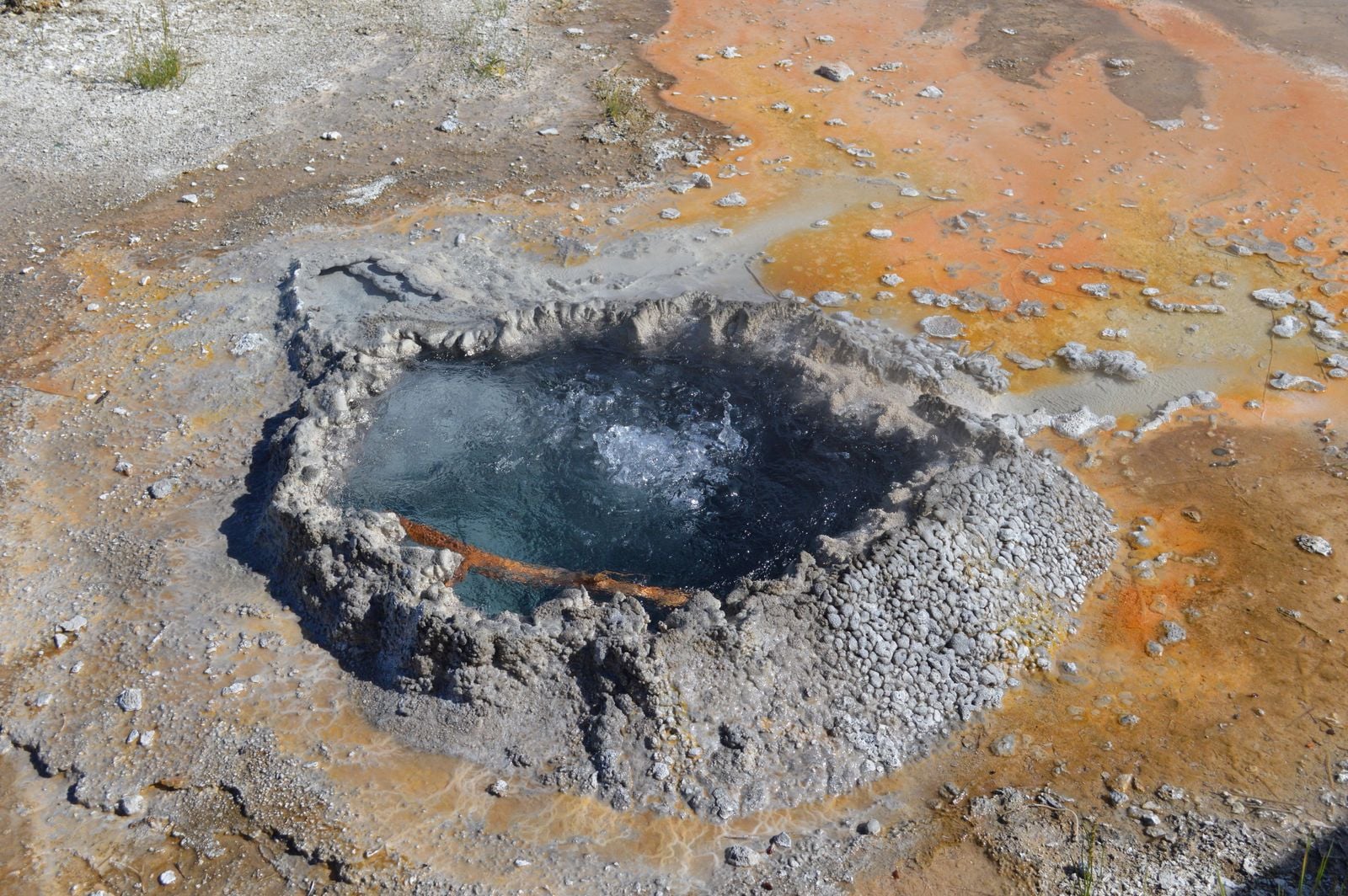
The Kueishantao seafloor, at about ten metres depth
The hydrothermal system around Kueishantao includes vents at roughly 10 to 30 metres depth, with some of the major vent stations close to ten metres. A 2025 report from MARUM described hot, acidic, sulfur-rich water rising from the vents into the shallow water column.
Joely Maak of MARUM and colleagues examined how microbes in that environment turn inorganic carbon into biomass. Their Biogeosciences study found that Campylobacteria dominate much of the chemoautotrophic activity and use the reductive tricarboxylic acid cycle, or rTCA, to fix carbon.
Maak called that pathway the microbes’ “secret weapon.” Compared with the Calvin-Benson-Bassham cycle used by many photosynthetic organisms, rTCA requires fewer energy-intensive steps, an advantage in an environment where acidity can be extreme.
The isotopes provide the more striking part of the story. The team detected the chemical signature of rTCA-derived carbon in tissues of the endemic vent crab Xenograpsus testudinatus, showing that carbon fixed by Campylobacteria had moved into a higher trophic level.
The paper estimated that campylobacterial biomass could account for as much as 34 percent of the crab’s biomass source in the samples examined. The crab is not simply standing beside a chemosynthetic ecosystem; some of that chemically fixed carbon becomes part of the crab itself.
How sunlight enters the same food web
Chemosynthetic carbon is only part of the Kueishantao diet. A 2022 stable-isotope and Bayesian mixing-model study sampled benthic animals and food sources at eight stations between about 10 and 18 metres depth, including the vent-mouth region itself.
The researchers collected bacteria, algal films, macroalgae, particulate organic matter and zooplankton. Green turf algae occurred from the vent mouths outward, placing photosynthetic production directly inside the hydrothermally influenced habitat rather than in a separate coastal ecosystem kilometres away.
For the consumers examined in that study, bacteria were not the dominant food source overall. Vent crabs and sea anemones generally received more trophic support from algae, phytoplankton-supported zooplankton and other photosynthetic material than from chemosynthetic bacteria.
An earlier isotope study of the Kueishantao food web produced a somewhat different balance. It estimated that vent-derived particulate organic matter could make up 38 to 53 percent of the diets of zooplankton and epibenthic crustaceans, while individual vent crabs varied much more widely.
Those studies do not reduce the system to a single fixed percentage. They instead show that the two carbon pathways are interleaved, with their relative importance changing among species, locations and sampling periods.
That is also the important distinction from deep hydrothermal vents. Deep vents receive no sunlight, so local primary production is centered on chemosynthesis, even though sinking organic material produced at the surface can still reach the deep ocean. At Kueishantao, new biomass can be produced locally by both light and vent chemistry.
Milos shows two very different shallow-vent settings
The Greek island of Milos provides another version of the same chemistry, but two different Milos research areas need to be kept separate. One is the very shallow coastal system at Paliochori Bay; the other is a much deeper field mapped across the Milos shelf.
During the METEOR M192 expedition in 2023, researchers mapped previously unknown hydrothermal activity around Milos using shipboard sonar, an autonomous underwater vehicle and remotely operated vehicles. The resulting 2025 Scientific Reports paper documented venting at roughly 100 to 230 metres depth and showed that its distribution closely follows active fault systems.
Those newly mapped vents are not the snorkelling-depth vents for which Milos was already famous. The accessible shallow system lies closer to shore at Paliochori Bay, where hydrothermal fluids move through sandy sediments and create sharp chemical gradients over short distances.
At Paliochori, in situ experiments published in 2022 showed that hydrothermal fluid flow continuously supplies the compounds needed by chemoautotrophic microbes. When researchers experimentally restricted that flow, carbon-fixation rates dropped substantially and the active microbial community changed.
The highest measured chemoautotrophic rates occurred along a transect extending only about a metre across the hydrothermally affected sediment. Milos therefore gives researchers an unusually accessible look at how chemical energy can vary across centimetres while the overlying coastal water remains inside the sunlit ocean.
What earthquakes and typhoons do to a vent food web
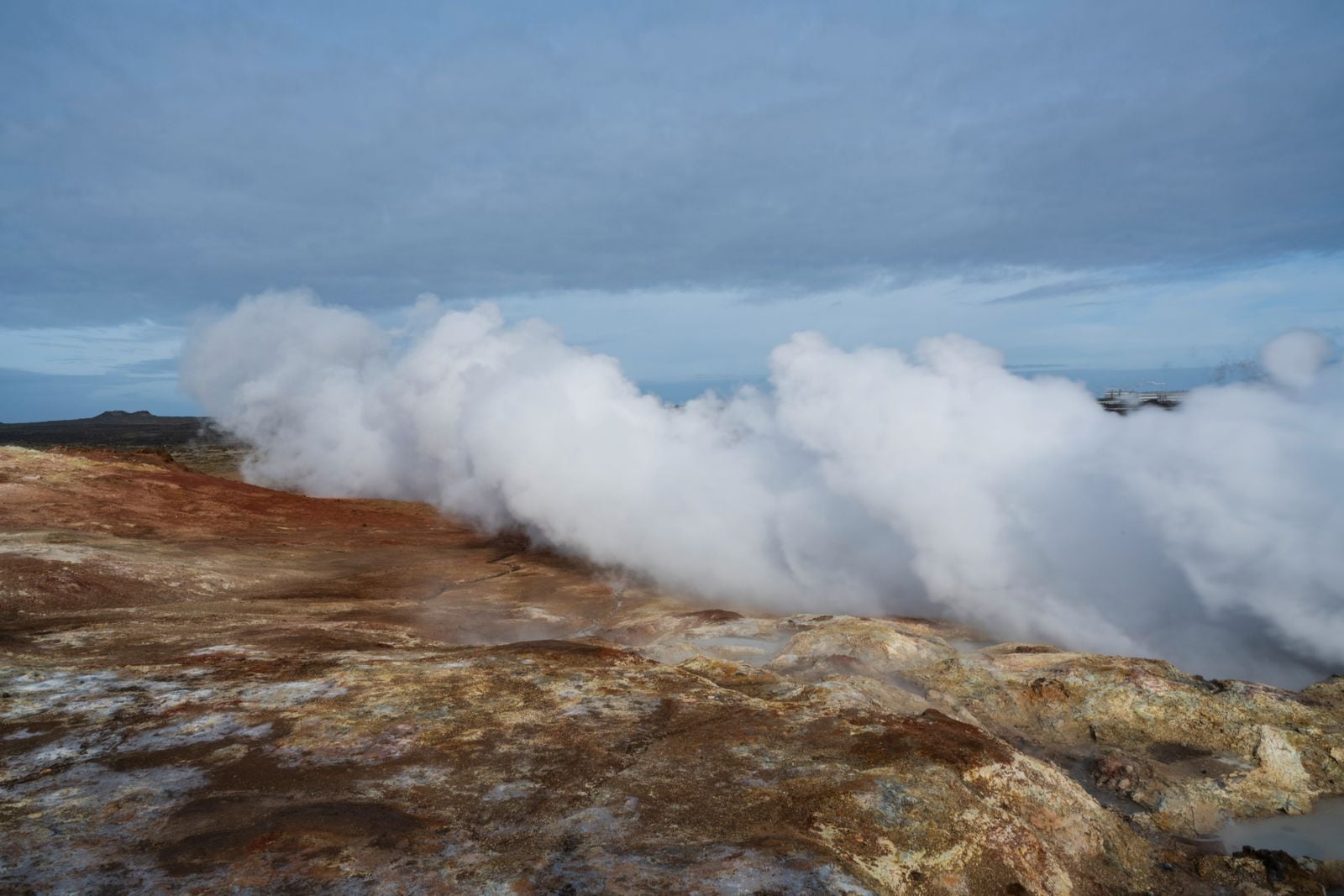
Kueishantao also shows how quickly the balance can be disturbed. In 2016, a magnitude 5.8 earthquake and Category 5 Typhoon Nepartak struck the area within weeks of one another, triggering landslides, sediment burial and a sharp decline in activity at parts of the vent field.
A ten-year observational record found major changes in venting and seawater chemistry after those events. Several of the disturbances were transient, with measurements by 2018 suggesting recovery toward earlier conditions in parts of the system.
The animals did not all respond in the same way. A later stable-isotope study of the disturbed food web found that endemic vent crabs continued to obtain part of their nutrition from chemosynthetic sulfur bacteria even after photosynthetic sources became the dominant available food source.
Non-endemic consumers showed greater dietary flexibility. The contrast matters because it turns the overlap between sunlight and chemistry into something that can change through time: when hydrothermal production falls, animals able to use other resources have options that strict vent specialists do not.
What the comparison does and does not say about Europa
That flexibility is one reason shallow vents are useful when thinking about lightless ocean worlds, provided the analogy is kept narrow. Space Daily has covered Europa’s hidden ocean as a possible chemosynthetic habitat, where any seafloor ecosystem would have no photosynthetic production to draw upon.
A 2026 Nature Communications modelling study, also discussed by Space Daily in its coverage of Europa’s seafloor, concluded that several proposed stress mechanisms are unlikely to drive present-day slip on even weak pre-existing faults there.
The authors did not conclude that Europa therefore cannot support life. They found that present-day water-rock reactions may be restricted largely to the upper few hundred metres of the seafloor and that any process maintaining habitable conditions would need to operate without depending on ongoing tectonic faulting.
Kueishantao offers a useful contrast rather than a direct model. When hydrothermal energy weakens in a sunlit terrestrial vent system, some consumers can shift toward photosynthetic resources. An ecosystem beneath kilometres of Europan ice would not have that second primary-production pathway.
The deep trenches of Earth provide the closer comparison. In 2025, Space Daily covered Mengran Du and colleagues’ hadal discoveries; the underlying Nature paper documented chemosynthesis-based communities extending about 2,500 kilometres through the Kuril-Kamchatka and western Aleutian trenches, at depths reaching 9,533 metres and sustained by methane-rich and hydrogen-sulfide-rich fluids moving along faults.
Life at the boundary
The existing studies do not establish one universal photosynthesis-to-chemosynthesis ratio for shallow vents. At Kueishantao, estimates vary among studies because researchers sampled different organisms, years and potential food sources, and because the vent itself changes after earthquakes and storms.
Nor are all shallow hydrothermal systems interchangeable. Some occur in coastal water only metres deep, others sit near the lower edge of the photic zone, and still others extend into intermediate depths where little useful sunlight reaches the seafloor.
What Kueishantao demonstrates directly is coexistence. Algae grow in the vent region, sulfur-oxidising microbes fix carbon from inorganic sources, and the endemic crab carries chemical evidence that vent-derived carbon has entered its tissue while broader isotope work shows that photosynthetic resources also feed the same animals.
Space Daily has written about similarly improbable volcanic habitats before, including sharks observed inside the crater of an active submarine volcano. At Kueishantao the spectacle is smaller: a crab crossing sulfur-stained rock beneath a water column still bright enough for algae to grow.
A few centimetres away, the shimmer from hot vent fluid bends the view through a diver’s mask. Above it is sunlight. Below it is chemical energy rising from the volcanic seafloor, and the crab lives where the two meet.