
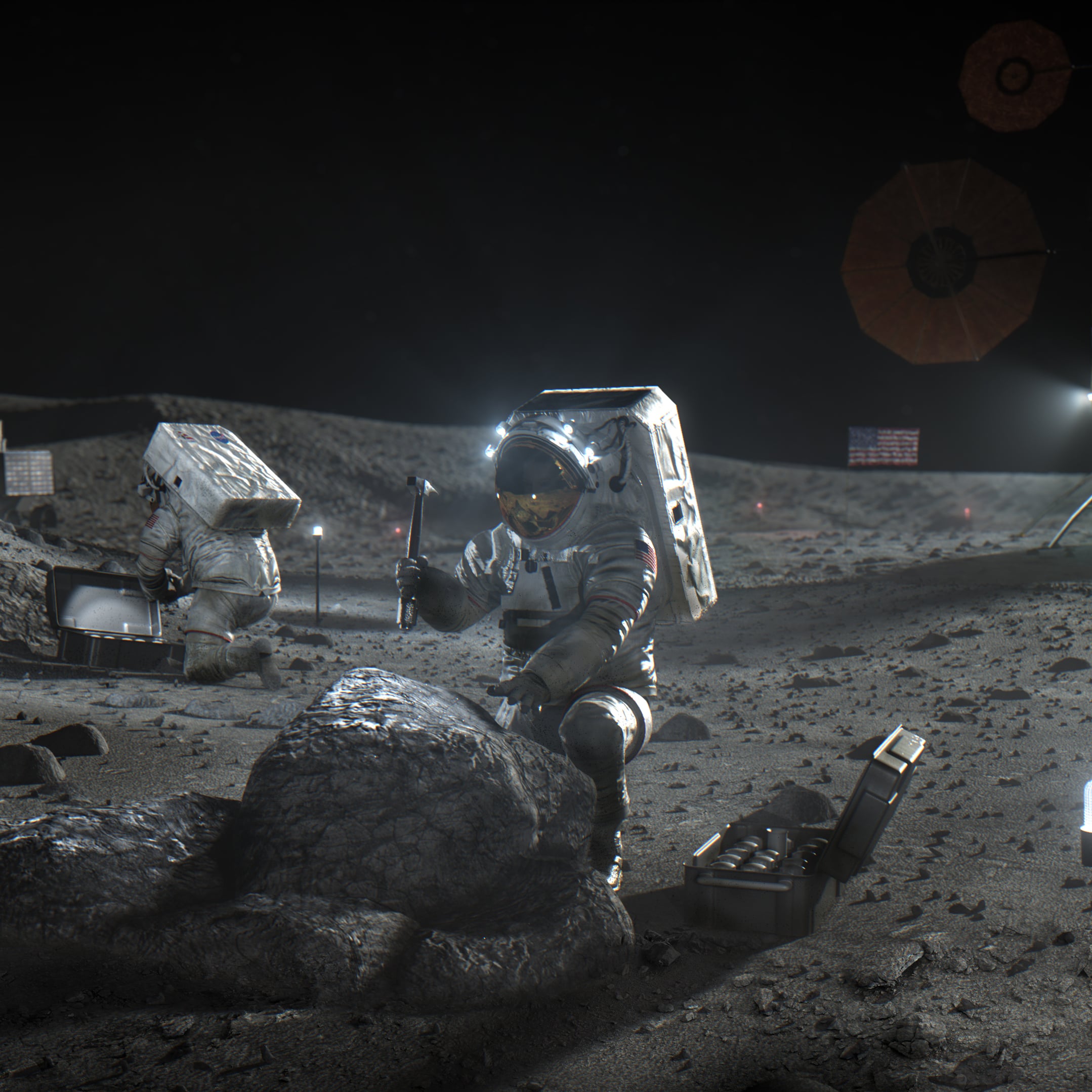
When Mauritius signed the Artemis Accords on 17 July 2026, it became the 70th country to join a coalition trying to turn broad principles of space law into habits that could work on the lunar surface. The milestone sounds, at first, like the creation of a new legal order for the Moon.
It is not. The legal foundation remains the Outer Space Treaty, opened for signature in 1967. The Artemis Accords do not amend that treaty, and they are not binding international law. They are a political commitment by their signatories to interpret and apply existing obligations in a broadly similar way.
That may sound modest, but the practical questions are no longer hypothetical. Governments and companies are preparing landers, rovers, communications systems and longer stays. The old treaty says a great deal about peaceful use and national responsibility. It says much less about what two crews should do when they want to work near the same ice-rich crater.
What the 1967 treaty actually bans
The Outer Space Treaty opened for signature on 27 January 1967 and entered into force on 10 October that year. Article II says outer space, including the Moon and other celestial bodies, is not subject to national appropriation by a claim of sovereignty, by use or occupation, or by any other means.
That is the basis for the familiar shorthand that nobody can own the Moon. More precisely, no country can extend its territory there. Planting a flag does not convert a landing site into a province, and occupying a crater does not establish sovereignty over it.
The treaty also makes states internationally responsible for their national space activities. That responsibility extends to non-governmental entities, whose work must be authorized and continually supervised by an appropriate state. Article IX adds duties of due regard and consultation when an activity might cause potentially harmful interference.
Those provisions are substantial. They are also broad. The text does not lay out traffic rules for rovers, prescribe the size of a safe operating area around a lander or clearly settle who may own material extracted from lunar soil.
No dedicated court does not mean no consequences
The treaty created no lunar court, police service, inspectorate or automatic sanctions body. There is no treaty official who can arrive at a disputed landing site, order one mission to move and impose a fine if it refuses.
That does not make the agreement meaningless. Compliance works through state responsibility, national licensing, diplomatic pressure, consultation, reputation and the wider machinery of international law. A country can place conditions on its companies, withdraw an authorization, protest another state’s conduct or negotiate after an incident. Disputes may also reach existing international forums when the states involved accept the relevant jurisdiction.
But none of that provides a fast, Moon-specific referee. SpaceDaily has previously looked closely at this enforcement gap in the 1967 framework. The important development now is that the group trying to supply some of the missing operating detail has grown to 70 countries.
What the 70 countries have actually signed
The Artemis Accords began in 2020 with the United States and seven initial partners. They reaffirm the Outer Space Treaty and set out principles covering peaceful purposes, transparency, interoperability, emergency assistance, registration, scientific data, heritage protection, resource use, avoidance of harmful interference and orbital debris.
NASA announced that Mauritius became the 70th signatory on 17 July 2026. That figure is specifically the number of Artemis Accords signatories. It is not the membership of a new world government for space, and it should not be confused with participation in the United Nations committee that discusses space law.
The phrase “helping write the practical rules” needs the same care. The 70 countries are not sitting in a treaty conference and voting line by line on binding lunar legislation. They are working through workshops, diplomatic exchanges and mission partnerships to make general principles more operational. A 2026 workshop in Lima, for example, focused on implementation and coordination among signatories.
That process can matter even without a new treaty. When many states repeatedly use the same notification formats, coordinate similar activities and expect the same conduct from partners, those habits can become influential. They can also reveal which principles fail when tested against real missions.
The difficult test is a crowded landing area
Useful terrain on the Moon is not evenly distributed. Permanently shadowed polar regions may contain accessible water ice, while nearby elevated areas can receive longer periods of sunlight. Those combinations could make a relatively small number of locations especially attractive for power, communications and resource work.
Operating close together creates risks that the treaty never describes in engineering detail. A descending lander can throw dust and fragments across the surface. A rover can cross another mission’s route. Radio transmissions may interfere with instruments. Drilling or excavation could disturb an experiment that depends on a quiet local environment.
The Artemis Accords respond with notification, coordination and the idea of temporary safety zones. In principle, such a zone is not a property boundary. It is supposed to identify the area in which an activity could cause harmful interference, so other operators know when consultation is needed.
The distinction will have to be demonstrated, not merely asserted. A limited buffer around a dangerous landing operation is easier to defend than a large, indefinite perimeter around a valuable deposit. Size, duration, technical justification and access to consultation will determine whether a safety zone looks like prudent deconfliction or territorial control under another name.
Resources remain the most sensitive unresolved issue
The Accords state that extracting and using space resources can be consistent with the Outer Space Treaty and does not inherently constitute national appropriation. The argument separates ownership of removed material from sovereignty over the place it came from. Several countries have reflected a similar view in domestic legislation.
That interpretation is not universally accepted. Critics worry that extensive resource rights could eventually create control resembling ownership even if no flag formally claims the ground. The 1979 Moon Agreement anticipated an international regime for exploiting lunar resources, but it failed to win broad support among the major space powers.
A separate United Nations process is now developing recommended principles for space resource activities. The 2025 draft addresses issues including harmful interference, cultural and natural heritage, benefit sharing, sustainability and the interests of developing countries. Those recommendations are voluntary as drafted.
This parallel work is important because the Artemis coalition is large but not universal. China and Russia, both major space powers, are not Artemis Accords signatories. A practice accepted inside one partnership does not automatically become a rule binding every country on the Moon.
The operating manual will be written through behaviour
The most consequential lunar rules may emerge through ordinary decisions rather than one grand negotiation. Which agency gives notice before landing? How early is that notice issued? What information does a company share about dust, radio emissions or a rover route? What happens when two planned safety areas overlap? How are historic sites protected without turning preservation into permanent exclusion?
NASA’s original 2020 announcement described the Accords as a practical set of principles for cooperation. Six years and 62 additional signatories later, the project has far greater diplomatic weight. Yet its basic limits remain. It creates no court, police force or universally binding code, and countries outside it are not obligated to follow its provisions.
I think the humble way to read the 70-country milestone is neither as a solved problem nor as empty symbolism. It is evidence that a large and varied group wants common expectations before lunar operations become crowded. Whether those expectations deserve wider trust will depend on how the signatories behave when cooperation becomes inconvenient.
If they consistently register spacecraft, share useful information, coordinate close operations and keep safety zones narrow and temporary, the Accords may make the treaty’s broad duties workable. If they use technical language to secure exclusive control over desirable terrain, the absence of a dedicated enforcement institution will become more serious with every landing.
The Outer Space Treaty remains the constitutional foundation. The Artemis Accords are closer to an operating manual being written while the machines are already being built. The practical rules for humanity’s return will ultimately be judged not by the elegance of the documents, but by what countries do when another spacecraft lands nearby.
