

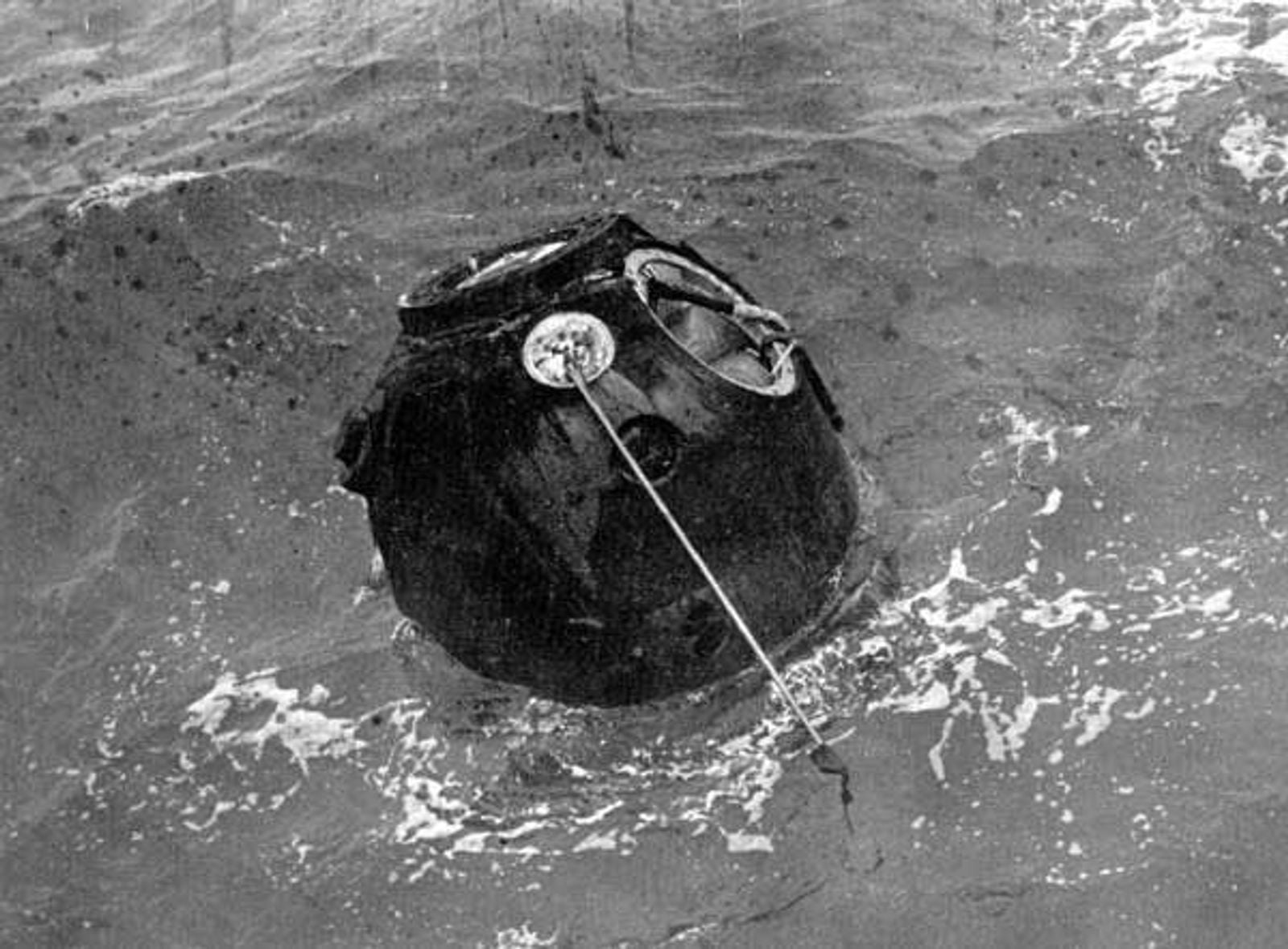
Before any person left Earth orbit, two small tortoises travelled around the Moon and came back alive. They did it inside a spacecraft designed as a precursor to a crewed Soviet lunar mission, survived a steep re-entry and splashed down far from the intended recovery zone.
Zond 5 launched on 15 September 1968, passed the Moon three days later and returned on 21 September. Apollo 8 would not launch until 21 December. The comparison is real, but the popular version needs two qualifications. The tortoises shared the spacecraft with smaller animal organisms, so it is more precise to call them the first vertebrates around the Moon. Their reported weight loss also came from an experiment in which feeding stopped before launch, not from a neatly isolated week of spaceflight.
Those limits do not make the mission less remarkable. They show what Zond 5 actually was: an uncrewed systems test, a biological experiment and a narrow escape from several failures, all compressed into the final months before humans made the same journey.
The tortoises were not the only living passengers
NASA’s history of the mission lists two Russian steppe tortoises alongside fruit flies, worms and plants. A more detailed NASA history records hundreds of Drosophila eggs, plant material, algae and bacteria. The tortoises, generally identified as Central Asian or Horsfield’s tortoises, were the largest and most recognisable members of a broader biological package.
That passenger list matters because flies and worms are animals too. Accounts often call the two tortoises the first animals, or even the first living organisms, to circle the Moon. The cleanest formulation is narrower: they were the first vertebrates, and the first substantial animal subjects, to make the circumlunar journey and return alive. They were accompanied by other forms of animal and non-animal life.
The animals were not sent as mascots. Zond 5 was a test of the Soviet L1 circumlunar architecture, a version of the Soyuz spacecraft modified for a two-cosmonaut trip around the Moon without entering lunar orbit. Its biological payload was meant to inform preparations for people who might later travel the same route.
Why a steppe tortoise suited the experiment
The flight animals each weighed about 340 to 400 grams. NASA’s detailed history, Challenge to Apollo, says Soviet doctors chose tortoises partly because they did not require complex onboard support and could be restrained securely. Their physiology also allowed a long period without feeding.
The two flight tortoises were placed in the spacecraft on 2 September, 13 days before launch, and their food supply was stopped then. Two other tortoises formed a fasting control group on Earth, while another four were left untreated. This was therefore not simply a comparison between “space” and “normal life”. It was an attempt to distinguish the effects of flight from the effects of prolonged food deprivation.
The distinction became important after recovery. A contemporary NASA-indexed translation of the biological investigation describes work on tortoises, beetles, seeds, Drosophila and bacteria during the circumlunar mission. Later tissue analysis found changes of an atrophic kind, but the researchers concluded that hunger explained most of the structural changes, with spaceflight factors contributing less.
Zond 5 completed a loop, not a lunar orbit
A Proton rocket lifted Zond 5 from the Baikonur Cosmodrome in Kazakhstan just after midnight on 15 September. After a brief parking orbit around Earth, the upper stage fired again and sent the spacecraft towards the Moon.
On 18 September, Zond 5 passed about 1,950 kilometres above the lunar far side. It did not fire an engine to enter orbit around the Moon. Instead, the encounter bent the spacecraft onto its return path to Earth, the defining geometry of a circumlunar flight. NASA’s current Moon mission chronology records Zond 5 as the first mission to carry living creatures past the Moon and Apollo 8 as the first to carry humans into lunar orbit.
This distinction is why “circle the Moon” works better than “orbit the Moon” for the tortoises. Zond 5 looped behind the far side and headed home. Apollo 8 later inserted into lunar orbit and completed ten revolutions before departing.
The return nearly undid the achievement
The outward flight was not free of trouble. A stellar attitude-control sensor failed, forcing controllers to use less precise Sun and Earth sensors for a midcourse correction. On the return leg, another navigation sensor failed and the system needed for a guided landing in Soviet territory could not be trusted.
Controllers settled for a ballistic re-entry aimed at the Indian Ocean. That profile subjected the descent module to substantially higher loads than the planned lifting re-entry would have imposed on a human crew. The capsule splashed down at 19:08 Moscow time on 21 September after six days, 18 hours and 24 minutes, according to the NASA history.
Recovery was not immediate. Soviet search teams had to find the capsule at night in rough water while US Navy ships watched from nearby. The descent module was lifted aboard a Soviet vessel, taken to Bombay, now Mumbai, and then flown to Moscow. NASA’s Zond 5 image record confirms that the tortoises survived the Indian Ocean landing and were returned to Moscow.
The 10 per cent figure needs its context
A NASA Ames summary of animals in space says the tortoises returned alive after six days and had lost 10 per cent of their weight. Another NASA account uses the less precise phrase “a little weight” and says they were otherwise in good health.
“Only about 10 per cent” should not be read as a measurement of what six days around the Moon does to a tortoise. Feeding had ended nearly two weeks before launch, and the capsule itself did not reach Moscow until 7 October. The experimental record therefore joins several exposures: prolonged fasting, confinement, microgravity, radiation, a high-load ballistic re-entry, rough splashdown and delayed examination.
There were also only two flight tortoises. Their survival showed that this biological payload could complete the route. It did not establish that the trajectory was harmless, quantify a general effect of deep space or prove that the same conditions were ready for humans. The control animals and later pathology made hunger, rather than spaceflight alone, central to interpreting the weight and tissue changes.
Three months later, Apollo 8 changed the category
Apollo 8 launched on 21 December 1968 and entered lunar orbit on Christmas Eve. Frank Borman, Jim Lovell and William Anders became the first humans to orbit another world. Their flight came three months after Zond 5’s September journey, and our earlier account of Apollo 8 at the Moon describes the ten orbits, live broadcast and return to Earth.
The timing was more than a curiosity. Zond 5 demonstrated that an L1 spacecraft could travel around the Moon and recover living passengers. Its success, together with US intelligence about Soviet lunar hardware, contributed to concern that the Soviet Union might send cosmonauts around the Moon before Apollo. NASA had its own reasons for changing Apollo 8’s plan, including delays to the lunar module, but Zond 5 sharpened the competitive context.
The tortoises occupy a precise place inside that history. They were not astronauts, and they were not the only animals aboard. They were the first vertebrates to travel around the Moon and return alive, passengers in the first successful Earth-Moon-Earth mission at a moment when neither lunar programme could afford to assume the next flight would work.
They came home after a journey lasting just under seven days. The three people who followed in December came home after proving something different: that humans could leave Earth orbit, enter lunar orbit and return. Zond 5 had already sent life around the Moon. Apollo 8 turned that biological and engineering precursor into a human voyage.