

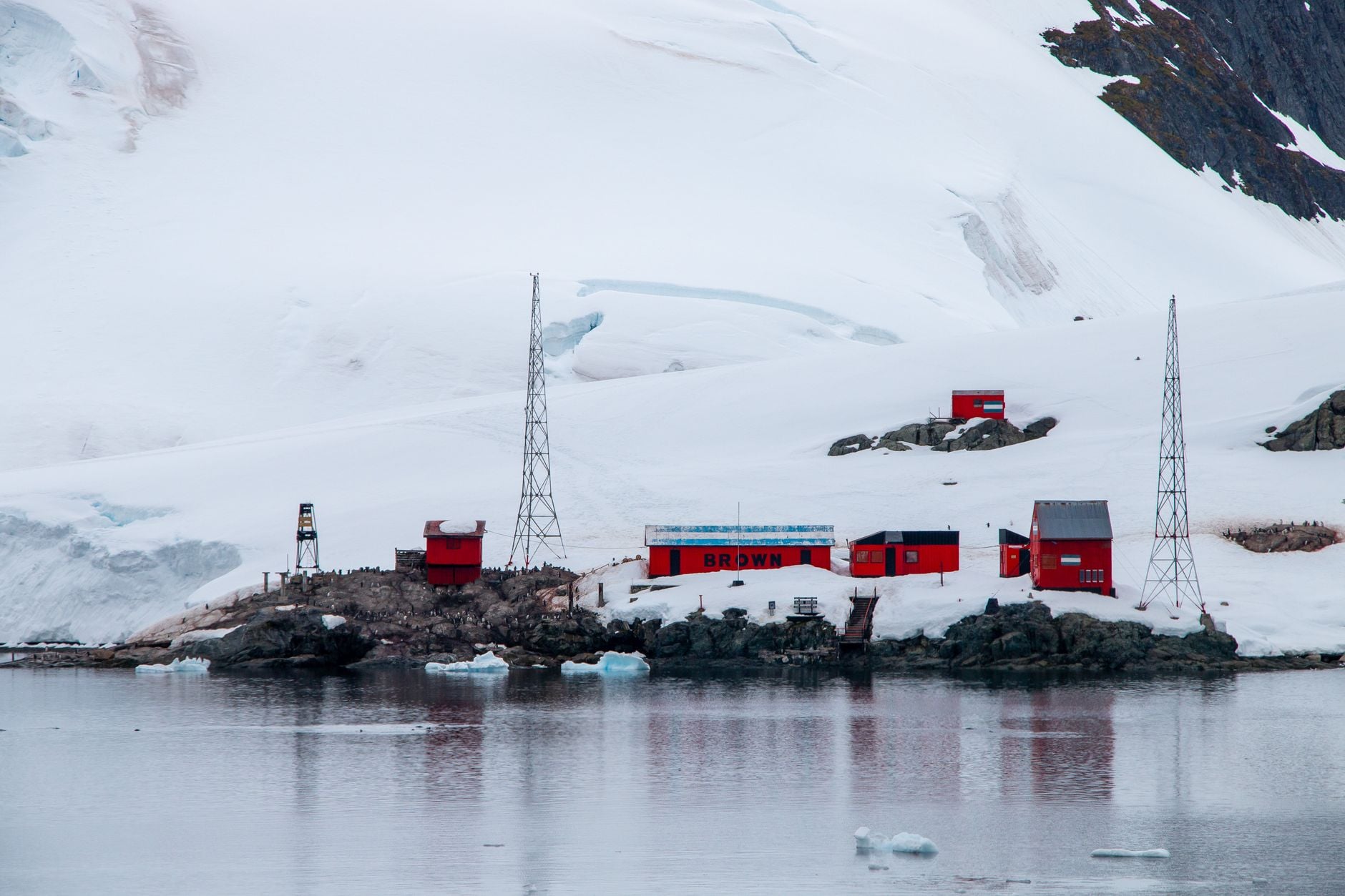
Isolation does not always look like being alone. At Concordia Station in Antarctica, twelve people spent ten months cut off from the wider world while living and working inside the same small social field.
A study published in PNAS on 26 May 2026 found that loneliness and conflict rose across the mission, while cohesion and perceived individual performance fell. The unexpected part came from wearable sensors: crew members who spent more time in close proximity also tended to report more conflict, suspiciousness and lower perceived performance.
We are writers, not clinicians. This is a reading of one extreme-environment study, not psychological advice or a rule for every isolated team.
Twelve people were followed through an Antarctic winter
Concordia sits more than 3,000 metres above sea level in the Antarctic interior. Winter temperatures can fall towards minus 80 degrees Celsius, and the station becomes inaccessible for roughly nine months. The European Space Agency uses Concordia as an analogue for spaceflight because its crew must tolerate danger, confinement, disrupted light and prolonged separation from ordinary support.
Andrea Cantisani, Jan Schmutz and colleagues studied one winter-over crew at four points: months one, three, six and nine. During each two-week measurement period, participants completed questionnaires about loneliness, suspicious thoughts, cohesion, conflict and their own work performance. They also wore proximity sensors during the day.
This is one team, not settled consensus. Repeated measurement gives the study unusual detail, but twelve participants cannot represent every Antarctic station, submarine or Mars crew.
The sensors measured co-presence, not closeness
The chest-worn devices recorded face-to-face encounters within roughly one to one and a half metres, resolving contact in ten-second intervals. Stationary sensors helped identify where interactions occurred. The result was a map of who spent time near whom and for how long.
That map did not reveal what happened between them. A sensor counted a warm conversation, a tense disagreement and two people sharing a workbench in the same basic way. It measured opportunities for interaction, not affection, trust or support.
The distinction is the centre of the finding. Social contact is often treated as the opposite of loneliness, but forced co-presence in a closed habitat is not the same thing as chosen, supportive connection. The University of Bern’s account of the work stresses that the sensors recorded spatial proximity rather than the quality or content of any exchange.
Conflict rose while cohesion and self-rated performance fell
Across the four measurement points, loneliness increased. Team cohesion declined, conflict intensified and participants rated their individual performance lower. Complete-case analyses involved nine or ten people depending on the outcome, with the research team also using growth models to incorporate available observations.
The word “performance” needs care. Participants answered three questions about meeting assigned goals and the quality of their work. The researchers did not report an objective increase in errors, missed targets or safety incidents. “Poorer performance” in the headline is therefore shorthand for poorer perceived individual performance.
The paper also used established questionnaires for two forms of what the researchers call paranoid thoughts. In ordinary language, the relevant pattern was rising mistrust or suspiciousness, including feeling watched or discussed by others. These were dimensions measured in a screened, functioning crew, not psychiatric diagnoses assigned to the participants.
More contact was associated with more strain
The researchers calculated “strength centrality”, a network measure reflecting a person’s total close-range contact. Higher centrality was positively correlated with conflict and both suspicious-thought measures. It was negatively correlated with cohesion and perceived individual performance. The association with loneliness pointed in the same direction but remained marginal, at a reported p value of 0.06.
None of this establishes that proximity caused the deterioration. The authors explicitly describe the analysis as correlational. Frequent contact might expose central crew members to competing demands and tensions. People feeling disconnected might seek more contact without finding it rewarding. A person’s job might simply require them to interact with more colleagues while also carrying greater pressure.
Work and leisure were mixed in the sensor record, and direction could run both ways. Conflict may make repeated contact feel worse, while unavoidable contact may give small conflicts more opportunities to recur.
The crew divided increasingly along national lines
The network also became more clustered. French and Italian participants increasingly spent time within their own national groups, while the ESA medical doctor occupied a separate position in the analysis. Shared language and familiar social cues can make daily life easier under pressure, yet strong subgroups can weaken the connections that hold the whole crew together.
That result complements earlier SpaceDaily reporting on a NASA-linked study of group-living skills. That research found that everyday consideration and tidiness tracked crew cohesion across the ISS and several analogues. The two findings are not opposites. Contact supplies opportunities for cooperation, but the quality of living together determines what those opportunities become.
A separate 2026 Concordia proximity study, covering 21 people across two winter-over campaigns, treated sensor data as a possible indicator of cohesion while finding that time alone increased during the missions. Taken together, the work argues against using raw interaction counts as a simple score for social health.
Mission design needs room for connection and retreat
The clearest practical implication is not that crews should avoid one another. Long missions require coordination, mutual help and frequent communication. The lesson is that designers cannot manufacture cohesion merely by putting people close together.
Private quarters, acoustic separation and genuine opportunities to withdraw may prevent interaction overload. Shared areas need to support voluntary conversation as well as operational work. Multilingual crews may also need routines that keep national or occupational subgroups connected to the larger team without treating every preference for familiar company as a problem.
The wearable method raises a governance question too. Continuous sensing could identify fragmentation early, but monitoring who meets whom can easily feel like surveillance. Any operational system would need clear consent, strict access rules and a purpose crews consider legitimate.
Concordia cannot tell NASA exactly how a Mars crew will behave. It does reveal a distinction mission planners cannot afford to ignore: people can be physically surrounded and socially unsupported at the same time. In a habitat with no easy exit, more contact is not automatically more connection.