

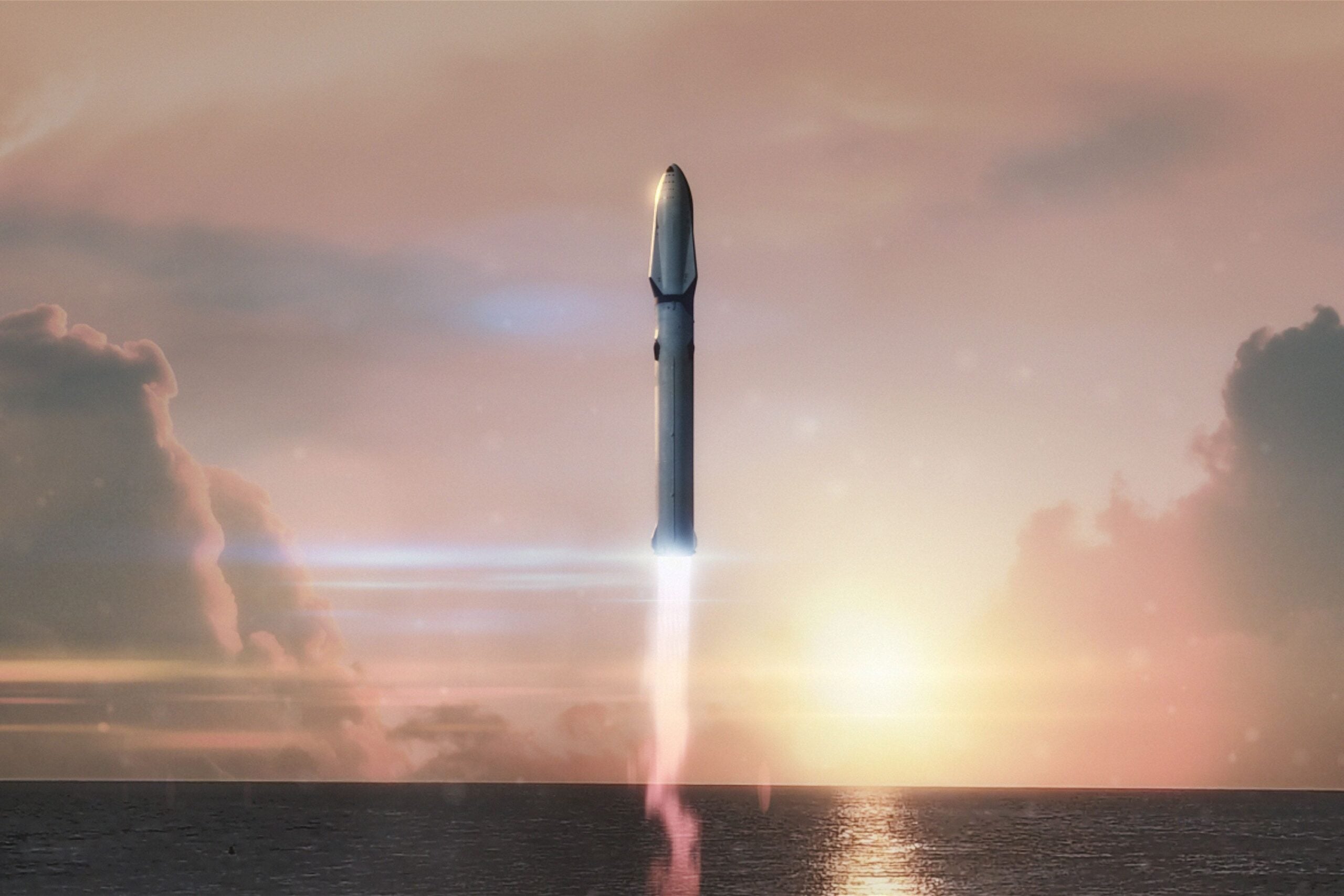
In 2014, Blue Origin patented the idea of landing a rocket vertically at sea, before it had launched a single orbital rocket, then used the patent to try to block SpaceX from doing exactly what SpaceX was already attempting to do. The dispute lasted barely a year, and it ended with Blue Origin walking away from its own patent rather than let a court finish the job of killing it.
A patent filed before either company had proven anything
Blue Origin filed for the patent in June 2010, describing a system for launching a multistage rocket from a coastal site, separating the booster, and steering it down to a tail-first, engine-controlled landing on a floating platform at sea. The US Patent and Trademark Office granted it in March 2014, listing Jeff Bezos among the named inventors. At that point Blue Origin had flown suborbital test vehicles but had not come close to landing an orbital-class booster anywhere, at sea or otherwise. SpaceX, meanwhile, had already made its first real attempts to land a Falcon 9 first stage on an ocean platform, attempts that were failing in dramatic, well-documented fashion, but were attempts all the same. The company had built what it called an autonomous spaceport drone ship specifically to catch a returning booster, and it was actively trying to use it while Blue Origin’s patent was still working its way through the grant process.
The challenge
SpaceX filed a formal petition with the Patent Trial and Appeal Board in August 2014, arguing the patent should never have been granted. Its central claim was blunt. Landing a rocket stage on a platform at sea by controlling its descent with the engines was not some novel invention Blue Origin had dreamed up. Academic papers describing similar approaches existed years before Blue Origin’s filing date, and SpaceX argued the underlying rocket science was, in its own words, already old hat by 2009. In March 2015, the board ruled largely in SpaceX’s favor on the claims it had specifically challenged.
Conceding before losing outright
Blue Origin didn’t wait for a final, complete defeat. In September 2015, the company itself filed the motion to cancel the remaining thirteen of the patent’s fifteen claims, a move a patent attorney following the case described plainly as the end of Blue Origin’s ability to enforce it at all. Effectively, Blue Origin agreed to lose rather than have a board formally rule that it had lost. Both companies declined to comment publicly when the cancellation became final.
Who actually landed first depends on how you count it
There’s a genuinely odd postscript to this. Just two months after Blue Origin gave up its patent claim, its own New Shepard vehicle became the first rocket to land vertically after reaching space, in November 2015. SpaceX matched the feat with an orbital-class Falcon 9 booster the following month, in December 2015, and went on to land boosters on actual sea platforms not long after. New Shepard is suborbital, built to reach space briefly and come straight back down, while Falcon 9 does the much harder job of reaching orbital velocity first. Comparing the two isn’t entirely fair to either company, but it means the company that lost the patent fight over sea landings was, technically, first to land anything vertically at all.
What the skirmish actually revealed
I think the patent fight matters less for who won it than for what it exposed about each company’s priorities at that moment. Blue Origin, in 2014, was reaching for a legal wall to put between SpaceX and a technique neither company had actually mastered yet. SpaceX was reaching for prior art and, more importantly, kept flying and failing and flying again at sea, which is a strategy that only works if you’re confident you’ll get there before anyone can stop you with paperwork. Falcon 9 became a genuinely routine, reusable rocket within a few years of that patent fight. Blue Origin’s own orbital-class rocket, New Glenn, didn’t reach orbit until 2024, nearly a decade later.
What I’d take from this
The race to win outer space gets told most often as a contest between nations, flags, and treaties. This particular skirmish was neither. It was two private companies, years before either had a working orbital reusable rocket, trying to out-lawyer each other over who got to try first, and the company that reached for the law lost, then spent the next decade catching up anyway.