

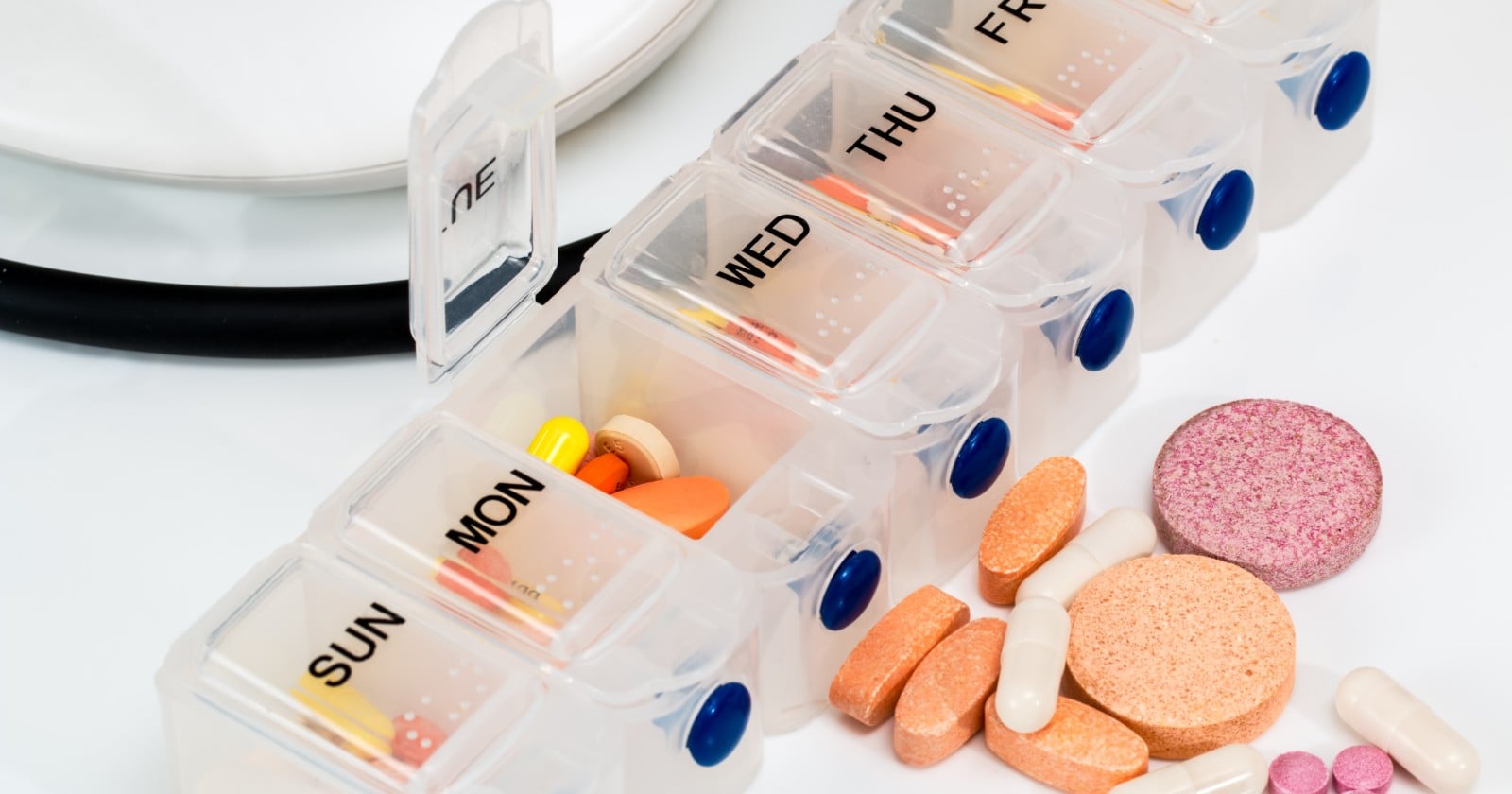
Sixty of ninety healthy older adults in Milan were handed a pill organiser holding twenty-one tablets and asked to take one a day for three weeks. Half of those sixty were told the tablets were a multivitamin formulated for people over sixty-five. The other half were told, in plain terms, that the tablets were sugar pills with no active ingredient. The remaining thirty were given no tablets at all.
At the end of the three weeks, the group that had been told the truth reported the lowest stress of the three, and scored higher on a memory-span test than the group that received nothing. The group that had been deceived failed to separate from that group on any between-group comparison the paper reports.
That result comes from a randomised controlled trial by Diletta Barbiani, Alessandro Antonietti and Francesco Pagnini of the Università Cattolica del Sacro Cuore, published in the International Journal of Clinical and Health Psychology. The university’s announcement of it carried percentages. The paper reports none.
Inside the Milan trial
The team recruited 110 people through four social and recreational retirement centres in Milan, flyers around the Università Cattolica, and word of mouth. Ninety were eligible and were randomised into three groups of thirty using a randomiser function. Participants ranged from 65 to 90 years old, averaging 77.01 years, and 56 of the 90 were women.
The study was advertised as a test of a multivitamin supplement for the over-65s. Anyone already taking supplements or medication was excluded, as was anyone with a history of physical injury, psychiatric conditions or neurodegenerative disorders.
The deceptive placebo group received a script describing a vitamin complex “designed specifically for adults over the age of 65”, with benefits “typically observed within the first week” including sharper concentration and memory, more physical energy and less fatigue. The open-label group received the same tablets and a longer script that began by telling them the pills “have no specific therapeutic properties. They are simply sugar pills …”. It went on to explain the placebo effect as a real psychobiological phenomenon, compared the body’s response to Pavlov’s dogs salivating at a bell, and asked participants to take the pills while keeping the body’s capacity for self-repair in mind.
The control group sat the same tests on the same schedule, received no tablets, and were given no rationale beyond being told that the researchers were tracking functional parameters over time.
Everyone was measured before and after on ten outcomes. Seven were questionnaires: perceived stress, psychological well-being, daytime sleepiness, fatigue, optimism, self-efficacy and stereotypes about ageing. Three were performance tests: Digit Span for short-term memory, a short Stroop task for selective attention, and the Short Physical Performance Battery, which scores balance, a four-metre walk at usual pace, and five repeated rises from a chair with the arms crossed. No outcome was nominated in advance as the primary one.
Two results out of ten
Perceived stress was the clearest. On the ten-item Perceived Stress Scale, the open-label group finished with a median score of 11, against 13.5 for the deceived group and 15 for the untreated group, and the difference across the three groups reached significance at p = .015, with a moderate effect size. In the pairwise comparisons the open-label group scored lower than the deceived group and lower than the control group. This is the one place in the study where telling people the truth outperformed lying to them in a direct test.
Digit Span was the other. The open-label group finished with a median of 9 against the control group’s 8, and that difference cleared significance. The comparison between the open-label group and the deceived group did not; neither did the comparison between the deceived group and the control.
The remaining eight measures showed no between-group differences at all. Well-being, sleepiness, fatigue, optimism, self-efficacy and ageing stereotypes all sat at p ≥ .30. Stroop completion time landed above p = .54. Physical performance, the outcome the announcement quantifies first, came in at p = .54.
Deception did the least
Line the three arms up and the surprise is not that a knowingly inert pill did something. It is that the deceptive pill, the classic version, the one the whole literature was built on, failed to distinguish itself from no intervention at all on any comparison between groups.
The within-group picture is kinder to it. Both placebo arms improved from start to finish on Digit Span and on the physical battery, while the control group did not. The paper’s conclusions are careful about what that is worth, noting that the deceptive group’s improvements were “primarily evident in within-group analyses and should therefore be interpreted cautiously”.
Barbiani and her colleagues offer a reason the deception may have underperformed. Deception alone, they write, “may be insufficient to engage these psychosocial mechanisms, likely due to reduced trust or engagement in the absence of transparent information”, and “even positively framed information about an unfamiliar supplement may have elicited uncertainty or suspicion, reinforcing a stricter experimenter–participant hierarchy”. Being handed a mystery vitamin by a researcher, on that reading, is a different psychological event from being let in on the mechanism.
A separate problem sits under the comparison with the control group. The open-label arm got a tablet, a rationale, an analogy, four numbered instructions and a reason to attend to their own body for three weeks; the control arm got a testing appointment. The paper is direct about it, calling for “active control conditions (e.g., attention-matched interventions) to better isolate placebo-specific effects” and stating that “it is not possible to determine the extent to which observed improvements reflect placebo mechanisms per se as opposed to broader expectancy-driven or compliance-related influences”. The open-label participants also knew the study was about the placebo effect, which the paper concedes “may have increased responsiveness to perceived experimental demands”. They had been told the pills would reduce their stress, and were then asked to rate their stress on a questionnaire.
The percentages appear nowhere in the paper
The figures in circulation are that the placebo improved physical performance by 7 per cent under deception and 9.2 per cent taken knowingly, and cognitive performance by 12.6 to 14.6 per cent and 6.9 to 21.5 per cent respectively. Not one of them appears in the paper. The paper reports no percentage change of any kind, for any outcome, in either direction. Its results are given as medians, interquartile ranges, test statistics, p values and effect sizes. The only percentage anywhere in the article body is the 80 per cent statistical power in its sample-size note.
All four figures appear in the Università Cattolica announcement issued on 25 March 2026, which attributes them to the researchers and quotes Pagnini calling them “significant effects”, “comparable to those seen in some experimental studies on physical activity regarding physical performance and cognitive training, especially with regard to memory”. Where the percentages were computed, the announcement does not say.
The paper’s own between-group test on physical performance was not significant. Its gains on the physical battery are pre-to-post changes inside each group, which it says “warrant cautious interpretation” and describes only as possibly indicating “a potential role for expectancy-related influences in motor functioning”. The announcement also reports an improvement in drowsiness; the paper found no between-group difference on daytime sleepiness, and no significant pre-to-post change on any questionnaire in any group, including the stress questionnaire that produced its headline result.
The open-label group’s own stress score did not move significantly from start to finish. The significant stress finding is a comparison between groups at the end, and the open-label group already had the lowest stress median at the start, at 12 against 13 for the deceived group and 14 for the control, although those starting differences were not statistically significant either.
Some of the reach does not belong to the press office. The paper’s abstract concludes flatly that “placebo interventions enhanced multiple domains of functioning in older adults”, which is a strong sentence to rest on two significant results out of ten. On the claim that travelled furthest, though, the abstract is careful and the announcement is not. The abstract says “within-group analyses revealed consistent cognitive and physical improvements in both placebo groups, with particularly pronounced effects in the open-label placebo group”. The announcement reproduces that sentence with its first two words removed, so that “the analyses revealed” those same improvements. The qualifier that told a reader which comparison was doing the work is the thing that went missing between the journal and the wire.
Stroop times improved in all three groups, control included, which the paper attributes to practice and habituation from sitting the same test twice, and it raises the same concern about within-group change on Digit Span. In the next breath it nominates the between-group Digit Span difference as its strongest evidence, so that caveat is not a retraction of the study’s own headline result.
The structural limits are larger than any of this. The trial was not preregistered. Its sample size was set by feasibility rather than a power calculation, and it could only detect medium-to-large effects, so smaller ones may be invisible here rather than absent. Ten outcomes were analysed in parallel with none nominated as primary, and the paper concedes this raises the risk of a false positive “despite the use of Bonferroni-corrected post hoc tests”. No confidence intervals are reported. No cognitive screening such as the MMSE or MoCA was administered. Adherence was never checked, so nobody knows how many of the twenty-one tablets were swallowed. The intervention ran three weeks, which says little about durability. And because everyone on medication was excluded, the sample is unusually healthy for its age.
The paper does not present any of this as a treatment. It positions open-label placebos as a possible low-cost addition to cognitive training or physical rehabilitation programmes rather than a replacement for care, and it describes the approach as carrying no adverse effects while collecting no safety data of its own, citing a 2016 ethics paper for that claim. Anyone weighing this against something they are actually taking should be talking to a clinician.
Thirty people in Milan were told their pills were sugar, and three weeks later that group scored a point higher on a memory-span test and four points lower on a stress questionnaire than the group that got no intervention at all. The authors’ own word for that is preliminary.