

Psychopathy tends to get talked about as a single thing, a switch a person has either flipped or not. A new study of ordinary adults suggests that picture is too tidy. When researchers measured what people’s brains and bodies actually did while they looked at disturbing images, the two darker sides of the psychopathic personality, the fearless one and the cold one, did not behave alike. They showed up as two different signals.
One trait, the fearless boldness that shrugs off risk, went with attention that locked hard onto the unpleasant images, at least among the men tested. The other, the cold detachment researchers call meanness, went the other way, with a blunted flinch and a muted reaction to the same pictures. If the result holds, two people who both score high for psychopathy could be running on nearly opposite wiring.
Catching a personality in milliseconds
The work, published in the journal BMC Psychology by a team at Erasmus University Rotterdam and Erasmus Medical Center, rests on a model that splits psychopathy into three traits rather than treating it as one lump. In this triarchic model, boldness is fearless dominance and calm under pressure, meanness is cold, empathy-poor detachment, and disinhibition is weak impulse control. Most people carry a little of each, and the study measured them as ordinary variation, through a self-report questionnaire, in a community sample of 115 healthy volunteers aged 18 to 33, most of them students at a Dutch university and none carrying a psychiatric or neurological diagnosis. The team recruited 119 in all; after routine data cleaning, between 110 and 112 remained in each analysis. Empathy was gauged with a separate scale that pulls apart three kinds: understanding what others feel, sharing their feelings, and physically mirroring them.
Catching those traits in the act is the hard part, because a personality does not sit still to be photographed. Older versions of this experiment only sampled a person’s reaction more than a full second after an image appeared, by which point the fast, involuntary part of the response is already over. So the team built a tighter version. Each volunteer watched a stream of images rated as negative, positive, or neutral, and at three carefully chosen moments, 50, 700, or 4,500 milliseconds after a picture appeared, a sudden burst of noise was fired at them.
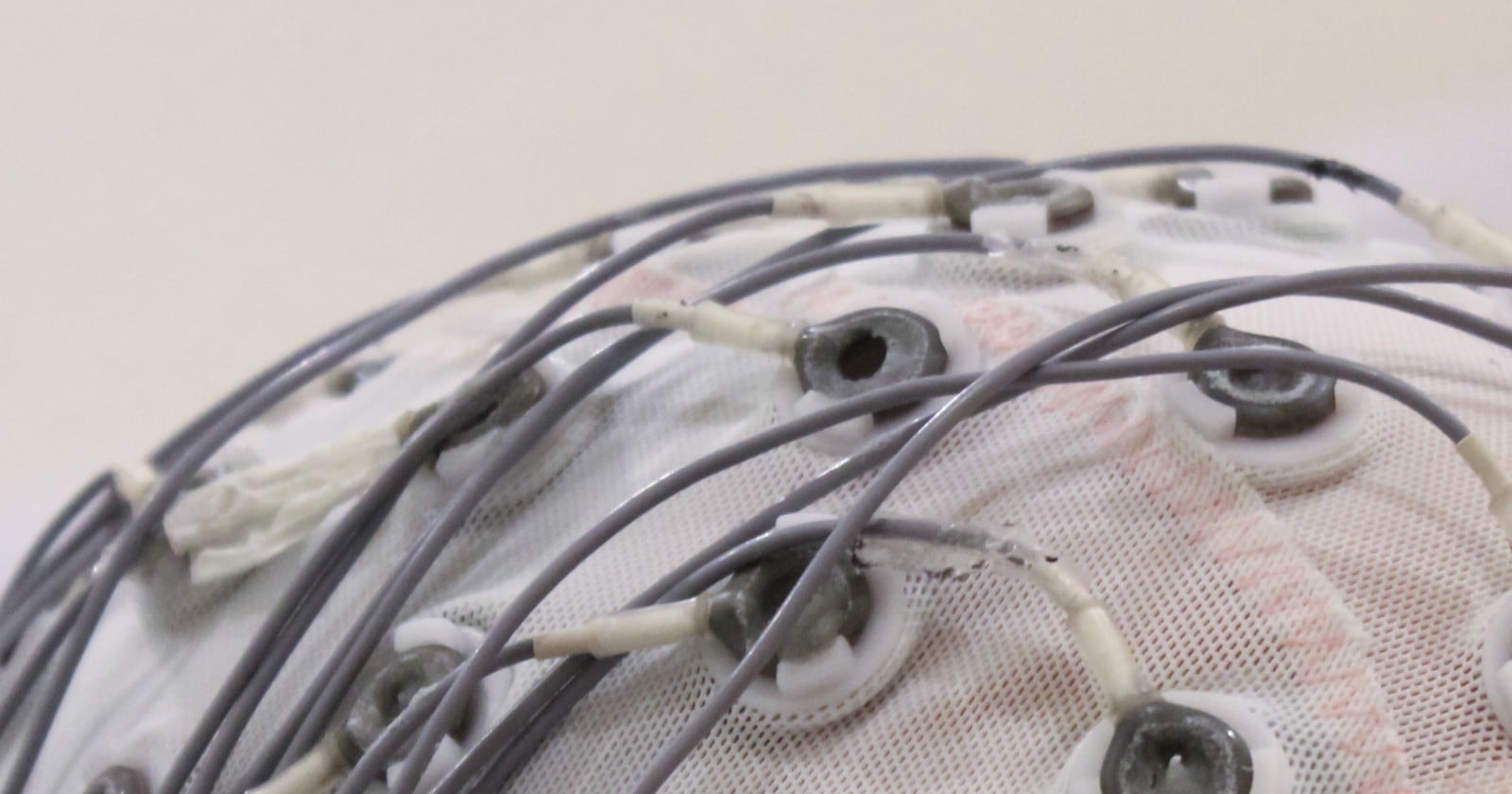
That burst triggers an automatic eyeblink, and how hard someone blinks is a clean readout of how their attention and emotion are tuned at that instant. Spacing the bursts across those three moments let the researchers separate a split-second attentional reflex from the slower emotional response that follows. They tracked the blinks with a smartphone camera reading facial landmarks, and at the same time recorded the brain’s electrical activity with an EEG cap, watching two signals in particular: a fast attention spike called the P3a, and a slower wave, the late positive potential, that tracks sustained emotional engagement.
The fearless and the cold, pulled apart
The P3a did much of the talking. That spike rises when something seizes your attention whether you meant to give it or not. Among the men in the study, the higher a person’s boldness score, the bigger that spike was in response to negative images, as if the disturbing picture commandeered more of their attention than it did for everyone else. The authors describe it as an attentional bottleneck, attention funneling hard toward the threatening thing in front of them. That is not what you would expect if fearless people simply felt less. In this sample the bold ones were not tuned out; their attention was captured. The effect also appeared only in the male participants, and boldness barely tracked with the empathy measures at all.
Meanness looked nothing like that. People who scored high on it produced a weaker startle blink late in the viewing window, at the 4,500-millisecond mark, the point where a strong emotional reaction should still be holding the body on alert. Their flinch had already faded. Alongside it came lower empathy, both the kind that involves understanding what others feel and the kind that involves physically mirroring it, and they rated the unpleasant images as less arousing than other people did.
The blunting went beyond arousal. High-meanness volunteers also rated the negative images as less negative than other people did, and rated the pleasant images as less positive, as if the whole emotional dial had been compressed toward the middle. The authors read the pattern as a reduced sensitivity to the emotional content of the images, valence and arousal alike, the cold flatness the meanness trait is named for. That is a closer match to the popular image of the cold personality than the fearless brain turned out to be, and it was meanness, not boldness, that went with something like an emotional flatline. The third trait, disinhibition, the impulsive, poor-self-control piece, produced no reliable signal here at all, emotional or attentional.
The reasons to hold this loosely
Start with what the study is not: a diagnosis. The volunteers were healthy young adults, most of them students, scoring across the ordinary range of traits that everyone carries to some degree, not incarcerated or clinically diagnosed. The findings are correlations, not evidence that one thing causes the other, and the ones that carried the story were modest in size, the sort that describe a tendency across a group rather than a rule about any single person. The boldness effect showed up only in men, so it may not carry over to women, and boldness’s link to lower empathy was weak enough that the authors themselves warn against leaning on it.
It is also one lab’s result, and it used a smartphone-based startle method the team was partly road-testing for the first time. The tool is promising and cheap, and the paper is candid that demonstrating it works is part of the point, which is a good reason to want the finding reproduced before building on it. What the data support is narrow: in this group, two traits that usually travel together under one label came apart when measured directly, one as captured attention, the other as blunted feeling.
If the fearless and the cold really run on separate systems, then the single word psychopathy may be flattening together things that deserve to be kept distinct, in the lab, and maybe in the way the rest of us picture the type at all.