
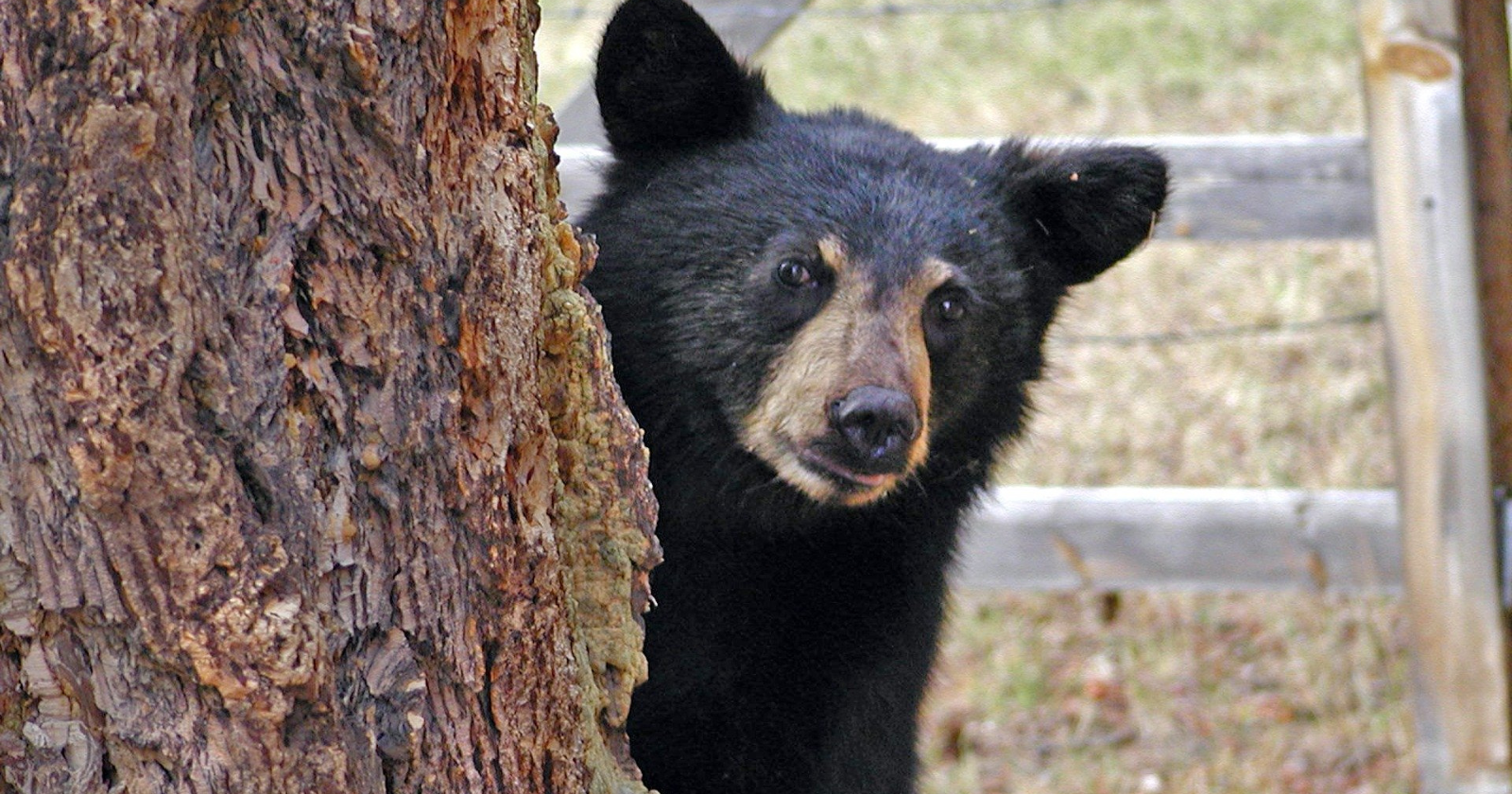
In summer, an American black bear’s heart beats around 55 times a minute. Deep in hibernation it can fall to as few as nine, with the better part of a minute sometimes passing between breaths and the beat quickening on each inhale. Those figures come from a study led by Øivind Tøien at the University of Alaska Fairbanks, published in Science on 18 February 2011, which monitored five bears continuously through a winter in dens rigged with telemetry. Heart-rate loggers implanted in wild bears, reported the same year by Laske, Garshelis and Iaizzo, have recorded average daytime rates near eight at the depth of hibernation.
The slowed heart is the part that travels. The figure that puzzled the researchers was the metabolic one. Tøien’s team found the bears cut their metabolism to about 25 per cent of normal while letting core temperature fall only five or six degrees, cycling between roughly 30 and 36 degrees Celsius. Most mammals slow their metabolism only as their body cools. Bears break that link.
They also emerge close to the condition they went in. Tøien’s team recorded metabolism still running below normal for up to three weeks after the bears left their dens.
What the bear actually keeps
Two systems that fail fast in an inactive human hold up unusually well in a denning bear: muscle and bone.
On muscle, the reference point is a short paper by Henry Harlow, Thomas Lohuis and colleagues in Nature in 2001, which measured leg-muscle strength in wild bears early and late in the denning season. Strength fell by about 23 per cent over 130 days. The authors noted that a human immobilised for a comparable stretch, extrapolating from bed-rest and spaceflight data, would be expected to lose closer to 90 per cent. Later work found muscle mass and protein content essentially intact. This is not a single result. Muscle preservation has since been shown across American, Asiatic and brown bears in several independent studies, so it reads as a real feature of bear physiology rather than one lab’s finding.
On bone, the work most often cited comes from Seth Donahue’s group, whose 2006 paper in the Journal of Experimental Biology tracked bone-metabolism markers across the bear’s year. Bone breakdown rises during hibernation, as it does in any inactive animal, but formation keeps pace and may even peak as the bear emerges. Bears also appear to recycle calcium back into the skeleton rather than excreting it, as an inactive human does. Donahue’s group has pointed to a bear-specific form of parathyroid hormone as part of the mechanism, and has spent years trying to turn that into an osteoporosis drug for people.
Why space agencies are paying attention
The connection to spaceflight is real, and the European Space Agency has made it directly. In a concept assessment run through its Concurrent Design Facility and written up by Alexander Choukér, Jennifer Ngo-Anh and colleagues in Neuroscience and Biobehavioral Reviews in 2021, ESA looked at whether a torpor-like state could be induced in a crew bound for Mars. The appeal is logistical first. A return Mars mission has to carry something like 30 kilograms of food, water and other supplies per astronaut per day. Cutting a crew’s metabolic rate toward the bear’s 25 per cent figure could, on the agency’s modelling, reduce consumables and habitat volume substantially, with possible secondary benefits for radiation tolerance and the strain of long confinement.
ESA has named the bear as its preferred model, for a specific reason: bears are close to humans in body mass and, unlike small hibernators, they barely drop their body temperature, which keeps the state within a range considered survivable for people. Choukér’s framing is that the bear demonstrates something worth taking seriously, that a large mammal can spend months immobile and fasting and still walk out in spring with only marginal loss of muscle and bone. NASA has pursued the same idea along a separate track. Through its Innovative Advanced Concepts programme it funded two studies, beginning in 2013, by the Atlanta firm SpaceWorks Enterprises under John Bradford, on a torpor-inducing transfer habitat that would use body cooling and sedation to hold a Mars-bound crew’s metabolic rate down.
What the research does not yet show
No human has been placed in torpor, by ESA, NASA or anyone else.
The ESA and SpaceWorks work is feasibility and concept study, not funded flight hardware, and neither claims otherwise. When researchers on the ESA project have offered a timeline of roughly a decade before human trials, that is a scientist’s estimate, not a programme on an agency’s manifest. It is also fair to separate two things the popular framing tends to fuse. The bear’s tissue-preservation biology and the engineering question of slowing an astronaut’s metabolism are related but distinct. Bears mostly inform the second as evidence that the state is survivable in a large mammal. They do not hand over a ready mechanism, and the “trick” is in fact several separate adaptations working together: metabolic suppression, calcium recycling, an unusual parathyroid hormone, and shifts in how muscle handles protein. Much of the bear biology, Donahue’s bone work in particular, has always been aimed first at terrestrial medicine, osteoporosis and muscle wasting and intensive-care patients, rather than at Mars. Choukér himself has said the first human likely to be put into an induced torpor state is more plausibly a hospital patient than an astronaut.
What to watch
The near-term proving ground is medical rather than orbital. Therapeutic cooling in intensive care, and the slow effort to bring a bear-derived osteoporosis compound through development, will show whether any of this translates to humans before a spacecraft is ever designed around it. For the space side, the marker to watch is whether ESA or NASA moves the torpor concept from paper study into funded animal work, and then, if that clears, toward a first human trial. Until that step is taken, the bear stays what it has been for two decades of this research: a well-recorded existence proof, not a method anyone has reproduced in a person.
