

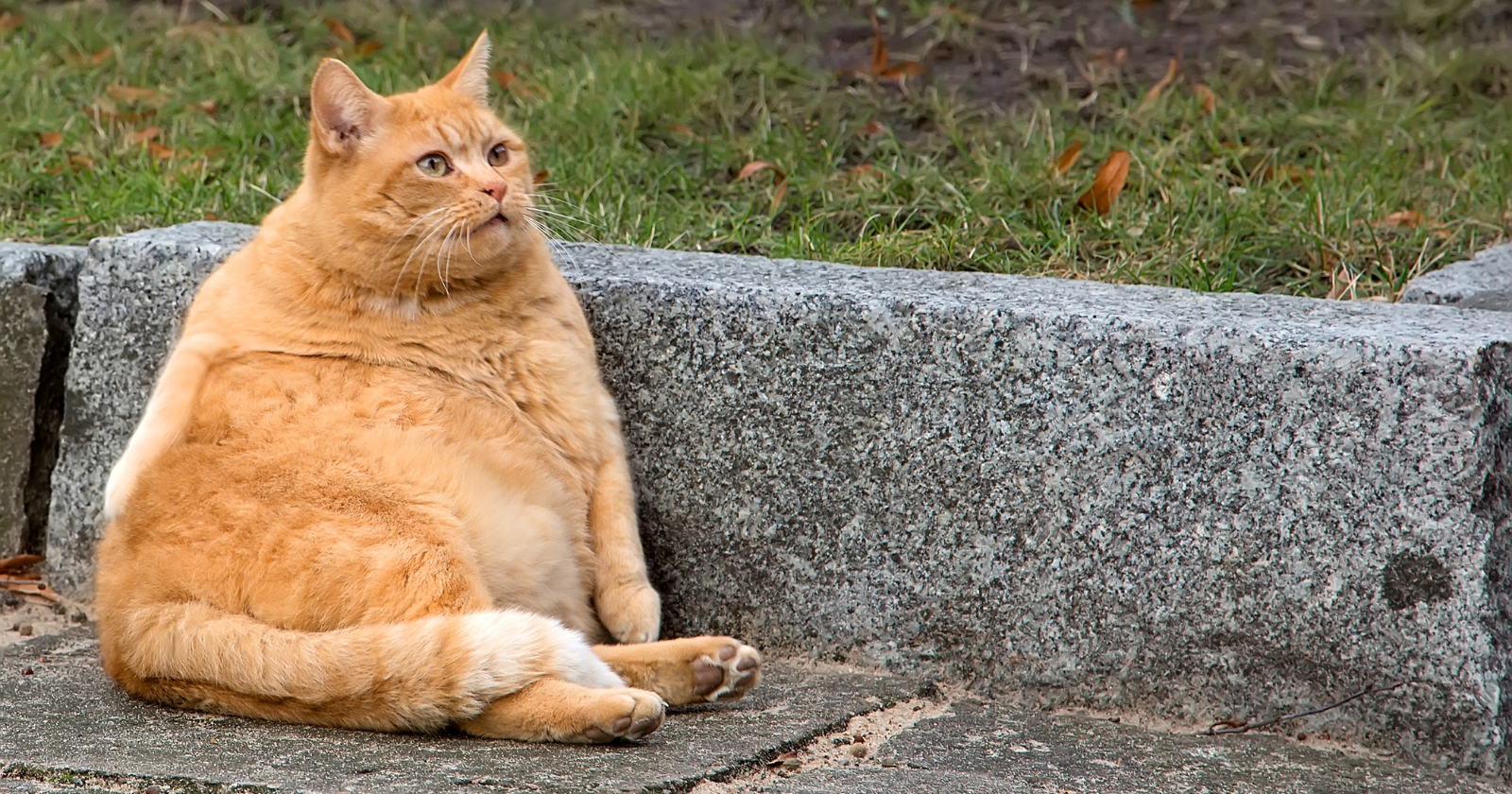
Two adult cats can share a house for years and barely meow at each other. Those same animals will meow at their owners daily, sometimes hourly. Kittens meow to their mothers, but grown cats living together tend to fall quiet with one another and switch to scent, posture, tail position and the occasional hiss.
The meow, aimed squarely at a human face, is something close to a domestication artefact: a kitten’s call for attention that never got put away.
This is one of the better-documented oddities of sharing a home with a cat, and it has a small but real body of research behind it. It also carries a few claims that get repeated more confidently than the evidence warrants, and that is the part to slow down on.
A kitten sound that stayed in use
That account comes from the biologist John Bradshaw, whose book Cat Sense sets out the argument that the human-directed meow is a post-weaning extension of kitten behaviour. Cats living without people mostly drop the meow as they mature and rely on smell and body language to manage their relations with other cats. Domestic cats kept the call and pointed it at the one audience that reliably answered.
The tidy version of this, that cats never meow at each other, goes too far. Free-ranging and feral cats do produce meow-like calls, mostly during the mating season. The accurate statement is narrower: meowing between adult cats is uncommon, and the meow directed at people looks like a signal domestication kept alive because it worked. That claim rests on accumulated observation and Bradshaw’s synthesis of it, rather than on one large controlled trial, and it is best held at that strength.
What the Cornell recordings showed
The most-cited early work is Nicholas Nicastro’s, done as a graduate student in evolutionary psychology at Cornell and first presented at the Acoustical Society of America in 2002. Nicastro compiled about 100 vocalisations from 12 cats and played them to volunteers, one group rating each sound for pleasantness, another for urgency. Pleasant calls tended to be short, starting high and falling in pitch. Urgent ones ran longer, with more energy low in the register.
In a 2004 paper in the Journal of Comparative Psychology he compared domestic cat calls with those of the African wildcat, the domestic cat’s nearest wild relative, and found the pet versions shorter and higher-pitched, and rated more pleasant by human listeners. His own framing was deliberately unromantic. Cats are not using language, he argued, and in his words cats do not know the meaning of their own meows. What they have, he suggested, is a learned sense of which sounds move us. The sample was twelve cats, a scale to keep in view before treating any of it as the final word.
The cry inside the purr
A second well-known result is Karen McComb’s, published in Current Biology in 2009 under the title “The cry embedded within the purr.” McComb, at the University of Sussex, noticed that her own cat’s morning purr was strangely difficult to ignore, and set out to work out why.
Her team recorded ten cats purring in two settings, when actively soliciting food and when not, equalised the recordings for volume, and played them to fifty listeners. People rated the food-seeking purrs as more urgent and less pleasant, even those who had never owned a cat. The difference came down to a high-frequency peak, at roughly 380 hertz, sitting inside the otherwise low purr and sounding something like a cry or a meow. When the researchers resynthesised the purrs to strip that peak out and changed nothing else, the sense of urgency fell away.
The authors read the embedded cry as sitting near the frequency range of a human infant’s cry, which may tap the same nurturing reflex. That is an interpretation of the acoustics, offered by the authors, not a demonstration that cats intend any of it. It has held up well as an example rather than as a universal rule.
The signature-meow idea needs care
Here is where the popular story tends to run ahead of the science. The appealing version has two parts: that your cat keeps a fixed catalogue of specific meows, one for the door and one for the bowl, and that each is tuned to you in particular.
It feels true to anyone who lives with a cat.
A recent paper complicates the first part more than the second. In Scientific Reports in December 2025, a research team whose authors include the bioacoustician Mirjam Knornschild analysed 276 meows from 14 cats and 557 purrs from 21 cats, testing how much individual identity each call type carried. Purrs were the stronger identity signal, classified to the correct cat about 85 per cent of the time. Meows were far less individually distinctive, at around 63 per cent, and domestic cat meows proved more acoustically variable than those of five wild relatives the team used for comparison.
That variability matters. A meow carries less of a fixed personal stamp than a purr does, which weakens the idea of a set catalogue while leaving room for tuning toward one owner. The authors themselves treat that flexibility as consistent with a call bent toward its listener rather than fixed to the animal making it. This is one study, not settled consensus, and the samples are small. It fits the more modest explanation the whole literature keeps returning to: cats adjust their calls to the situation and learn, by ordinary trial and response, which noises get a result from the specific people they live with.
What the calls are really tuned to
Taken together, the work points to a call built around whoever is meant to hear it. Calls that persisted in domestic cats are the ones that reliably got a human out of a chair. High, short, plaintive registers, the hardest for people to ignore, are what cats use on us most.
What stays genuinely under-tested is the piece most owners feel certain about: whether a cat tailors its calls to a single person rather than to the general fact of a human being present. The samples so far are too small to settle it. For now the defensible reading is that a cat has learned what works in its own household, which is a smaller and more interesting claim than the one about private vocabularies.