
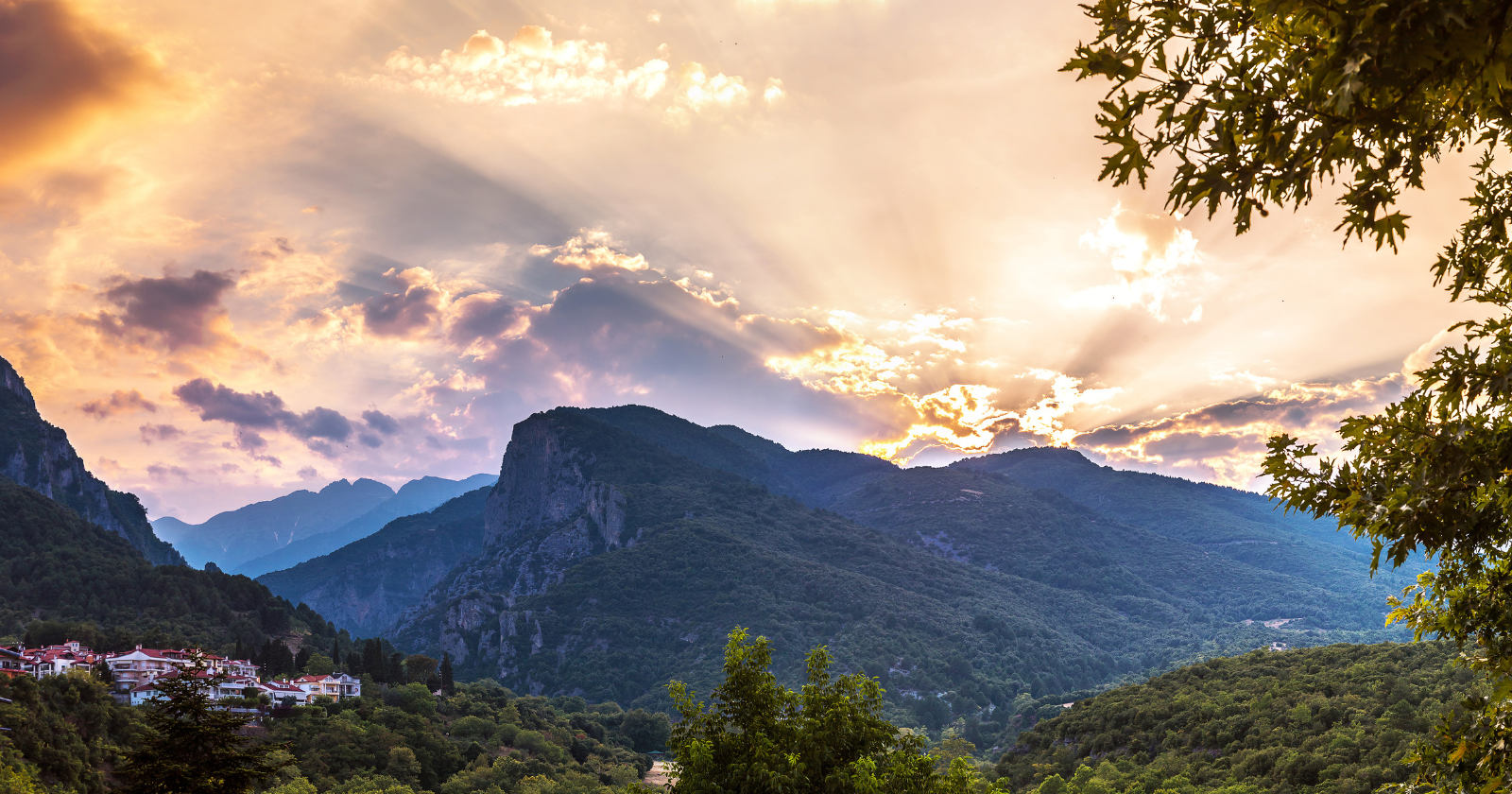
Mount Olympus has held UNESCO Biosphere Reserve status since 1981. Greece submitted the mountain and its surrounding region for full World Heritage inscription on 16 January 2014, placing it on UNESCO’s tentative list under a rare mixed nomination covering both natural and cultural criteria. More than twelve years later, the nomination is being examined this week at the 48th session of the World Heritage Committee, running from 19 to 29 July 2026 in Busan, South Korea.
According to reporting from Euronews, the advisory bodies that assess nominations ahead of the Committee’s meeting have recommended that Greece’s case be referred back rather than moved directly to a vote for inscription or rejection. Their observations reportedly call for more evidence on the area’s geological features, biodiversity, and ecological processes, and for the cultural case to be clarified further, including a proposal to add the archaeological site of Dion, at the mountain’s foot, to the nomination.
That falls short of a verdict — it’s a request for more homework, meaning the outcome of this session may be another period of waiting rather than a resolution either way.
What the mountain already has
At 2,917 to 2,918 metres, depending on the source consulted, Mytikas is the highest of Olympus’s summits and the highest point in Greece. The wider massif was declared Greece’s first national park in 1938, and in 1981 UNESCO separately designated it a Biosphere Reserve, a status that recognises an area’s ecological value and supports conservation research rather than granting it the protections or prestige of a World Heritage listing. Those are two different things, decided by two different processes, and the mountain has held the lesser of the two for close to forty-five years.
What it has not held, in all that time, is a place on the roughly 1,200-site World Heritage List, the designation that carries the strongest international recognition and, in practice, the most consequential protections against development, extraction, and neglect. Mount Olympus is one of dozens of sites worldwide sitting on tentative lists for years or decades before a Committee actually rules on them; a tentative list submission is a statement of intent, not a queue position with a guaranteed date.
Why the nomination is unusual
Greece is seeking Mount Olympus’s inscription as a mixed site, a category that requires demonstrating both natural significance, such as biodiversity or geological value, and cultural significance in the same nomination. Mixed sites are a small minority of the World Heritage List; most inscriptions qualify under either natural or cultural criteria alone. For Olympus, the cultural case rests substantially on the mountain’s status in Greek mythology as the seat of the twelve Olympian gods, a claim to significance that is symbolic and historical rather than archaeological in the way a temple ruin or a burial site would be. Reviewers weighing a nomination like this have to judge how a mythological association, which shaped centuries of literature, religion, and art well beyond Greece’s borders, sits alongside the more conventional physical and ecological evidence a World Heritage case usually leans on.
That is very likely part of what advisory bodies are asking Greece to document further. A natural-criteria case can point to species counts, geological formations, and biosphere data already gathered since 1981. A cultural case built on myth has to make an argument about the significance of an idea, not just a site, and that argument is harder to specify in the terms a Committee evaluation expects.
What a referral actually means
If the Committee follows its advisory bodies’ recommendation this week, the practical result is not rejection. Referral back to the nominating country is one of several standard outcomes available to the Committee, alongside inscription, deferral, or, less commonly, an outright decision not to inscribe. A referral typically asks the country to address specific gaps in evidence or argument and resubmit, which can add years rather than months to a case that has already run for twelve. It is worth being plain about what this means for the mountain in the near term: no change in legal protection, no change in visitor access, and no immediate change in international status, whatever the Committee decides this week.
Alongside the Committee’s deliberations, Christopher Nolan’s adaptation of the Odyssey, released in theatres on 17 July 2026 and drawing heavily on Olympus and Greek myth, has been cited in some coverage as part of the reason for renewed public attention to the mountain’s heritage status.
That kind of attention can shape public interest in a nomination, but it has no formal bearing on how the Committee’s advisory bodies or its member states evaluate the evidentiary case in front of them.
What to watch next
The 48th session of the World Heritage Committee runs through 29 July 2026. Whether Greece’s Mount Olympus nomination is formally referred back, deferred, or reaches some other outcome during that window will be the next concrete marker in a case that has already outlasted most news cycles that might have covered it.
Given the mixed-nomination complexity and the reported advisory recommendation, a full inscription decision at this specific session looks less likely than a further request for documentation. What that documentation would need to show, and how long Greece takes to supply it, is the open question the mountain’s decade-plus wait now turns on.
