Human Behaviour The human mind has no single prime age. Raw processing speed appears to peak around 18 or 19, while short-term memory improves until about 25 and remains relatively stable for another decade. The ability to recognise other people’s emotions peaks much later, in the 40s or 50s, while vocabulary—a measure of accumulated knowledge—can keep improving into the late 60s or early 70s. By Lachlan Brown · Jul 28, 2026
Flora And Fauna Every owner knows the dog head-tilt, but which dogs do it most turns out to be telling: the rare dogs 'gifted' at learning toy names tilted their heads far more often, hinting the tilt marks a mind hard at work By Mal James · Jul 28, 2026

Science There's a stretch of desert in Chile so dry that a single rain event turned up in four years of instrument records, and its soil fools life-detection hardware in precisely the way Mars does, so NASA spent four field seasons rehearsing a rover mission on it By Daniel Moran · Jul 28, 2026
Mind & Meaning A mother can carry a living piece of her child for the rest of her life, and not as a metaphor. During pregnancy some of the baby's cells cross into her body and lodge in her organs, even her brain, and male DNA has been found in a woman's brain as late as the age of 94 By Daniel Moran · Jul 28, 2026
Flora And Fauna A 2019 experiment challenged the old idea that cats are aloof and indifferent to their owners: researchers found that about two-thirds of the cats they could classify showed secure attachment patterns resembling those seen in babies with a caregiver By Mal James · Jul 28, 2026

Marsdaily A NASA instrument the size of a toaster, riding inside the Perseverance rover, converted Martian air into 122 grams of breathable oxygen between 2021 and 2023 — enough to keep a small dog alive for 10 hours, and proof that astronauts could one day make the fuel to fly themselves home By Lachlan Brown · Jul 28, 2026
Science In the jungles of Vietnam there is a cave so vast it has its own river, its own weather, and its own rainforest growing beneath shafts of daylight — large enough to swallow a New York City block of skyscrapers, and no outsider set foot inside it until 2009 By Daniel Moran · Jul 28, 2026
Technology An MIT study found 95 percent of corporate generative AI pilots delivered no measurable return, pointing at habits over the technology By Mal James · Jul 28, 2026

Psychology On a hospital ward where half the rooms were bright and half were dim, patients recovering from depression who landed on the sunny side went home about two and a half days sooner — nobody had prescribed anything, and the researchers thought some had been getting light therapy without realising it By Daniel Moran · Jul 28, 2026
Flora And Fauna A woodpecker slams its beak into solid wood twenty times a second, and the bizarre thing keeping its brain intact is its own tongue By Kiran Journals · Jul 28, 2026
Human Behaviour Around 2018 humanity crossed a line it had never once crossed in all its history: for the first time ever, people over 65 came to outnumber children under five, and the gap has widened every year since By Mal James · Jul 28, 2026
Psychology Psychopathy may be two different things, not one: in 115 ordinary adults, one type's attention locked hard onto the images that unsettle most people, while the other barely flinched at them By Human Element · Jul 28, 2026
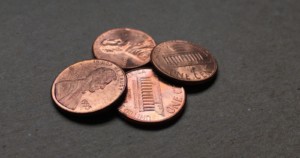
Political Economy For years the humble American penny carried a quiet embarrassment that finally ended its long run: each one-cent coin had come to cost nearly four cents to make, and in late 2025 the US Mint struck its very last circulating penny By Mal James · Jul 28, 2026
Science The ocean produces roughly half of the oxygen humans breathe — not the Amazon, not forests — through microscopic organisms called phytoplankton that most people have never heard of By Lachlan Brown · Jul 28, 2026
Science How does a fish live eight kilometres beneath the surface, under pressure equal to a thousand cars stacked on its back, in water so cold and so heavy that the proteins in its body should long since have stopped folding? By Lachlan Brown · Jul 28, 2026
Psychology The more money, time, or effort we've poured into something failing, the harder it gets to quit, even when walking away is plainly the smart move: we throw good resources after bad just to justify what we spent By Mal James · Jul 28, 2026