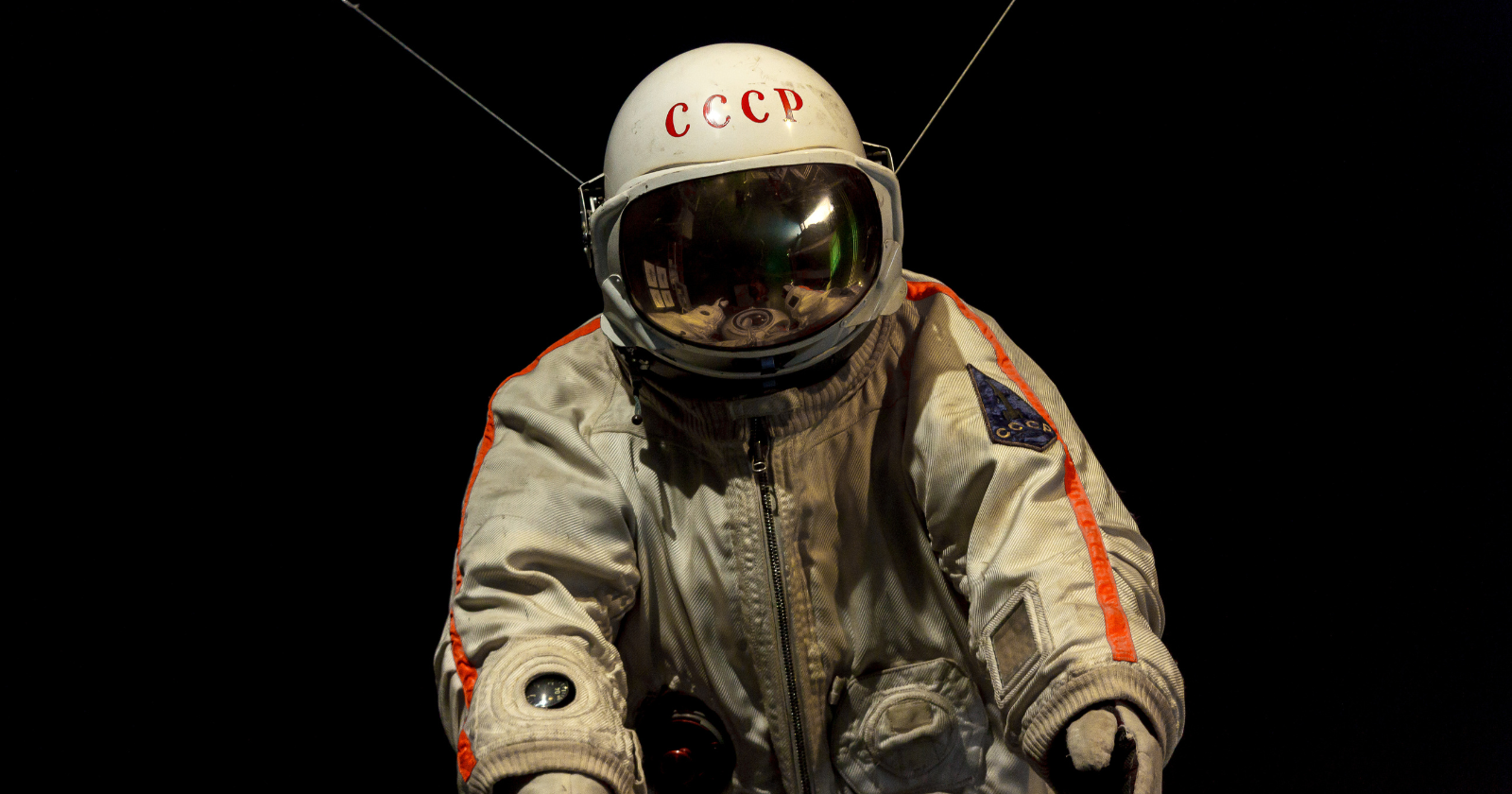
When you picture the people who flew the first space missions, you probably picture a certain kind of person. Fighter pilots. Engineers. Men with jaws set for the recruiting poster. The Mercury Seven fit that mould neatly. The first woman in space did not. She worked as a spinner in a textile factory, and the experience that helped put her into a spacecraft was not flying but jumping out of aircraft.
Valentina Tereshkova made her first parachute jump in May 1959, at 22. That amateur skydiving is what put her on the Soviet radar. Vostok cosmonauts did not land inside their capsules: they ejected during descent and parachuted down separately, so parachuting was a formal requirement even though piloting was not.
Why they picked a textile worker
The Soviet programme screened a large field to find its female candidates. About 400 candidates were initially screened, 40 were called to Moscow for interviews and medical tests, and five were selected for training. Tereshkova emerged from that group.
She was 26 at launch, and she remains the youngest woman to fly in space. On 16 June 1963 she lifted off aboard Vostok 6. Her selection reflected the politics of the space race, but the mission itself was real, demanding and historic.
What nearly three days alone actually meant
Tereshkova’s flight lasted two days, 22 hours and 50 minutes, and she circled Earth 48 times. She flew solo. With that single mission she logged more time in space than all the US Mercury astronauts who had flown by then combined.
The early American flights were short. Alan Shepard and Gus Grissom each spent about 15 minutes in space. John Glenn and Scott Carpenter flew for just under five hours each, Wally Schirra for a little over nine hours, and Gordon Cooper for about 34 hours. Together, the six flights totalled 53 hours, 55 minutes and 27 seconds, still well short of Tereshkova’s 70 hours and 50 minutes.
She also remains the only woman to have made a solo spaceflight. The isolation was real: no crewmate to hand a problem to, inside a capsule barely large enough to move in, for almost three days.
The problem she said was kept quiet
Decades later, Tereshkova said something had gone wrong with her spacecraft’s automatic control programme. Recalling the mission at London’s Science Museum in 2015, she described the problem this way:
“My toothbrush was nothing compared to the fact that the spacecraft was programmed to ascend, but not to descend. Now that was a mistake.”
Ground control sent a corrected computer programme that allowed the spacecraft to return to Earth. Tereshkova also said she asked that the engineer responsible not be punished and, in return, was asked not to reveal the error. She kept it quiet for around 30 years.
This is Tereshkova’s later account. It is safest to treat the dramatic version as her recollection rather than a fully settled technical record.
What her flight was, and what it wasn’t
The uglier side of the story is the criticism directed at her afterward. The New Mexico Museum of Space History notes that Sergei Korolev was reportedly unhappy with her performance and described her as being “on the edge of psychological instability.” Tereshkova rejected that portrayal, pointing out that she completed the mission schedule and had asked for the flight to be extended to three days.
The next woman in space, Svetlana Savitskaya, did not fly until 1982, 19 years later. Nor was Vostok 6 a piloting showcase: the spacecraft was largely automated, though Tereshkova carried out observations, maintained a flight log and entered data sent by ground control.
What it was, however, was a genuine solo mission that outlasted every American who had flown, carried out by someone the usual astronaut-selection mould would never have admitted. The launch was celebrated, the programming issue was kept quiet, and criticism followed in private.
Underneath all of that remains the central fact: a former textile worker orbited Earth alone for nearly three days and returned safely.