Science Finnish researchers tracked babies napping outdoors at minus 5°C and found they slept up to 90 minutes longer than indoors By Space Daily Editorial Team · Jun 30, 2026
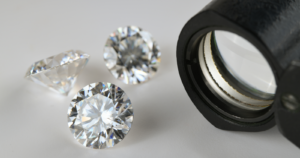
Chip Tech A Chinese HPHT press can grow a one-carat diamond chemically identical to a mined stone in about two weeks — and it collapsed a price the cartel defended for 137 years By Space Daily Editorial Team · Jun 30, 2026
Disaster News Venezuela's buildings didn't fall because of one earthquake — they fell because a second one hit 39 seconds later, and engineers say that gap is the entire story By Space Daily Editorial Team · Jun 30, 2026
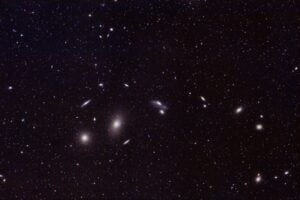
Space Industry Pranim Limbo, a citizen scientist inspecting deep radio images from a remote hillside in the Himalayas, spotted a galaxy nearly 1.8 million light-years across bent into the shape of a bow and arrow — and the team that followed up thinks it's frozen mid-crash into a galaxy cluster By Space Daily Editorial Team · Jun 30, 2026
Earth News In January 2025, the loudest gravitational wave ever recorded hid a second signal nobody knew how to read — and a decade after the first detection, it has just given physicists the spin rate of a black hole's event horizon By Space Daily Editorial Team · Jun 30, 2026
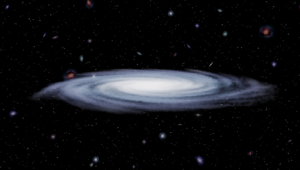
Constellations In 2025, astronomers found one of the largest spinning structures ever reported in the universe: a cosmic filament roughly 50 million light-years long, containing nearly 300 galaxies. Many of its galaxies appear to rotate in sync with the filament itself — a vast, coordinated motion that challenges current models of how galaxies gain their spin. By Space Daily Editorial Team · Jun 30, 2026
Tech Space In June 2026, astronomers using the Murchison Widefield Array in remote Western Australia announced the discovery of PSR J0125−5854, a millisecond pulsar locked in an unusually wide 833-day orbit with what appears to be a burned-out helium white dwarf, the first such object the low-frequency radio array has ever uncovered By Space Daily Editorial Team · Jun 30, 2026
Science The bootlace worm found washed up on Scottish beaches after storms can stretch more than 55 metres when relaxed, making it longer than the largest blue whale, and it secretes a mucus laced with a neurotoxin that paralyses crabs and kills cockroaches in lab tests By Space Daily Editorial Team · Jun 30, 2026
Science The first dinosaur bone ever discovered on the continent of Antarctica was confirmed last week, forty years after it was picked up on the Antarctic Peninsula in 1985 and stored in a museum drawer in Cambridge — a tail vertebra from a titanosaur, the group that included the largest animals ever to walk on land By Space Daily Editorial Team · Jun 30, 2026
Constellations In 2025, astronomers discovered Eos, the closest dark molecular cloud ever found — a vast crescent of molecular hydrogen just 300 light-years from Earth. It is so enormous on the sky that, if human eyes could see its ultraviolet glow, it would stretch about 40 times the width of the full Moon. By Space Daily Editorial Team · Jun 30, 2026
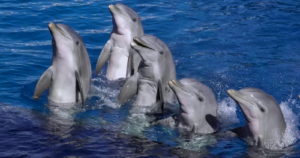
Science Within the first few months of life, every bottlenose dolphin invents a unique whistle that becomes its name for the rest of its life — and other dolphins learn that whistle, remember it, and use it to call out to that specific individual, making bottlenose dolphins the first non-human species ever discovered to use personal names By Space Daily Editorial Team · Jun 30, 2026
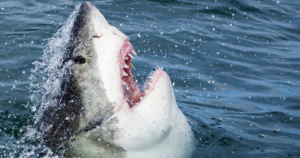
Mind & Meaning In July 1916, sharks killed four swimmers along the coast of New Jersey, two of them in a tidal creek miles inland from the ocean — and the panic that swept across the country during those twelve days became the foundational American fear of sharks that inspired the film Jaws By Space Daily Editorial Team · Jun 30, 2026
Mind & Meaning In May 1977, so few American theater owners wanted to screen a science-fiction film called Star Wars that the studio had to bundle it with another film theaters actually wanted — and within a year, the movie no one in Hollywood expected to succeed became the highest-grossing movie in history By Space Daily Editorial Team · Jun 30, 2026
Mind & Meaning A Hungarian biochemist named Katalin Karikó, who smuggled her family's savings inside her daughter's teddy bear to escape communist Hungary in 1985, spent the next thirty years being demoted, defunded, and rejected for her work on messenger RNA — and her ignored research became the foundation of the COVID vaccines administered to billions of people By Space Daily Editorial Team · Jun 30, 2026
Mind & Meaning We tend to think we form opinions by weighing all the evidence — but confirmation bias means we mostly seek out and remember what already fits the beliefs we hold By Mal James · Jun 30, 2026
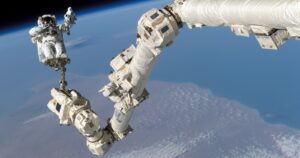
Station News NASA astronauts head outside the space station to replace a Canadarm2 wrist joint that malfunctioned after 25 years in orbit By Space Daily Editorial Team · Jun 30, 2026