

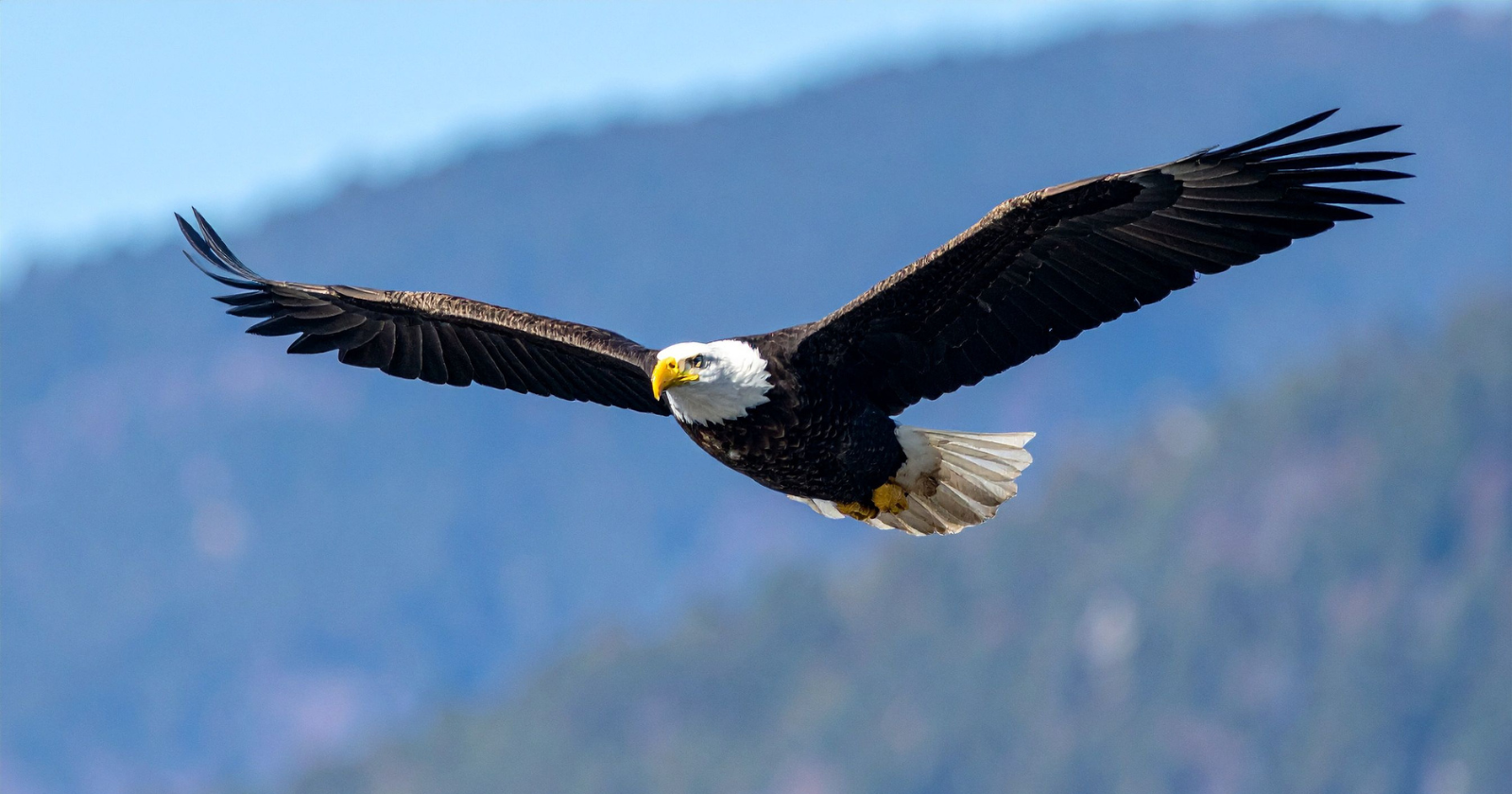
The bald eagle had not always been a rare bird. When the United States adopted Haliaeetus leucocephalus as its national symbol on 20 June 1782, the species may have numbered as many as 100,000 nesting pairs across the continent, with substantial breeding populations in every state where suitable habitat existed. The bird was, by the standards of late-eighteenth-century North America, abundant.
By the middle of the twentieth century, that abundance had been substantially reduced by habitat destruction, deliberate persecution, and the steady loss of the species’ preferred prey base. Bald eagles had been shot in large numbers throughout the nineteenth and early twentieth centuries on the assumption that they preyed on poultry and livestock. By the 1940s, the species had vanished from most of its former range outside Alaska, and population estimates in the lower 48 states had fallen into the low thousands.
The collapse that followed was different in kind from the slow attrition that had preceded it.
The chemical
In the years immediately following the Second World War, an organochlorine compound called dichloro-diphenyl-trichloroethane became the most widely used agricultural insecticide in the United States. The chemical, developed in the 1930s and used militarily during the war to control insect-borne diseases, was known by the abbreviation DDT. It was cheap, effective against a wide range of pests, and considered by the agricultural and public health establishment to be largely harmless to higher animals. American farmers sprayed DDT across their cropland in quantities that, by the early 1950s, ran to tens of thousands of tonnes per year.
DDT did not stay on the cropland. It washed into rivers, lakes, and coastal estuaries. Aquatic plants and small invertebrates absorbed it. Fish that ate them accumulated it in their tissues at concentrations substantially higher than the surrounding water. Larger fish that ate the smaller fish accumulated it at even higher concentrations. The process is called bioaccumulation, and by the late 1950s the concentration of DDT in the bodies of large predatory birds at the top of aquatic food chains had reached levels the species had never encountered in their evolutionary history.
The chemical’s effect was specific and devastating. DDT interfered with the enzymatic process by which female birds deposited calcium in their eggshells. The shells of bald eagle eggs laid by DDT-contaminated females were between 15 and 25 per cent thinner than the shells of eggs laid by uncontaminated females. The thinner shells could not bear the weight of an adult eagle attempting to incubate them. The eggs broke in the nest. The chicks inside them died before they had hatched.
The same effect was being observed across the entire continental population of large predatory birds. Peregrine falcons, ospreys, brown pelicans, and Cooper’s hawks all experienced comparable population collapses during the same period and through the same mechanism.
The book
In September 1962, a marine biologist and science writer named Rachel Carson published a book titled Silent Spring. Carson had spent the preceding four years researching the ecological effects of synthetic pesticides on American wildlife. The book argued, in language accessible to a general readership and supported by detailed footnoting, that the widespread use of DDT and related chemicals was producing a continent-wide ecological catastrophe that the agricultural establishment had refused to recognise.
The book became a bestseller within weeks. It was excerpted in The New Yorker. It was attacked by the chemical industry in a sustained public-relations campaign that included direct personal attacks on Carson herself, who was at the time terminally ill with breast cancer and would die in April 1964 without seeing the legislative changes her book had triggered.
President John F. Kennedy ordered a federal investigation of the claims in Silent Spring in 1962. The President’s Science Advisory Committee, reporting in May 1963, substantially confirmed Carson’s analysis. The report became one of the founding documents of what would become, over the following decade, the modern American environmental movement.
The ban and the recovery
The Environmental Protection Agency, established in 1970, announced a ban on most agricultural uses of DDT in June 1972, effective 31 December that year. The ban was substantially driven by the evidence on bald eagles, peregrine falcons, and other affected species that had been accumulating since the publication of Silent Spring a decade earlier.
The Endangered Species Act, signed into law by President Richard Nixon on 28 December 1973, provided the legal framework under which the recovery of the bald eagle would be managed over the following three decades. ESA protection was extended to the entire lower 48 states in 1978, with the exception of Alaska, where the population had remained healthy because of lower agricultural pesticide use across the state.
The recovery, on the available US Fish and Wildlife Service population data, was substantially faster than any of the contemporary biologists had predicted. The population doubling time across the three decades following the DDT ban averaged approximately seven to eight years. From a low of 417 nesting pairs in 1963, the population reached approximately 5,000 pairs by 1997, approximately 10,000 pairs by 2007, and, by the most recent USFWS estimates, approximately 71,400 nesting pairs in 2020.
The mechanisms behind the recovery were several. The DDT ban allowed surviving birds to produce viable offspring for the first time in nearly two decades. ESA protection prohibited the deliberate killing of bald eagles. Captive breeding and “hacking” programmes, in which biologists reared eaglets in artificial nests and released them into former breeding areas where the species had been locally extinct, restored populations in regions where the wild population was too sparse to repopulate naturally.
The delisting
On 28 June 2007, the Secretary of the Interior, Dirk Kempthorne, stood at the Jefferson Memorial in Washington and announced that the bald eagle would be removed from the federal list of threatened and endangered species. The species had been reclassified from endangered to threatened in 1995. The 2007 delisting was the formal recognition that the recovery goals established under the original 1978 ESA listing had been met.
The bald eagle continues to be protected under the Bald and Golden Eagle Protection Act of 1940 and the Migratory Bird Treaty Act of 1918. Killing or disturbing a bald eagle, or its nest, remains a federal crime. The species’ recovery does not represent the end of legal protection. It represents a change in the legal category under which that protection is administered.
The honest limitations
The 71,400 nesting pairs figure for 2020 represents a substantial increase over the 1963 low point, but it is still below the 100,000 pairs estimated for 1782. The species has recovered to approximately 70 per cent of its pre-decline population.
The recovery has been geographically uneven. Bald eagle populations have recovered most strongly in regions with substantial protected wetland habitat, particularly the Chesapeake Bay, the Great Lakes, and parts of the Pacific Northwest. Populations in the southeastern United States have recovered more slowly.
Several ongoing threats continue to affect the species. Lead poisoning from the consumption of waterfowl killed by lead shot is now estimated to be the leading cause of mortality in bald eagles in some regions. Wind turbines kill an estimated several hundred bald eagles per year, although the population-level effect is currently considered manageable. DDT itself persists in soils and sediments for decades and continues to circulate at low levels through aquatic food chains.
What it means
The recovery is a documented case of a large vertebrate species being brought back from the edge of extinction by a combination of regulatory action, scientific monitoring, and habitat protection. The mechanism was not novel technology or extraordinary expense. It was a ban on a single chemical, a federal law protecting endangered species, and a sustained programme of habitat management and captive breeding.
Rachel Carson’s Silent Spring is one of the few books in modern history that can be credibly described as having altered the course of national environmental policy. The book did not single-handedly produce the DDT ban or the Endangered Species Act, but the chain of legislative and regulatory events that followed its publication is sufficiently direct that the connection is not in serious dispute. Its author died in 1964 without knowing that the bird whose plight she had described would recover within her lifetime had she lived to see it.
The recovery was not predicted by most of the biologists involved at the time it began. The contemporary expert consensus in the early 1970s was that the bald eagle would continue to decline for at least a generation after the DDT ban took effect, because of the persistence of the chemical and the slow reproductive rate of the species. The actual recovery substantially exceeded those predictions.
The bald eagle was not unique. The peregrine falcon, the brown pelican, the osprey, and several other large predatory birds recovered in parallel through the same combination of mechanisms. The American Bird Conservancy has documented comparable recoveries in 41 American bird populations that recovered substantially through ESA protection during the same period.
The mother eagles are no longer crushing their own eggs.
The chicks inside them are hatching.