

The United States said Thursday it had slapped sanctions on two Chinese firms and one individual agent it accused of supplying Iran with materials used in the manufacture of chemical and biological weapons.
The announcement, less than a month before US President George W. Bush is due in Beijing for a summit with President Jiang Zemin, threw the spotlight squarely back on China’s proliferation record — a highly inflammatory issue in Sino-US relations.
A veneer of cooperation has coated US-China ties in recent months as the two sides have stressed their willingness to work together to combat terrorism following the September 11 terror attacks.
But proliferation of materials which could be used to make or deliver weapons of mass destruction is one issue, along with human rights, Taiwan and security with the potential to change that dynamic.
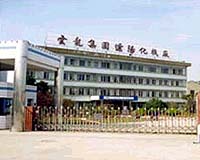
State Department spokesman Richard Boucher said restrictions were placed on Liyang Chemical Equipment company, the China Machinery and Electric Equipment Import and Export Company, and an individual broker and agent named as Q.C. Chen.
“The penalties were imposed for the transfer to Iran of equipment and technology that’s used for the manufacture of chemical and biological weapons; equipment that’s controlled under what’s called the Australia Group,” he said.
The Australia Group is a 34-nation informal agreement designed to ensure that the export of certain chemicals does not contribute to the spread of chemical weapons. The United States is a participant in the group. China and Iran are not.
Sanctions were imposed under the Iran Nonproliferation Act of 2000, US legislation which prohibits the sale of chemical and biological weapons components and missiles and missile technology to Iran, designed to stop Tehran acquiring weapons of mass destruction.
They were imposed on January 16, though the measure was first announced on Thursday, in the Federal Register, a government gazette.
The restrictions, which will be in effect for two years, prohibit any US government contracts with the entities and bar them from purchasing any defense items from the United States.
A senior State Department official said that the transfers were revealed in a CIA report on Iranian activities covering the first half of 2001.
“They were not weapons but items that are controlled,” said the official.
As well as weaponry, the law also covers so-called dual use items — which can be adapted from an innocent purpose and employed for military means.
It was the second time in less than six months that the United States moved against Chinese companies allegedly involved in proliferation.
On September 1, the United States imposed sanctions on a Chinese state-owned firm it accused of funneling missile technology to Pakistan, which is engaged in a nuclear arms race with its arch-rival India.
China denied the charges and Pakistan said it received no missile components, but the United States has refused to lift the sanctions, which have hit Chinese hopes of its satellites being launched on US rockets.
US and Chinese officials have tackled the matter at a high level in several recent encounters — including Secretary of State Colin Powell’s visit to Beijing last year, when proliferation was a major bone of contention.
China says it has enacted a new system of export controls designed to prevent proliferation. Top US officials argue that the safeguards are still not sufficient.
“We’ve had a long-standing dialogue with China on nonproliferation issues and overall sought to get China to abide by or impose similar standards to those that the rest of the international community follows when it comes to these kinds of transfers,” Boucher said.
