
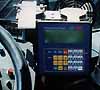
Orbital Sciences has completed installation of Portland’s Tri-County Metropolitan Authority (TRI-MET), Montgomery County, Maryland’s Department of Transportation and Public Works, and the State of Maryland’s Mass Transit Administration’s (MTA), Intelligent Fleet Management System. The ORBTRAC system was designed and built by Orbital’s Intelligent Transportation Systems (ITS) business unit, located in Germantown, Maryland.
Mr. Robert D. Strain, Orbital’s Executive Vice President and General
Manager of the ITS Division, said, “System acceptance by these transit
authorities represents a significant milestone for Orbital’s ITS division in the development and installation of satellite-based transit systems. These Automatic Vehicle Location systems provide each agency the tools to improve operations and cost effectiveness and to enhance the quality of service to their customers.”
At TRI-MET, Orbital’s ORBTRAC system is installed on 692 fixed-route buses
and 154 paratransit vehicles. ORBTRAC provides computer-aided dispatch and automatic vehicle location functions, including two-way data and voice
messaging, schedule and route adherence, vehicle location represented on
Geographic Information System (GIS) electronic maps, and automatic
passenger counting.
Orbital’s In-Vehicle Unit (IVU) continuously compares location and time derived from Global Positioning System (GPS) satellites to pre-planned schedules and notifies TRI-MET’s management of any significant deviations. At the end of the day, detailed maintenance, passenger loading and schedule adherence data is off-loaded for analysis to plan improved customer service. At the TRI-MET Command Center, real-time data is used to monitor and proactively correct service deviations caused by traffic jams, detours or other unusual events.
Montgomery County’s fleet management program supports 96 fixed-route
buses on the Ride-On System, with plans for 90 additional buses in the future. This system is unique in its integration of transit and traffic operations at the Montgomery County Transportation Management Center. In addition to the Computer Aided Dispatch (CAD) and Automatic Vehicle Location (AVL) functions described for TRI-MET, transit vehicles may request priority movement through the central traffic signal control system to maintain schedules. Real-time data from this system will also be used to provide up-to-date information to waiting passengers at bus stops throughout the service area.
For the MTA, Orbital supplied a unique vehicle wayside communication
system for Baltimore’s light rail transit system that adjusts traffic signal timing to expedite service through the downtown area with minimal impact on cross-street traffic. Orbital’s IVU, installed on each light rail vehicle, calculates position with respect to schedule and, if necessary, sends a message to the upcoming traffic signal requesting either an early green signal or additional green time to pass through the intersection. This allows vehicles to proceed through the downtown area with limited interruption from traffic signals.
Orbital’s ITS business unit is a leading systems integrator of GPS-based
asset management services. Highlighting these services are state-of-the-art equipment and software for mobile vehicles, including bus and rail transit systems, state and municipal maintenance fleets, emergency vehicles and commercial vehicle fleets. In addition to these systems, Orbital’s ITS products are helping transit system officials in Chicago, IL, New York City, NY, Oakland, CA, Long Island, NY, and numerous other cities, counties and regions throughout the United States.
Orbital is a $600 million (1997 sales) space and information systems
company that employs over 4,000 people and maintains operations in eight
states and several international locations. Headquartered in Dulles, VA, the company designs, manufactures, operates and markets a broad range of
affordable space infrastructure systems, satellite access products and
satellite services. These include satellites, launch vehicles, sensors and
electronics, satellite ground systems and software, satellite-based
navigation and communications products, and satellite-delivered fixed and
mobile communications and Earth imaging services.
