

Washington DC – July 22, 1997 – Thiokol Corp. announced yesterday a major
development in the race to build and fly the first private reusable space
vehicle. The Utah-based firm announced in Washington that it was joining
with Pioneer Rocketplane to create a new family of upper stages to fly
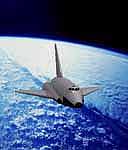
inside the Pioneer Pathfinder, a proposed reusable, manned spaceplane that
is to begin suborbital flight trials in two years.
Thiokol will use both its existing line of STAR solid fuel rocket stages
in the spaceplane as well as a new, all liquid stage to be built using a
new monopropellant rocket engine. The stage, which will be released from
the Pathfinder winged vehicle to send the satellite payload to its final
orbital destination, will be able to carry 200 to 400 pound space
platforms or small satellites. The development marks the first new U.S.
upper stage vehicle in more than a decade.
Pioneer Rocketplane is one of several firms now competing for a NASA
development contract aimed at creating a new small U.S. rocket booster
capable of sending small payloads into space for about $1 million per
launch, an order of magnitude less than today’s current small launchers,
the winged Pegasus and stacked, staged Taurus. Both rockets are believed to
cost in the $9 to $12 million range, and are products of Orbital Sciences
Corp. of Dulles, Virginia. Under the Bantam project, the space vehicle can
be reusable, expendable, or a combination. Pioneer’s design is a small
winged spaceplane about the size of an F-16 fighter jet that takes off from
a runway and is refueled with liquid oxygen from a tanker aircraft. Once
full of fuel from the tanker, which is planned as a converted Lockheed
L-1011 cargo plane, the Pathfinder vehicle ignites a rocket engine and
flys 80 miles into space but doesn’t orbit. At that point, the Thiokol
stage with the satellite or payload attached, is released and flies the
remainder of the flight into orbit. The Pathfinder, with a crew of two
astronaut-pilots, returns to Earth and lands using jet engines. The small
craft can be turned around for another flight into space in a few hours,
according to company officials.
Thiokol’s new upper stage program might also make it easier for any number
of current proposals for private winged reusable vehicles. No matter what
the design, each of the several companies now making their designs
available for private financing will also need a new, small upper stage to
deliver their satellites into final orbits. Thiokol’s move yesterday
breathes new life into the stale and oft stagnant U.S. rocket business-and
opens a whole new all-civil space product line for the company.
Reuseable Launch Vehicle Archive at Spacer.Com
Rotary
Kistler
X-3X
Other Space Planes
General RLV Industry Issues
