
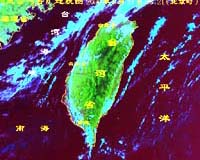
A non-military zone should be set up in the Taiwan Strait and dialogue reopened between Taiwan and China to avoid unexpected clashes in what is regarded as a potential regional flash point, an official report said Saturday.
The lingering standoff between Taiwan and China should be solved in a peaceful manner, the report by Taiwan’s National Security Council, an advisory body to the president, said.
Beijing called off rapprochement talks in 1995 to protest the landmark US visit by Taiwan’s then president Lee Teng-hui, alleging the trip was part of his efforts to push for independence.
China’s People’s Liberation Army then triggered the nerves of Taiwan and its neighbours by lobbing ballistic missiles into waters off the island.
The crisis ended only after the United States sent two carrier groups to the area in an apparent warning to Beijing against further sabre-rattling.
“In order to avoid military clashes, the two sides should weigh the feasibility of setting up a non-military zone, where combat personnel, weaponry and missiles are pulled out,” it said.
Taipei pledged in the report not to develop nuclear and bio-chemical weaponry and urged Beijing to follow suit.
However, the report suggested the government hike the annual military spending to account for 3.0 percent of the national domestic product by 2008, up from the present 2.5 percent, as Taiwan needs proper military forces to safeguard its hard-won democracy.
According to a report by the Pentagon in July last year, China’s defense spending was two to three times greater than acknowledged by Beijing, or up to 90 billion dollars in 2005.
The Pentagon also said China’s efforts to increase its ballistic missile strength and modernize its conventional forces were largely aimed at retaking Taiwan.
China has repeatedly threatened to invade Taiwan should the island declare formal independence. Beijing has regarded the self-governing island as part of its territory since their split in 1949 at the end of a civil war.
