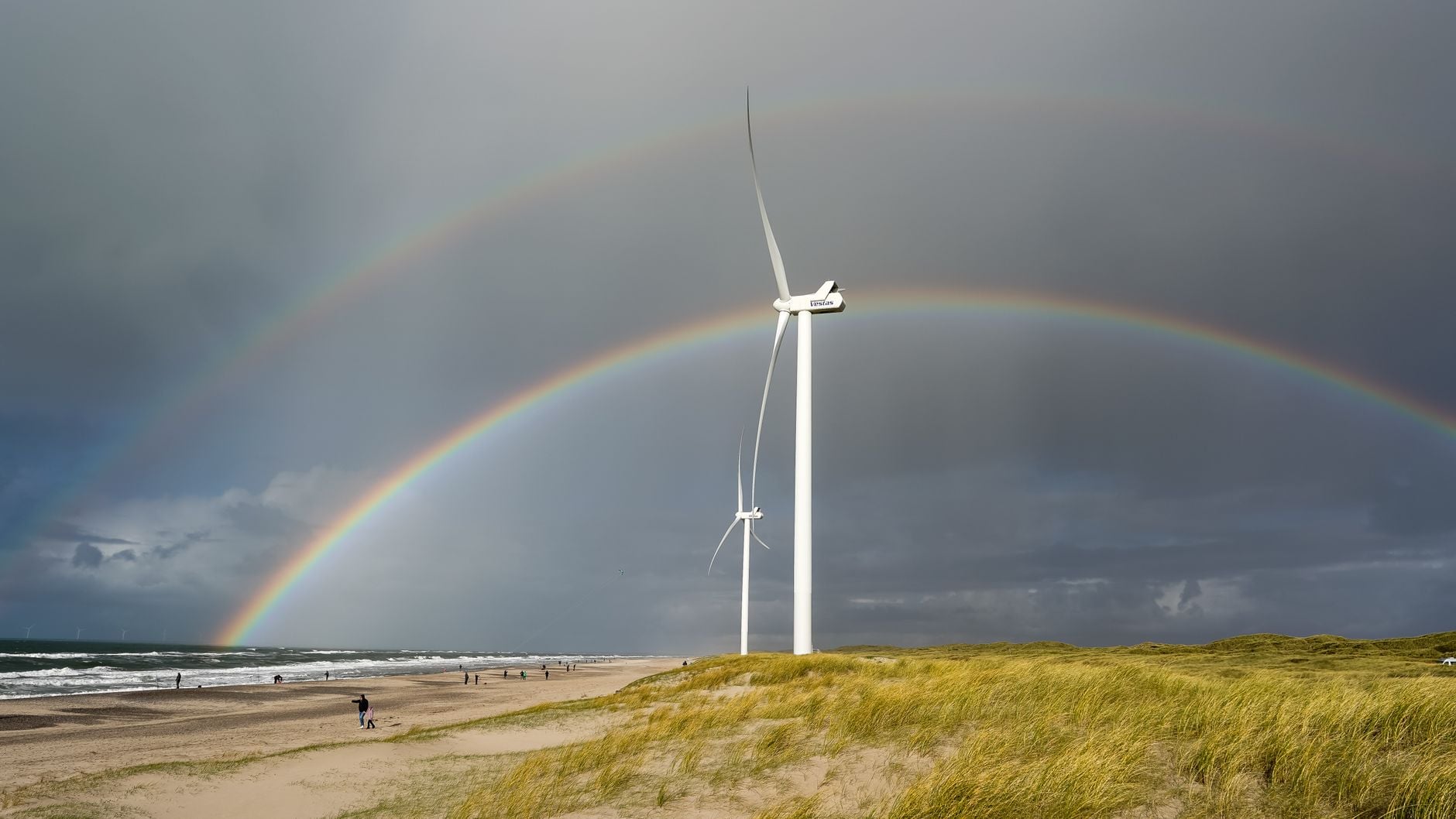
Wind supplied 60 per cent of Denmark’s domestic electricity production in 2025, according to the country’s electricity system operator, Energinet.
That is an unusually high share for a weather-dependent source. It is also a figure that needs a careful denominator. Denmark did not get 60 per cent of every hour’s electricity use from wind, and it did not operate as an electrical island. The figure describes wind’s share of electricity produced inside Denmark across the full year.
What I find useful here is not just the percentage, but the machinery behind it.
Denmark shows that a country can build an electricity system around a great deal of wind. It also shows why transmission links, flexible generation, regional trade and prices matter as much as the turbines themselves.
The 60 per cent figure has a specific meaning
Energinet’s Electricity Market Report 2025 says Danish wind farms produced about 19 terawatt-hours during the year. Offshore and onshore wind together accounted for 60 per cent of the country’s electricity production.
Oddly enough, that record-looking share arrived in a poor wind year. Wind generation fell by about 1.5 terawatt-hours from 2024 because wind levels were generally low. Total Danish electricity production fell by nearly 2 terawatt-hours, while consumption increased. A source can therefore claim a larger percentage of a shrinking production total even while generating less electricity in absolute terms.
The previous year provides another useful comparison. A Danish Energy Agency overview records 20.5 terawatt-hours of wind generation in 2024 and says wind covered 54 per cent of domestic electricity supply. The wording and denominator differ, which is why the two percentages should not be treated as interchangeable.
Solar also mattered in 2025. Energinet reports 4.4 terawatt-hours of solar generation, equal to 14 per cent of domestic production. That was up from 10 per cent the year before and barely 1 per cent in 2020.
Interconnectors turn a national weather problem into a regional one
Denmark produced less electricity than it consumed in every month of 2025. Imports increased and exports declined, with the largest monthly energy deficits appearing in April and August. Most imports arrived through connections with Norway and Sweden, while most exports went towards Germany.
Those flows are not an embarrassing footnote to the wind statistic. They are a central part of how the system works.
When Danish turbines and solar panels produce more than local consumers need, electricity can move across borders. When output is low, Denmark can draw on a wider regional system. The International Energy Agency’s 2023 review of Denmark specifically points to integration with Nordic and continental European markets as a foundation of the country’s transition.
This is also where simple country rankings can mislead. Denmark has unusually strong links to neighbouring systems with different resources and demand patterns. A larger or more isolated country cannot copy the Danish generation mix without building its own combination of transmission, flexible demand, storage and controllable supply.
Wholesale prices reveal both surplus and scarcity
Prices provide a rough hour-by-hour view of the balancing act. In western Denmark, wholesale electricity prices were negative for 441 hours in 2025, up from 375 hours in 2024. Eastern Denmark recorded 265 negative-price hours.
A negative wholesale price does not mean every household was paid to use electricity. It means production exceeded demand in that market interval and some generators were willing to pay to remain online, often because of technical limits, support arrangements or commitments to supply heat.
The opposite problem appeared during a regional period of low wind and solar output on 20 January. At 5 pm, the price in both Danish bidding zones reached €583.40 per megawatt-hour. Energinet says the episode affected Germany and its neighbours, tightening the regional market at the same time. Yet prices above €200 occurred in only 1.6 per cent of hours in western Denmark and 1.9 per cent in eastern Denmark during the year.
Denmark also moved its day-ahead electricity market to 15-minute intervals in September 2025. More precise pricing cannot create wind, but it can give producers and consumers a clearer incentive to adjust closer to the moment electricity is needed.
Wind is only one part of the system
The broader Danish electricity mix was already heavily renewable before the 2025 result. The Danish Energy Agency’s latest key figures put renewables at 79.7 per cent of electricity supply in 2024.
But an annual percentage does not balance a grid. Electricity supply and demand must match continuously, including on still winter evenings and bright summer afternoons. Denmark’s system combines cross-border transmission with flexible power plants, combined heat and power, changing demand and increasingly detailed market signals. The IEA’s Electricity 2026 analysis makes the broader point that systems with large wind and solar shares need more flexibility from grids, storage, generation and consumers.
I think that is a more grounded lesson than either celebrating the 60 per cent figure as proof that the work is finished or dismissing it because Denmark imports electricity. Annual wind production and regional electricity trade answer different questions.
What Denmark does and does not prove
Denmark’s 2025 result demonstrates that wind can provide most of a country’s annual domestic electricity production without being a niche supplement. That is meaningful progress, especially considering that the Danish Energy Agency says wind covered only about 12 per cent of domestic electricity supply in 2000.
It does not prove that turbines alone can supply a modern economy through every hour. The same report that gives us the 60 per cent headline also records lower wind output, higher consumption, more imports, hundreds of negative-price hours and a sharp price spike during a regional low-renewables period.
That combination is the real story. The percentage describes Denmark’s annual generation mix. Its interconnectors, flexible resources and electricity markets explain how the system keeps working from one quarter-hour to the next.