
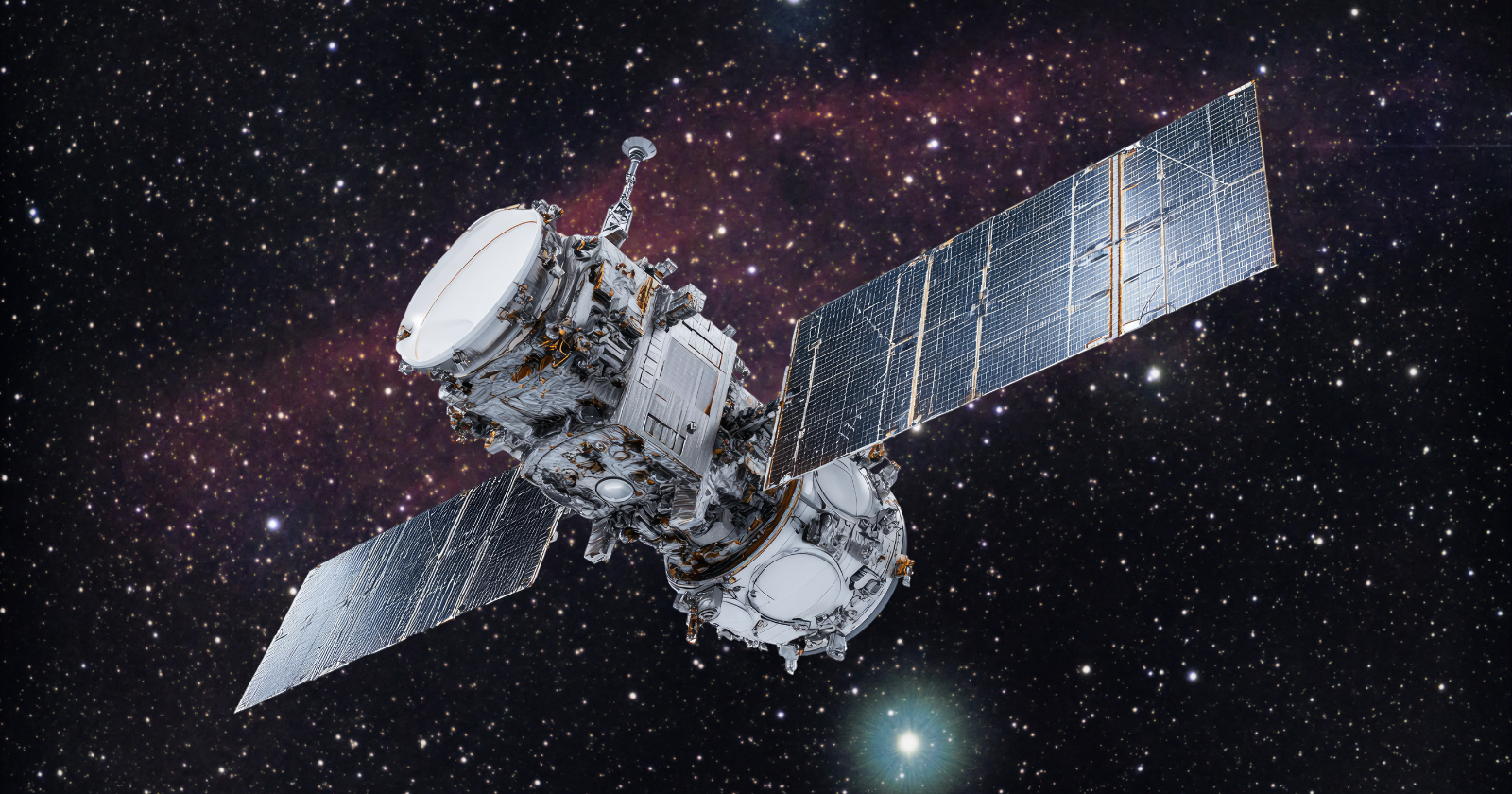
Between 2014 and 2016, the European Space Agency’s Rosetta spacecraft flew alongside Comet 67P/Churyumov-Gerasimenko and analysed the gas streaming off it. The list of compounds it found reads like a catalogue of unpleasant smells: hydrogen sulphide (rotten eggs), ammonia (a horse stable), formaldehyde, hydrogen cyanide (bitter almonds), and several others. In the same gas were molecules that bear on the question of how life began.
Both halves of that are true.
Both are also easy to oversell. The comet would smell foul if you could smell it, and you could not. The chemistry is genuinely interesting without being proof of anything about life’s origins.
What the “smell” actually was
The measurements came from an instrument called ROSINA, the Rosetta Orbiter Spectrometer for Ion and Neutral Analysis, led by Kathrin Altwegg at the University of Bern. ROSINA is a pair of mass spectrometers, which sort molecules by mass, not by odour. The “smell” is a translation: a way of describing which compounds were present by naming what they would smell like at a high enough concentration.
In an October 2014 post, the ROSINA team described the mix as rotten eggs from hydrogen sulphide, horse stable from ammonia, a suffocating note of formaldehyde, a faint bitter almond from hydrogen cyanide, alcohol from methanol, vinegar from sulphur dioxide, and a sweet trace of carbon disulphide.
The honest qualifier sits in the same post. These compounds are trace constituents. The bulk of the coma, the cloud of gas around the comet, is water, carbon dioxide and carbon monoxide, all odourless, and the whole thing is so thin it is closer to a vacuum than to any atmosphere you could breathe or smell. The “perfume” is a vivid way to report a mass spectrum, not an experience anyone could have had.
The molecules that matter more
The finding with real weight came later. In 2016, Altwegg and colleagues reported in Science Advances that ROSINA had detected glycine in the comet’s coma, along with phosphorus and two molecules, methylamine and ethylamine, that can act as precursors to glycine.
Glycine is the simplest of the twenty amino acids that make up proteins. Phosphorus is part of the backbone of DNA and RNA and a component of cell membranes. Detecting both around a comet is why this result drew attention, rather than the smell.
Why “unambiguous” is the key word
The team called it the first unambiguous detection of glycine at a comet. That wording matters. Hints of glycine had appeared before in samples returned from Comet Wild 2 by NASA’s Stardust mission, but because those samples came back to Earth, contamination was difficult to rule out, and the cometary origin had to be argued from carbon isotope ratios. Rosetta measured 67P directly, in space, while flying through the comet’s coma.
The detections were repeated, strongest near the comet’s closest approach to the Sun in August 2015, and correlated with dust, which suggests the glycine was released from icy grains as they warmed. That is what lifted it from “probably cometary” to a direct measurement.
What the detection does not show
That does not mean the comet carried life. It does not even mean comets created life on Earth. It means a comet preserved and released some of the simple chemical pieces that life uses: an amino acid, a biologically important element, and precursor molecules that point to possible routes for making them.
The finding supports a hypothesis, advocated for decades, that comet and asteroid impacts could have delivered such molecules to the early Earth. The ESA team framed it that way, as comets having the potential to deliver key molecules for prebiotic chemistry. ESA itself flagged the catch in the same breath: a huge evolutionary gap separates delivering ingredients and life taking hold.
One amino acid out of twenty is a long way from a protein, and a protein is a long way from a living cell. The detection narrows the question of where prebiotic molecules could come from. It does not answer how life started, which remains unsolved.
That is enough to be interesting without turning the comet into a frozen seed of biology.
What Rosetta actually showed
Rosetta ended in September 2016, set down onto 67P in a controlled descent. Its archive is still being worked through, and later analyses have added detections, including phosphorus in solid grains rather than gas.
Rosetta’s comet was not a dirty snowball full of life. It was a cold, ancient body releasing a thin cloud of gas and dust, carrying sulphur compounds, carbon compounds, nitrogen compounds and at least a few molecules that matter for prebiotic chemistry.
The smell line is the hook. The real story is quieter: comets can preserve primitive chemistry for billions of years, then release it when sunlight warms them. Whether that chemistry helped life begin on Earth remains an open question.
Rosetta showed that the raw material was there.
