
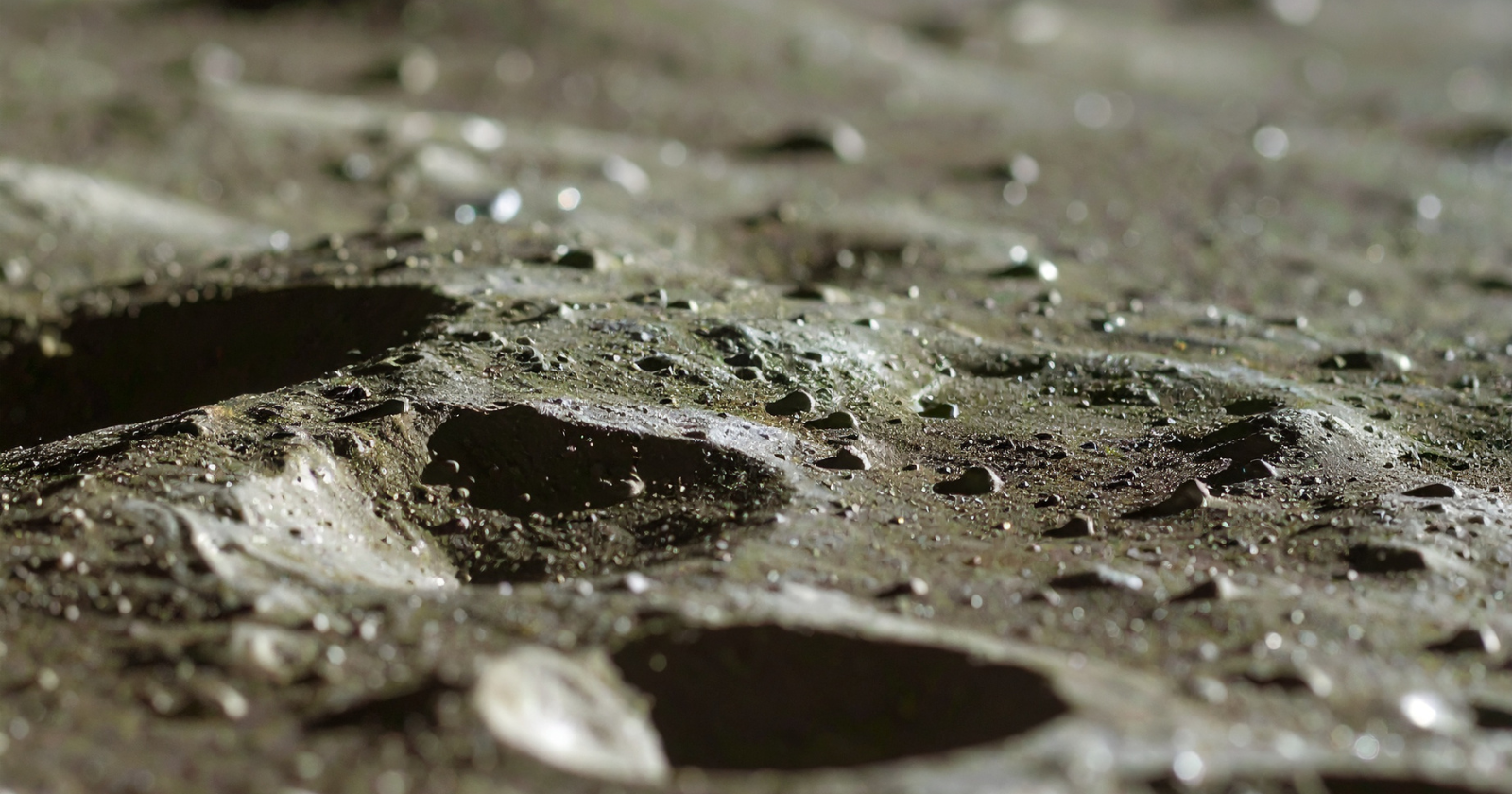
The Apollo astronauts who tracked Moon dust back into their cabin kept filing the same odd report. Fresh lunar dust, they said, smelled like spent gunpowder. The impression was immediate, and it was reported by multiple crews. Yet the smell never survived the trip home. By the time the samples were opened in laboratories on Earth, they no longer smelled like gunpowder, and more than fifty years later there is still no settled account of what the astronauts were smelling up there.
The puzzle is real, but it is narrower than it sounds. A good deal is known about why lunar dust is chemically strange. What is missing is the specific link between that chemistry and the smell.
What the astronauts actually reported
The descriptions are unusually consistent, and unusually specific. Harrison Schmitt, the geologist on Apollo 17 and the only trained scientist to walk on the Moon, said the instant impression was of spent gunpowder, not something metallic or acrid. He even noted the timing: about seven minutes passed between the start of repressurising the lander and his first remark about the smell.
Gene Cernan, his crewmate, reached for the same comparison. Buzz Aldrin, on Apollo 11, described it a little differently, closer to burnt charcoal, or wet ashes from a fireplace. John Young, on Apollo 16, went further than smelling it and reported that it did not taste half bad.
One detail matters for what follows. The astronauts were careful to say burnt gunpowder, the smell after firing, not the smell of the powder itself. The two are not the same.
Why it vanished before Earth
The most useful clue is the disappearance. There are hundreds of kilograms of lunar material in the curation lab at NASA’s Johnson Space Center in Houston, and it does not smell of gunpowder. Gary Lofgren, a NASA geologist who has handled the dusty rocks directly, sniffed them and reported plainly that they do not smell like gunpowder.
The astronauts were not imagining it. The accepted reading is that the dust was, in the word researchers use, pacified. Whatever produced the smell was a reaction that happened once, when the dust first met the air inside the cabin, and was finished long before the samples reached Earth. A smell that depends on a one-time reaction cannot be bottled and shipped.
The leading explanation, and where it stops
The reason fresh lunar dust reacts at all comes down to where it has been. The surface of the Moon has no air and no weather. For billions of years its dust has been broken down by micrometeorite impacts and bombarded by the solar wind, producing extremely fine grains with fresh, raw surfaces and, in many of them, tiny specks of metallic iron embedded in glassy coatings. Surfaces like that are chemically hungry. They carry what chemists call dangling bonds, unsatisfied bonds left exposed because the dust has never had air to react with.
Bring that dust into a cabin filled with oxygen and a little moisture, and those surfaces oxidise quickly. The reaction is a slow form of burning, too gradual for smoke or flame, and it is the most popular candidate for the smell. Schmitt himself guessed as much at the time, suspecting his nose was responding to unsatisfied bonds of the kind found in both fresh dust and just-fired gunpowder.
This is a hypothesis with broad support, not a proven result. No instrument sampled the cabin air, so the actual molecules responsible were never identified. The gunpowder comparison is an association in the human nose, not a statement about shared chemistry. Other ideas have been raised over the years, including sulphur-bearing minerals in the dust and volatiles implanted by the solar wind. None has been confirmed, because the evidence that would settle it evaporated, in effect, during the flight home.
Why this is more than a curiosity
The smell is a footnote.
The reactivity behind it is not.
The same properties that may have produced the odour, the abrasive shape of the grains and their reactive surfaces, make lunar dust a serious problem for people and equipment. It clings to everything, works its way through seals, and is fine enough to be inhaled deep into the lungs. Dust that got into the Apollo cabins left crews with eye, nose and throat irritation, an effect NASA came to call lunar hay fever, with Schmitt’s reaction the best documented. Reviews of lunar dust as a hazard link its reactive surfaces and iron content to the way it interacts with human tissue.
That has turned an Apollo-era anecdote into a present-day engineering requirement. For NASA’s Artemis programme, and for the commercial missions intending to operate on the surface for more than a few days, dust handling is now a standing line item: cabin filtration, suit design, airlock procedures, and medical monitoring all have to account for a material whose chemistry was barely understood when the first samples came home.
What to watch
The next people to bring Moon dust into a sealed cabin will arrive with instruments the Apollo crews did not have, and with reason to use them. Whether anyone finally captures the cabin chemistry, and identifies what the astronauts were smelling, is one of the smaller questions Artemis could answer. The larger one, how to live and work in the stuff without it harming lungs and hardware, is the reason the answer would be worth having.
