
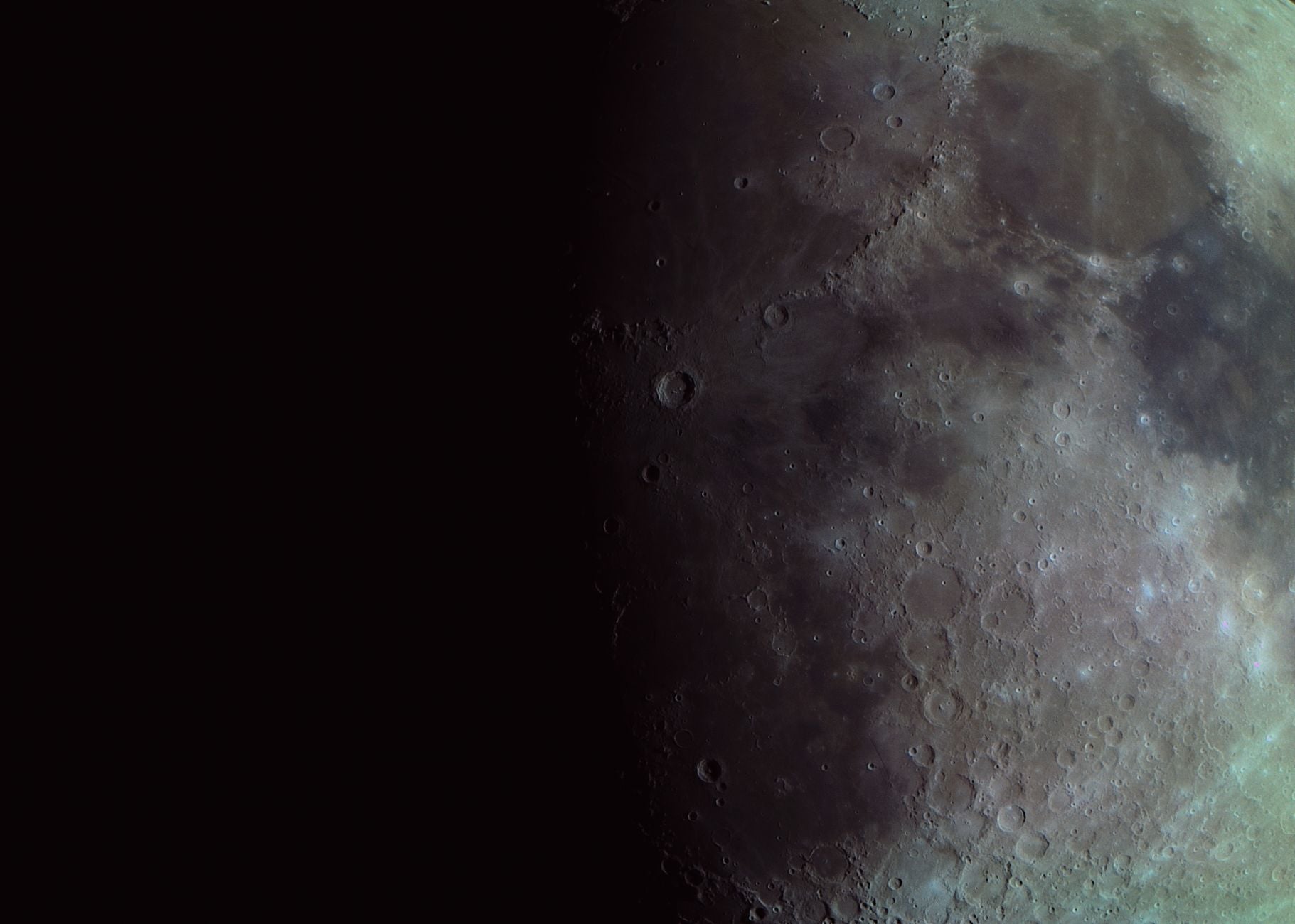
In December 1972, Eugene Cernan and Harrison Schmitt drove through the Taurus-Littrow valley toward boulders that had made their own journeys across the Moon. The rocks had broken from the steep North and South massifs, rolled downhill and carved tracks into the regolith before stopping on the valley floor.
The Apollo 17 astronauts photographed, examined and sampled several of them. More than half a century later, those samples became clocks in a reconstruction of ancient moonquakes.
Thomas Watters of the Smithsonian Institution and Nicholas Schmerr of the University of Maryland combined cosmic-ray exposure ages with measurements of boulder size, slope stability and simulated seismic waves. Their analysis concluded that ground shaking from a series of moonquakes most likely triggered four sampled boulder falls and a large landslide, with the nearby Lee-Lincoln thrust fault the likely source.
The result is strong, but the dates and verbs need care. The paper was published on July 30, 2025, not in December. It reconstructed events between about 90 million and 19 million years ago. It did not record Lee-Lincoln slipping after Apollo 17, nor did it watch the fault move in 2025. The fault is considered likely or potentially active because it is geologically young and because the stress that formed it continues, not because motion has been measured there during the past fifty years.
Apollo 17 landed beside an unusually useful fault
The lunar module Challenger landed in Taurus-Littrow on December 11, 1972. The site offered access to dark volcanic material on the valley floor and much older highland rock exposed on the surrounding massifs. The crew spent just over three days on the surface and completed three long traverses in the lunar rover.
A low, sinuous step called the Lee-Lincoln scarp cuts across the valley floor roughly six kilometres west of the landing point, then changes direction and climbs the slope of North Massif. Cernan and Schmitt crossed the scarp in the rover. It is the surface expression of a shallow thrust fault, where compression has forced one block of crust up and over another.
The Moon has no network of moving plates like Earth. It can still develop tectonic faults. Its interior continues to lose heat, causing gradual contraction, while Earth’s gravity adds changing tidal stress as the Moon follows its orbit. The brittle crust responds by cracking and slipping along faults, leaving scarps that can extend for kilometres.
Taurus-Littrow preserves an unusual combination of evidence. Boulder tracks run down both North and South massifs. A broad patch of bright material called the light mantle spreads from South Massif and drapes across the valley floor and the Lee-Lincoln scarp. Most importantly, Apollo 17 brought pieces of four fallen boulders back to Earth.
The samples turned boulders into clocks
Watters and Schmerr described their work in “Paleoseismic activity in the moon’s Taurus-Littrow valley inferred from boulder falls and landslides,” published in Science Advances. This is one study, not settled consensus.
The method depends on cosmic rays. A surface buried within an outcrop is partly shielded from energetic particles arriving from space. Once a boulder breaks free and rolls downhill, newly exposed minerals begin accumulating changes caused by cosmic-ray bombardment. Measurements made in laboratories can estimate how long those surfaces have been exposed.
That age is not the age of the rock. It is an estimate of the time since the relevant surface became exposed, with uncertainties about its earlier position and shielding history. Used carefully, it provides an approximate date for a fall.
The light mantle landslide was the oldest event in the study, with samples giving a range of about 70 million to 110 million years and a working average near 90 million years. The four boulder events formed a younger sequence. Station 2 boulder 1 was assigned an exposure range of roughly 45 million to 55 million years. The Station 7 boulder was dated to about 25 million to 32 million years, Station 2 boulder 2 to about 22 million years, and the enormous Station 6 boulder to roughly 17 million to 21 million years.
The Station 6 rock measured approximately 15 by 8 metres. Cernan photographed Schmitt beside it, and the crew sampled it at the base of North Massif. Its long, narrow track can be followed upslope toward its source. Under the study’s interpretation, a strong moonquake dislodged it around 19 million years ago.
Why the team favoured a quake over an impact
The Moon is struck continually by meteoroids, and impacts can both eject boulders and shake slopes. The researchers therefore had to test the alternative raised in the headline: perhaps a space rock, rather than a tectonic quake, sent these boulders downhill.
The geometry did not resemble a local ejecta field. The tracks of the Apollo 17 boulders lead to source areas high on the massifs where no fresh impact crater is visible. Impact-ejected boulders more commonly leave shorter, narrower and shallower trails arranged radially around a crater.
The energy requirement provided another check. The authors calculated that an impact delivering energy comparable to the modelled magnitude 3 moonquake would create a primary crater about 50 to 400 metres across, depending on the impact angle, speed and target material. They found no fresh primary crater in that size range within 30 kilometres of Taurus-Littrow.
That absence and the track morphology make seismic shaking from fault slip the better explanation for the five analysed features. They do not remove impacts from the valley’s history. The paper notes a cluster of secondary craters attributed to material ejected by the formation of Tycho and says that those secondary impacts probably contributed some shaking. “Not dislodged by space rocks” is therefore narrower than it first appears: the study rejects a nearby fresh primary impact as the cause of the sampled falls, while acknowledging other impact-related seismic effects.
How hard the valley had to shake
The researchers next estimated the acceleration needed to move each boulder from its original slope. A tall boulder balanced on a short axis is easier to tip than a low one lying on its broad side. Partial burial, friction and attachment to bedrock would make a fall harder. The calculations therefore covered favourable and less favourable starting positions.
For the most favourable geometry, the minimum ground acceleration needed for the four boulder falls ranged from about 0.42 to 0.55 metres per second squared, equivalent to 26 to 34 percent of lunar surface gravity. The upper estimates were much greater. The light mantle deposit required lower acceleration because loose regolith on a steep slope can fail more readily than a massive rock.
Watters and Schmerr then simulated a magnitude 3 slip event on the Lee-Lincoln fault at a source depth of 100 metres. The predicted ground motion at the source slopes was consistent with the minimum required to trigger the boulders and landslide. Using two ground-motion models, they estimated event magnitudes spanning roughly 2.8 to 3.4, with the main discussion centred near magnitude 3.
The exposure ages led to a proposed sequence. The light mantle landslide may record an early rupture that helped form the Lee-Lincoln scarp around 90 million years ago. Four later falls may represent subsequent slip on different fault segments over approximately 70 million years. If that reconstruction is correct, the scarp’s relief accumulated through at least five separate seismic events rather than one large break.
This is paleoseismology by inference. The paper combines dated surface consequences with mechanics and simulations; it does not contain seismograms from those ancient events. The authors’ preferred explanation is internally consistent, but terms such as “likely,” “suggests” and “if correct” are part of the paper for a reason.
What it means to call Lee-Lincoln active
NASA’s August 2025 account of the study says Lee-Lincoln was the likely source of repeated strong moonquakes and describes similar young faults as potentially active today. The underlying evidence joins this paleoseismic record with earlier work on lunar contraction and Apollo seismic data.
A 2019 analysis led by Watters relocated the 28 shallow moonquakes recorded by the Apollo Passive Seismic Network between 1969 and 1977. Eight lay within 30 kilometres of young thrust faults, and one estimated epicentre was only 13 kilometres from Lee-Lincoln. Six of those eight quakes occurred when the Moon was at or near apogee, where tidal stress was elevated. The result, published in Nature Geoscience, supported the conclusion that some young lunar faults still slip.
That does not establish a post-1972 movement on Lee-Lincoln itself. The Apollo network was sparse, and epicentre estimates were broad. No modern local seismometer has sat beside the scarp to measure its current behaviour. In planetary geology, “active” can mean that a fault belongs to the present stress regime and may slip again, even when its recurrence interval is measured in millions of years.
A rare risk that accumulates with time
Using the five dated Taurus-Littrow events and a standard frequency-magnitude relationship, the authors estimated that a magnitude 3 event might recur on Lee-Lincoln roughly once every 5.6 million years. This result depends on a tiny sample, an assumed fault age and parameters adapted from lunar seismic observations. It should not be mistaken for a timetable.
Under the model, potentially hazardous shaking within 15 kilometres of the fault had a probability of about one in 56,000 in any year, one in 5,600 over a decade and one in 20 million on a given day. The daily risk during Apollo 17’s brief stay was extremely low. It becomes more relevant when a habitat, power system or landing pad is expected to remain for years.
The simulation also asked what a magnitude 2.9 to 3.4 event might have done had it occurred while Challenger stood on the valley floor. Predicted acceleration at the landing site ranged widely, from 0.2 to 2.1 metres per second squared. The model placed the lander’s stability threshold at 1.38 metres per second squared. That does not mean Apollo 17 narrowly escaped a quake; the probability was very small. It illustrates why distance from a young scarp and from unstable slopes matters in long-term site planning.
Fifty years later, the Apollo samples still speak
The most striking continuity is not a fault observed moving for fifty years. It is the scientific connection between a short expedition and a geological process that operates too slowly for any person to watch.
Cernan and Schmitt saw the boulders, traced their paths and carried pieces home. Lunar Reconnaissance Orbiter later supplied the regional view and detailed topography. Laboratory exposure ages supplied the chronology. Modern wave simulations tested whether fault slip could produce the required shaking.
Together, those lines of evidence make a strong case that the valley experienced repeated moonquakes and that Lee-Lincoln was their source. The youngest event in the reconstruction predates Apollo 17 by about 19 million years, not fifty. The fault has not been caught slipping since the astronauts left, but the Moon continues to contract and faults of the same young class are expected to remain capable of movement.
The boulders are therefore records rather than recent witnesses. They show that a landscape which seemed motionless during three days in 1972 had been shaped by repeated shaking, and that the safety of future lunar infrastructure will depend on reading that long record with care.
