
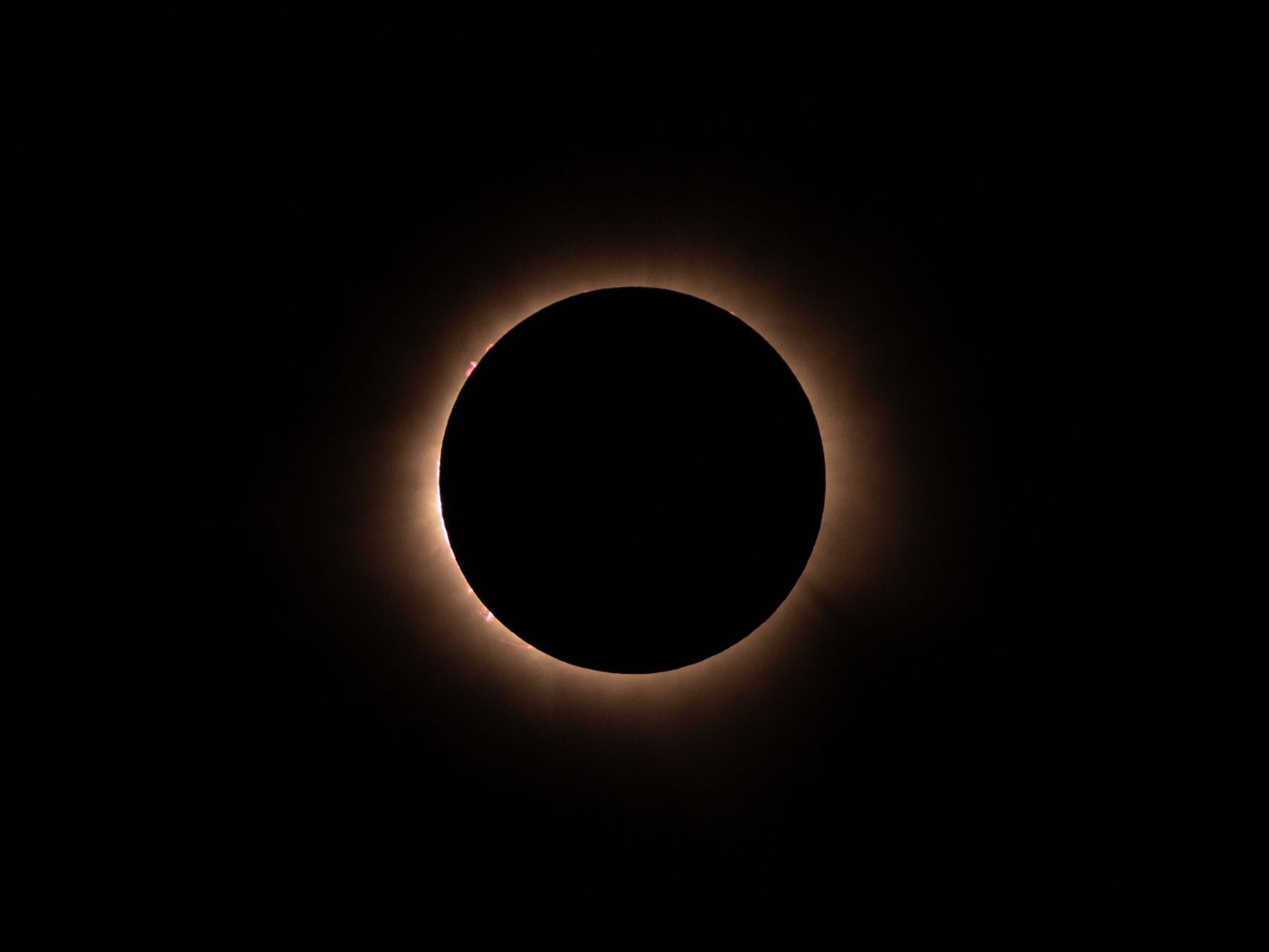
Spain’s evening of 12 August 2026 will contain two separate alignments. First, the Moon’s shadow will cross the northern half of the country while the Sun sits low in the west. Later, after twilight, Earth will pass through the densest part of the annual Perseid stream under a sky with no moonlight.
The pairing is real, but it is not a continuous show from sunset until dawn. Totality lasts seconds to less than two minutes at Spanish locations in its path. The meteor shower builds over several hours and is forecast to be strongest before dawn on 13 August.
Totality reaches Spain at the end of the eclipse path
The total eclipse crosses the Arctic, northeastern Greenland, western Iceland and the Atlantic before entering Spain. NASA’s path map also clips a small part of Portugal. The greatest duration anywhere along the path is 2 minutes 18 seconds near Iceland; northern Spain and the Balearic Islands sit near its evening end.
Spain’s National Geographic Institute, or IGN, says totality will pass through cities including A Coruña, León, Bilbao, Zaragoza, València and Palma. In A Coruña, maximum eclipse is at 20:28 CEST with the Sun 12 degrees high and totality lasting 76 seconds. Burgos receives about 104 seconds with the Sun eight degrees high. In Palma, maximum eclipse comes around 20:32 with the Sun only two degrees above the horizon.
The event will be the first total solar eclipse visible from mainland Spain since 1912. Much of southern Spain lies outside the totality band and will see a deep partial eclipse instead.
A sunset eclipse makes the horizon part of the calculation
Low altitude changes the practical problem. A hill, building, trees or haze to the west can hide the Sun even under an otherwise clear sky. Atmospheric extinction and cloud near the horizon may also soften or erase the view. The best eclipse calculation cannot guarantee a visible eclipse from an obstructed site.
The Sun’s low position does not make partial phases safe to watch without protection. Certified eclipse viewers meeting the relevant solar-viewing standard are required whenever any bright portion of the solar surface remains. Only observers inside the totality path who have confirmed that totality has begun can look without a solar filter, and protection must return before totality ends.
The IGN’s practical guidance also advises checking local circumstances and weather near the date rather than choosing a site only for a few extra seconds on the centre line.
The Perseids favour the hours before dawn
The Perseids occur when Earth crosses debris left by comet 109P/Swift-Tuttle. The grains enter the atmosphere at about 60 kilometres per second, producing streaks that appear to radiate from Perseus even though they can cross any part of the sky.
The International Meteor Organization’s 2026 calendar forecasts the normal maximum between 02:00 and 04:00 UTC on 13 August, or 04:00 to 06:00 CEST in mainland Spain and the Balearics. The IGN gives the same two-hour window and says activity may remain intense from about 23:00 on 12 August until late morning.
A quoted zenithal hourly rate of 100 is a standardised ideal value, not a promise that one person will count 100 meteors. Actual numbers depend on darkness, cloud, the radiant’s altitude, obstructions and the observer’s field of view.
The eclipse itself guarantees a new moon
A solar eclipse can occur only at new moon, when the Moon passes between Earth and the Sun. The 2026 Perseid maximum therefore arrives without the lunar glare that often washes out fainter meteors. The International Meteor Organization describes the conditions as excellent for optical observations.
Darkness does not arrive when totality ends. After the Sun sets, evening twilight must fade before faint Perseids become visible. Observers who remain outside will also need time for their eyes to adapt away from screens and artificial light.
One date still requires two observing plans
The eclipse demands a precise position inside the totality path, a clear western horizon and approved eye protection. The meteor shower rewards a broad view of the dark sky, distance from light pollution and patience into the early morning. A site that works well for one may not automatically be ideal for the other.
The eclipse timetable can be calculated to the second, while the Perseid maximum is a forecast for a stream with natural variations. Weather remains the shared uncertainty, and useful cloud forecasts will only become available close to the date.
What the calendar provides is not a guarantee of two flawless displays, but a rare opportunity to plan for both without lunar interference.
For observers under clear Spanish skies, the Moon will first reveal itself by covering the Sun and then disappear from view while comet dust marks the hours before dawn.
