
One septillion is a one followed by 24 zeros. Put that many stars into the observable universe and alien life can feel mathematically unavoidable. Surely, the intuition says, at least some of those suns must have produced complex beings capable of making themselves known.
The Rare Earth Hypothesis attacks one word in that argument: “must”. A vast number of opportunities guarantees an outcome only when the probability per opportunity is not vanishingly small. If complex life requires several rare transitions in sequence, cosmic abundance and biological loneliness can coexist.
The star count is an upper estimate, not a list
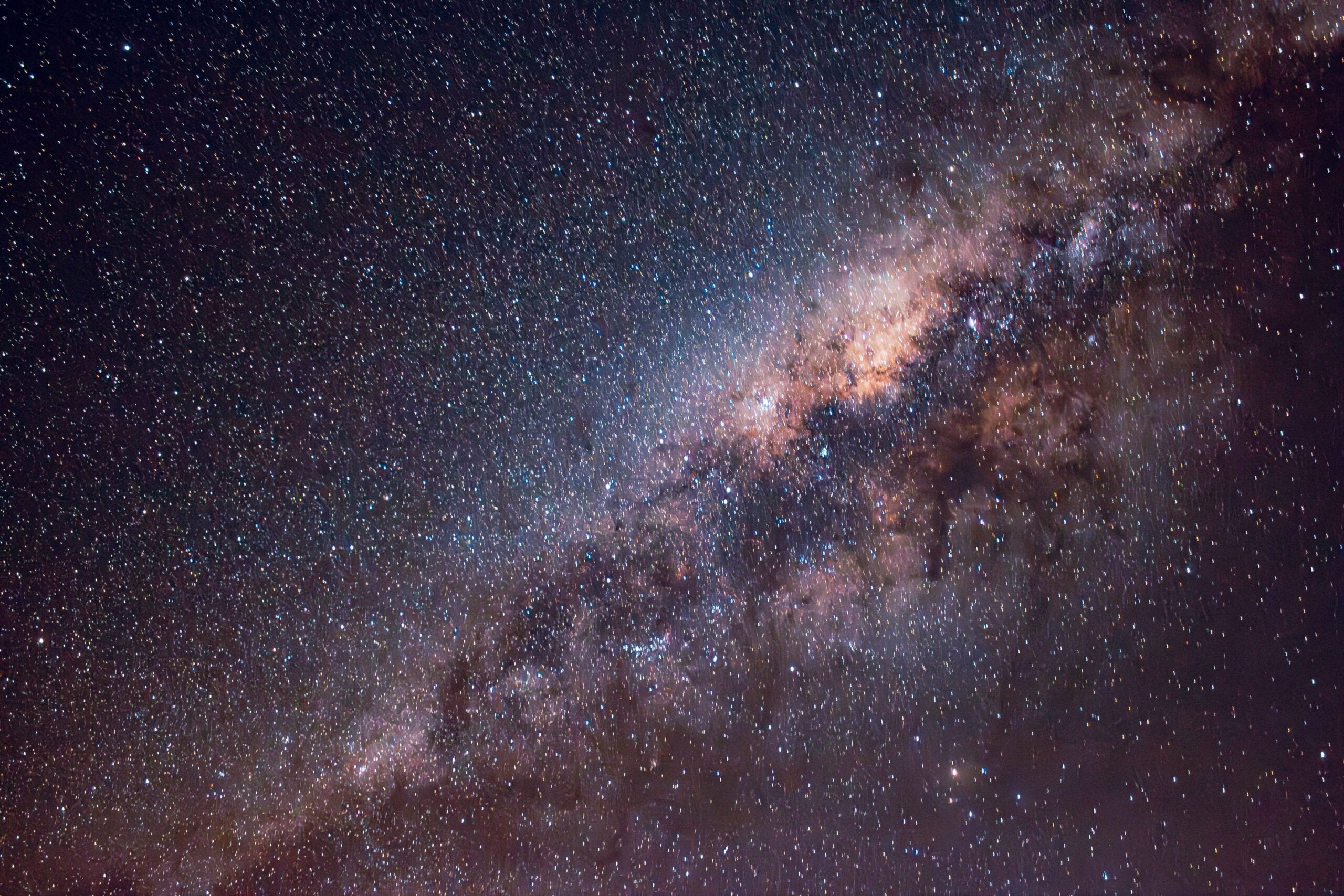
NASA estimates that the universe could contain up to one septillion stars. Astronomers reach numbers on that scale by estimating how many galaxies exist, measuring their light and inferring the stellar populations too faint or distant to resolve individually.
There is substantial uncertainty. The European Space Agency describes a range from 1022 to 1024 stars. Even the low end is almost beyond intuition. Neither end, however, represents an equal number of chances for complex life.
Stars differ in age, chemistry, stability and lifetime. Many formed in environments hostile to long-term surface habitability. Many visible galaxies are so distant that the light reaching us began its journey before Earth existed.
The famous silence concerns a much smaller arena
The Fermi paradox is usually framed around the Milky Way. Our galaxy is old enough that a spacefaring civilization could, under many expansion assumptions, have crossed it long before humans appeared. The lack of obvious signals, probes or engineering is then presented as a puzzle.
Adding every star in the observable universe does not automatically sharpen that puzzle. A civilization five billion light-years away cannot have visited the young Milky Way we inhabit now. We observe it in a remote past, and two-way communication would be meaningless on human or civilizational timescales.
The relevant count is closer to the number of sufficiently stable systems within causal reach, multiplied by the probabilities of planets, habitability, life, complexity, intelligence, technology and detectability. Each term narrows the previous one.
Rare Earth is about complexity, not necessarily microbes
Peter Ward and Donald Brownlee set out the hypothesis in their 2000 book Rare Earth: Why Complex Life Is Uncommon in the Universe. Their important distinction was between simple life, which might be widespread, and animal-like complex life, which may demand an unusual planetary history.
The proposed requirements form a ladder: a suitable long-lived star; a rocky planet with persistent liquid water; an atmosphere and climate that remain viable; recycling of essential elements; manageable radiation and impacts; and enough uninterrupted time for difficult biological innovations. Some versions include plate tectonics, continents and oceans, a large moon, an outer giant planet and a safe galactic orbit.
Several entries on that list are disputed. Jupiter is not a simple shield because its gravity can also send objects inward. A moon like ours may stabilize climate without being indispensable. Exoplanet plate tectonics cannot yet be routinely observed. Rare Earth remains a hypothesis assembled from possible filters, not a calculation with measured inputs.
Our one example took billions of years
Earth offers both encouragement and caution. Microbial life appeared early in the geological record, suggesting that biology can begin when conditions permit. Yet the planet remained dominated by microbes for most of its inhabited history. Complex cells, abundant oxygen and large multicellular organisms came much later.
This long interval does not tell us the odds. We have no second inhabited planet against which to compare it. It does show that the origin of life and the rise of complexity are not interchangeable steps.
A 2024 Scientific Reports paper argued that the combination of continents, oceans and sustained plate tectonics helped enable complex life and, eventually, communicative civilization. That is a testable attempt to refine the Drake equation. It is not proof that another evolutionary route cannot work.
Thousands of planets moved the uncertainty downstream
Exoplanet discoveries have overturned the idea that planets themselves are unusual. NASA now lists more than 6,200 confirmed worlds, with thousands more candidates. Some are small and rocky; some orbit where stellar heating could permit surface water.
But “habitable zone” is an orbital and climatic screening concept, not a certificate of life. It does not tell astronomers whether a planet has retained an atmosphere, regulates carbon, exposes nutrient-rich land, carries oceans of the right depth or has ever hosted a cell.
The astronomical side of the equation is becoming empirical. The biological terms remain largely unconstrained because every confirmed organism belongs to one connected biosphere. Multiplying guesses can produce almost any answer, and the factors may not even be independent.
A quiet search is evidence with a narrow label
Technosignature surveys are steadily improving. One Breakthrough Listen project searched for radio emissions from 97 nearby galaxies. Its non-detection constrained civilizations broadcasting at particular powers and frequencies during the observations. It said nothing about microbes, alien animals or technologies that do not leak narrowband radio.
SpaceDaily’s earlier examination of whether Earth is unusually fortunate lays out the physical case for several proposed filters. The sharper statistical lesson is that the current silence can support rarity without establishing it.
If complex, detectable life emerges less than once per relevant region and era, there is no paradox: quiet is what the model predicts. If it emerges often, then limited searches, short technological lifetimes or unfamiliar communications may explain the same observation. The septillion-star estimate makes the question grander. It does not yet tell us which probability nature chose.