
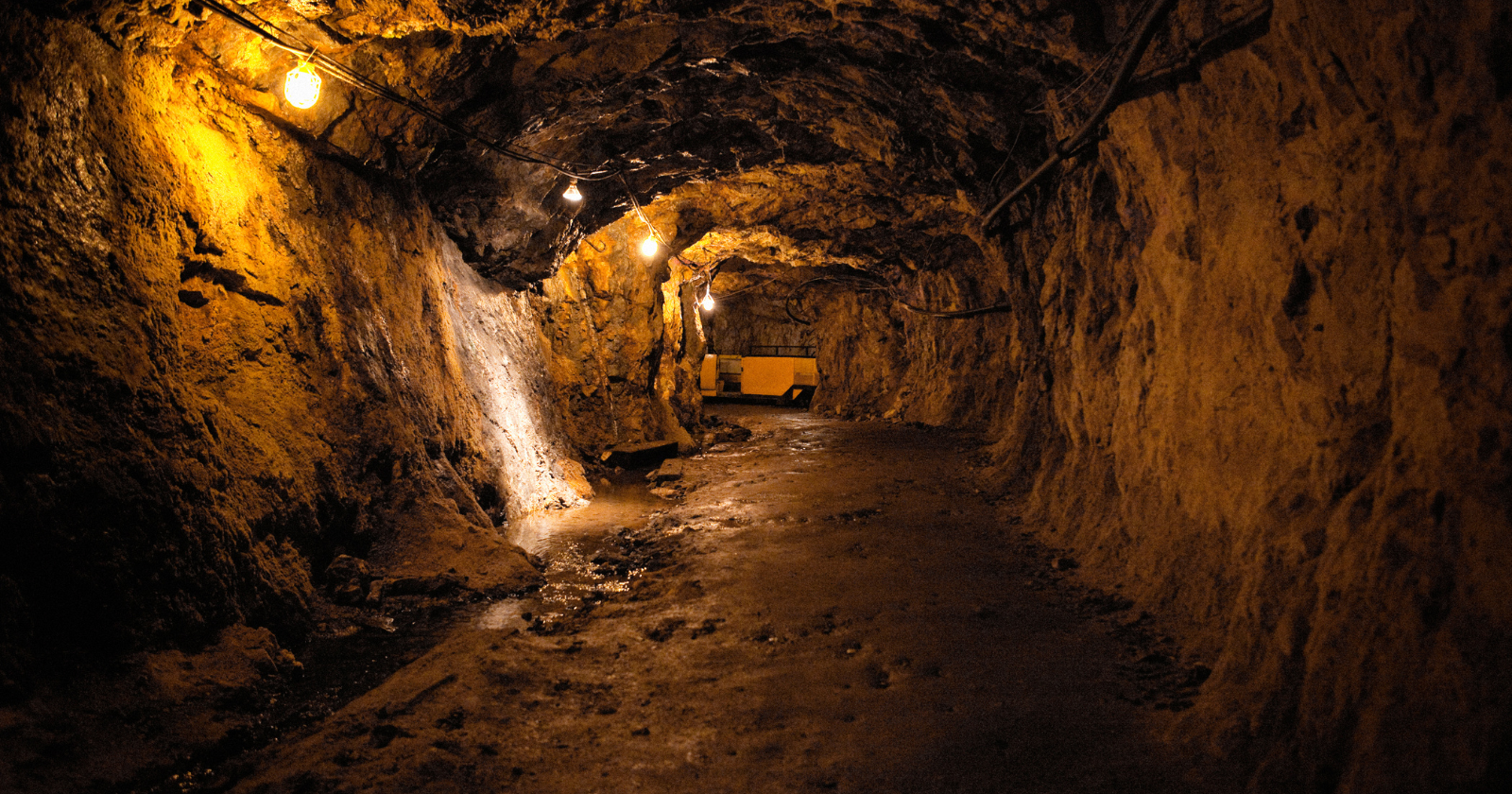
Nearly three kilometres below the surface, in a mine in northern Ontario, geologists found water that had been isolated in the rock for roughly two billion years. That is older than animals, older than plants, and older than almost everything most people picture when they think of life. When that water was last in contact with the surface, the only life on Earth was microbial. The researcher who led the work, Barbara Sherwood Lollar of the University of Toronto, tasted it.
She did so on purpose, and for a reason. First, what the water is.
Where it was found
The site is the Kidd Creek mine near Timmins, operated by Glencore at the time of the research and long described as the deepest base-metal mine in the world, worked for copper, zinc and silver. Its lowest accessible point sits about three kilometres down, which makes it one of the few places on land where anyone can reach rock this deep directly.
Sherwood Lollar first went there in 1992. The record-setting samples came much later. In 2013 her team, reporting in the journal Nature, described fracture water at a depth of about 2.4 kilometres with a minimum mean residence time of around 1.5 billion years, and noble-gas evidence pointing to a system connected to mineralisation about 2.64 billion years ago. In 2016 they went deeper, to nearly three kilometres, and found water dated at roughly two billion years, which they presented at the American Geophysical Union meeting that December.
One detail tends to surprise people. This is not a few drops squeezed from stone. The water flows out of fractures and boreholes at rates of litres per minute, in volumes much larger than anyone expected. It does not seep so much as flow, in Sherwood Lollar’s description, bubbling out of the rock at you.
How you date water that old
Two billion years is far beyond the reach of radiocarbon dating, which runs out after some tens of thousands of years. The age here is not the age of the water molecules but the length of time the water has been cut off from the surface, and it is worked out a different way.
As explained by the geoscience outreach project EarthDate, the team measured noble gases dissolved in the water, including helium, argon, neon, krypton and xenon. These gases build up in trapped fluid at slow, modelled rates as elements in the surrounding rock decay. The more that has accumulated, the longer the water has been sealed away. The figure that comes out is a minimum isolation time, which is why it is given as a range rather than a single year.
Why someone tasted it
Tasting rock and water is a normal, if unglamorous, part of fieldwork. Salinity is one of the quickest things a geologist can read off a fluid, and the tongue is a decent instrument for it. Sherwood Lollar has said she tastes these waters to judge how salty they are, and that the older the water, the saltier it tends to be.
This one was very salty.
By her account it runs up to about ten times saltier than seawater, thick, and bitter, with a sulphurous smell, and it turns a faint orange when it meets air, as dissolved iron reacts with oxygen. The profile in Maclean’s records her following the musty odour through the rock to find where the water was seeping out.
That is the part every retelling reaches for, and it is fair enough. The taste was set by chemistry that has been running, undisturbed, since long before anything with a tongue existed.
What it means for life
The age would be enough on its own, but the more consequential part is what the water contains. The chemistry of the fluid, including sulphate produced by reactions resembling those at deep-sea hydrothermal vents, points to biological activity. The water also holds dissolved hydrogen, and later studies of the Kidd Creek site have identified resident microbes, among them sulphate reducers, able to live on this kind of rock-derived chemistry, in the dark and sealed off from the sun.
This matters beyond Earth. If life can persist in isolated, rock-bound water with no light and only chemical energy, then similar settings elsewhere become worth examining: the subsurface of Mars, or the hidden oceans under the ice of moons like Europa and Enceladus. NASA researchers have visited Kidd Creek for exactly this reason, treating it as a stand-in for environments they cannot yet reach.
The careful version of the claim is not that microbes have been continuously observed there for two billion years, but that the water and the fracture system contain chemistry and microbial evidence consistent with a deep, isolated biosphere sustained by rock-water reactions.
What to watch
The Kidd Creek water is the oldest that has been dated this way, but probably not the oldest that exists. Researchers are now looking for similar ancient fluids in deep rock on other continents, comparing their chemistry, age and any signs of life. Whether older isolated water turns up, and whether any of these systems holds living organisms rather than only their chemical traces, are the open questions.
For now the finding stands as a strange kind of sample: not a fossil, not a rock, but liquid water from a world that existed long before animals, plants or anything recognisably familiar had appeared.
