
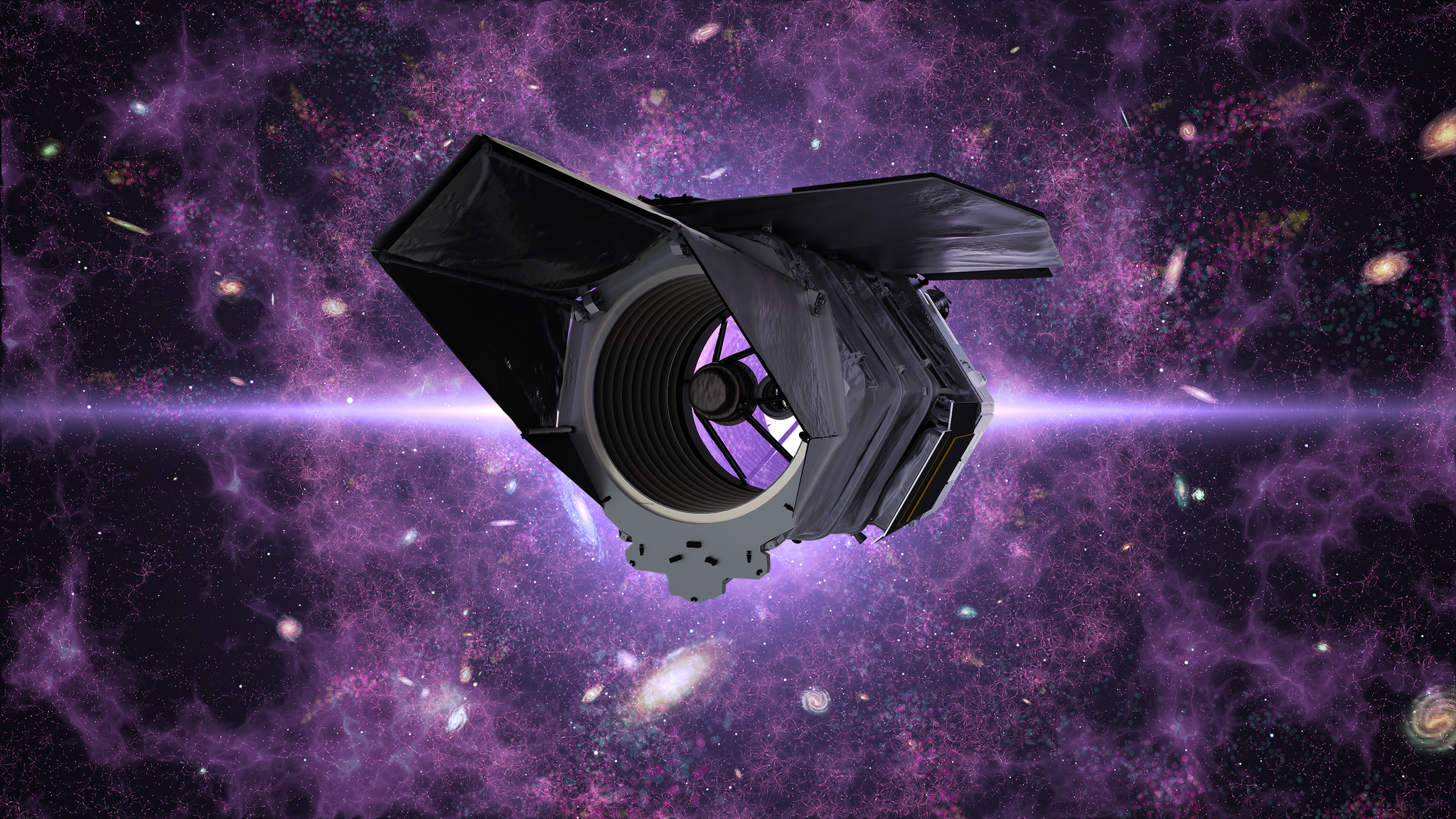
NASA’s Nancy Grace Roman Space Telescope is now listed by NASA for launch on August 30, 2026, a little earlier than the September 2026 timing that has appeared in some recent coverage. If the mission performs as forecast, the date matters because Roman will not be another telescope slowly adding planets to the known list one at a time. It could return a planetary census so large that the scale of the exoplanet catalog changes in a single mission.
The headline number is around 100,000 planets. NASA has used that figure for Roman’s expected transit yield, and a later simulation study put the plausible range even wider, at roughly 60,000 to 200,000 transiting planets depending on survey choices. That does not mean 100,000 instantly confirmed worlds with names and full orbital biographies. It means a vast haul of detections and candidates that would then need the usual checks, modelling and follow-up.
Even with that caveat, the comparison is startling. A NASA Exoplanet Archive query on July 7, 2026 listed 6,316 confirmed planets. Roman’s predicted haul would therefore be larger than the entire confirmed exoplanet catalog assembled since the first planets around other Sun-like stars were found in the 1990s. Not by a small factor, either. By something closer to a catalog reset.
A wide-field telescope built for counting
Roman is not a small successor to Hubble or Webb. Its mirror is 2.4 meters across, the same diameter as Hubble’s, but its main instrument is built for a very different kind of work. NASA says Roman’s field of view will be at least 100 times larger than Hubble’s while keeping space-telescope resolution. Its Wide Field Instrument is a roughly 300-megapixel infrared camera designed to survey large patches of sky repeatedly.
That repeated looking is the crucial part. Roman’s exoplanet program is built around a Galactic bulge time-domain survey: staring toward the crowded center of the Milky Way, again and again, watching the brightness of hundreds of millions of stars change over time. In that data are two different planet-finding techniques.
The first is gravitational microlensing, one of Roman’s central exoplanet jobs. When a star passes almost directly in front of a more distant background star, the foreground star’s gravity can bend and magnify the light behind it. If the foreground star has a planet, the planet can leave a brief extra signal in that magnification pattern. Microlensing is valuable because it can find planets far from their stars, planets at large distances from Earth and, in some cases, worlds that may not orbit any star at all.
The second method is the transit technique, the one made famous by NASA’s Kepler mission. A planet crosses the face of its star from our line of sight, and the star dims by a tiny, regular amount. Roman is not primarily being launched as a Kepler replacement, but the same high-cadence monitoring that makes the microlensing survey work also allows Roman to catch transits. That is where the 100,000 figure comes from.
The 100,000-planet forecast
NASA highlighted the possibility in 2021, citing work led by Benjamin Montet that suggested Roman, then still commonly associated with the WFIRST planning era, could detect more than 100,000 transiting planets. The logic is simple but powerful: if you watch enough stars, often enough, with enough precision, rare alignments stop being rare in the aggregate.
A 2023 pixel-level simulation study led by Robert F. Wilson pushed the estimate into a broader range. The team modelled Roman’s Galactic Bulge Time Domain Survey and predicted about 60,000 to 200,000 transiting planets, including roughly 7,000 to 12,000 small planets. The exact number depends on survey design: how often Roman observes, how long the observing seasons last, how crowded the stellar fields are, and how confidently signals can be separated from noise and blending.
That range is important because it makes the 100,000 figure less like a promise and more like a central expectation inside a larger planning envelope. A mission can be built for a yield without controlling every detail that determines the final number. Stellar crowding, spacecraft operations, observing cadence and data pipelines will all matter.
The expected planets will also not all resemble Earth. NASA’s 2021 summary said many of Roman’s transiting planets are likely to be gas giants, ice giants and mini-Neptunes, because larger planets close to their stars are easier to catch by transit. Some may be in habitable zones, but the mission’s value is not mainly in finding one familiar-looking world. It is in turning a limited sample into a statistical map: where planets are common, where they are rare, how planet populations change with distance from the galactic center, and what kinds of systems current searches have missed.
Why Roman is different from Kepler
Kepler transformed exoplanet science by proving that planets are common. But Kepler watched a relatively nearby patch of the sky in the direction of Cygnus and Lyra. Roman will look toward the dense central regions of the Milky Way, reaching planets thousands of light-years farther away. NASA says Roman could find planets as far as about 26,000 light-years from Earth.
That changes the question. Instead of asking only how many planets exist around nearby stars, Roman can help test whether planet populations vary across the galaxy. Are planets just as common toward the bulge as they are in the local neighborhood? Do gas giants, mini-Neptunes and smaller worlds appear in the same proportions? Does the galaxy’s older, denser central region build planetary systems differently?
Roman’s microlensing survey addresses another blind spot. Transits are biased toward planets close enough to their stars to cross frequently from our viewpoint. Microlensing can find planets farther out in their systems, including worlds at separations closer to Jupiter and Saturn than to Mercury. Together, the two methods let Roman sample both tight-in planets and colder planets on wider orbits, even if each method has its own biases.
This is why the mission’s exoplanet result may be more useful than the headline number alone. A raw count can impress. A well-characterized count can become a map of how planets are distributed through the Milky Way.
The schedule is still a schedule
NASA’s mission page now gives August 30, 2026 as Roman’s launch date. That is the current agency listing, and it is more specific than earlier references to a September 2026 launch window or a broader late-2026 target. But spaceflight dates remain dates on a planning calendar until the spacecraft is on its rocket and through the final reviews.
The observatory itself has been moving through late-stage assembly and testing. NASA reported in January 2026 that construction of the telescope was complete and that Roman would continue through environmental and system-level checks before launch. The mission is expected to operate from the Sun-Earth L2 region, the same broad gravitational neighborhood used by the James Webb Space Telescope, where it can maintain a stable observing environment for infrared surveys.
Roman will also carry a coronagraph technology demonstration, designed to block starlight so faint nearby exoplanets and planet-forming disks can be studied more directly. That instrument is not the source of the 100,000-planet forecast, but it is part of the same larger shift: exoplanet astronomy moving from discovery alone toward census, demographics and eventually more detailed characterization.
A catalog built in one sweep
The first confirmed exoplanets changed astronomy because they ended a long argument over whether other stars commonly hosted worlds. Kepler changed the field again by showing that planets are not unusual decorations around stars, but a normal outcome of star formation. Roman is aimed at the next statistical step.
If the mission finds around 100,000 transiting planet candidates, the most important result will not be that a new record has been set. It will be that a single survey has produced enough planets to compare populations across distance, stellar environment and orbital architecture. The known catalog will no longer be dominated only by the planets easiest for earlier missions to find.
That is the careful way to read the claim. Roman is not guaranteed to deliver exactly 100,000 confirmed exoplanets. It is expected to produce a planet-detection harvest of that order, with later work needed to validate and classify what it sees. But even that more cautious version is large enough to matter. Against a present confirmed catalog of just over 6,300 planets, Roman’s forecast is not a marginal improvement. It is a different scale of survey.
By the time Roman begins sending back data, the question may no longer be whether planets are common. It may be whether we have finally started counting them across the galaxy rather than only around the stars easiest for us to reach with older tools.
Sources
NASA Science: Nancy Grace Roman Space Telescope mission page
NASA Science: Roman Space Telescope exoplanets overview
NASA: Roman mission predicted to find 100,000 transiting planets
Wilson et al., 2023: Transiting exoplanet yields for the Roman Galactic Bulge Time Domain Survey
NASA Exoplanet Archive TAP query, accessed July 7, 2026
