
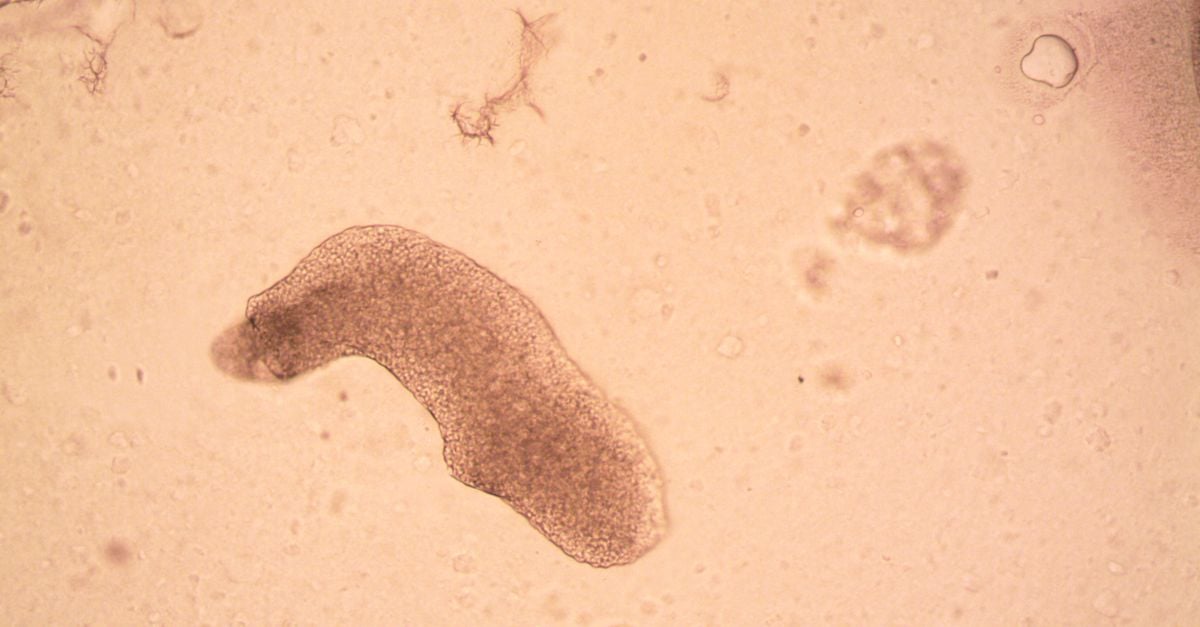
On 11 April 2019, the Israeli lander Beresheet lost its main engine in the final minute of descent and hit the Moon at close to a kilometre per second. It was carrying thousands of tardigrades, dried into a dormant state and tucked inside a disc-shaped archive. Whether any of them came through the crash is a question that still has no clean answer.
The honest position is the uncomfortable one. A later experiment suggests they probably did not survive. It does not prove that none did, and nobody has been back to look.
What was actually on board
Beresheet, built by the non-profit SpaceIL and Israel Aerospace Industries, was attempting the first privately funded lunar landing. Bolted to the craft was the Lunar Library, a project of the Arch Mission Foundation, which describes its goal as making a backup of human knowledge. The library is a disc about the size of a DVD, built from thin sheets of nickel and holding around 30 million pages of text and images.
It also held biological cargo. Tucked into the layers were samples of human DNA and several thousand tardigrades, the microscopic animals often called water bears. According to the foundation’s founder, Nova Spivack, the tardigrades were dehydrated and sealed into the disc’s resin. Their presence was not widely known before launch and came out only after the crash, as reported by CNN in August 2019.
The choice of animal was not random. Tardigrades are the standard example of a creature that can be switched off and stored.
Why anyone thought they might live
When conditions turn hostile, a tardigrade can expel most of the water from its body and curl into a compact, glassy form called a tun. In that state its metabolism drops to near zero, and it can wait. Tuns have been revived after extreme cold, extreme heat, crushing pressure and years of dryness.
They have also been to space and come back. In September 2007, the European Space Agency’s Foton-M3 mission carried around 3,000 dried tardigrades on the outside of the capsule and exposed them to the open vacuum of low Earth orbit for about ten days. In work led by Ingemar Jönsson and published in the journal Current Biology in 2008, most survived the vacuum and radiation of space and some also endured direct solar ultraviolet light. Once rehydrated on Earth they revived and produced healthy offspring, which the European Space Agency described as the first time any animal had been shown to survive exposure to open space.
So the raw idea, that a dried tardigrade could ride a spacecraft and still be viable, was already sound. The open question was never the vacuum or the radiation. It was the crash.
What the impact test found
In 2021, Alejandra Traspas and Mark Burchell at the University of Kent set out to measure exactly that. Writing in the journal Astrobiology, they described loading small numbers of frozen, dormant tardigrades into hollow nylon bullets and firing them into sand targets with a two-stage light gas gun, then thawing the samples and checking for revival.
The animals survived impacts up to about 0.9 kilometres per second, which corresponds to a shock pressure of roughly 1.14 gigapascals. Above that speed, they did not. The result gave, for the first time, a rough physical ceiling on how hard a tardigrade can be hit and still come back.
Set that ceiling against Beresheet. The lander’s final telemetry, sent from an altitude of about 150 metres, and the reconstructed impact put its speed at somewhere near or slightly above one kilometre per second, on a low, glancing trajectory. That is at or just past the survival limit the Kent team measured. On those numbers, the tardigrades most likely did not make it.
Why “most likely” is as far as it goes
The word doing the work there is “likely.” A single experiment, however careful, does not close the case for one specific crash.
The gas-gun tardigrades were fired as bare samples into sand. The Beresheet tardigrades were embedded in resin, between sheets of nickel, inside a disc engineered to survive for a very long time. That packaging could have made the impact worse for them, or it could have cushioned the shock in ways the test never modelled. Beresheet’s speed also sat right at the edge of the measured limit rather than far beyond it, and impact survival near a threshold is rarely all or nothing across thousands of individuals.
So the accurate summary is narrow. Some, and probably most or all, were destroyed. Whether a single tun somewhere in that wreckage is still structurally whole is not something anyone can currently state either way.
The part that gets lost
Even in the most generous reading, this is not life on the Moon in any working sense.
A tun is inert. It does not eat, move or divide. To become a living animal again it has to be rehydrated, and there is no liquid water sitting on the lunar surface at the crash site to do that. A tardigrade cannot wake itself, and it certainly cannot feed or reproduce there. The scenario in the headline is a conditional one: intact enough to be revived if they were ever recovered and rehydrated, which would take a future mission to find the debris, retrieve it and bring a sample home.
The episode did sharpen a real debate about planetary protection and who gets to decide what rides along on a private spacecraft. The Moon carries only light contamination rules, so no treaty was obviously broken, but the fact that a biological payload flew with little disclosure unsettled a lot of researchers.
For now the tardigrades, however many survived the fall, are doing what tardigrades do best when the water runs out. Nothing. The question of whether any could be woken is one only a return trip could answer.
