
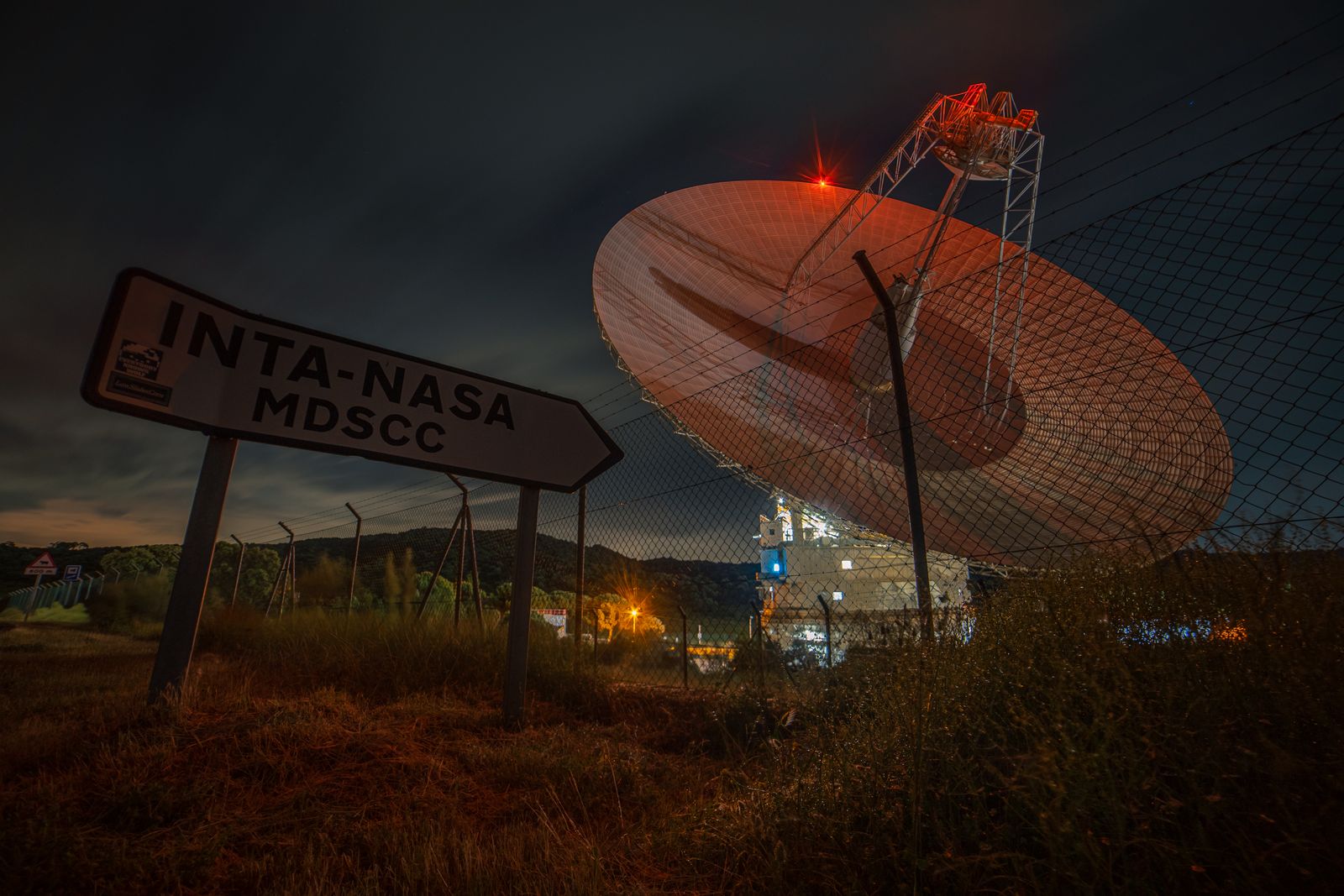
In late 2023, Voyager 1 stopped making sense. The spacecraft was still transmitting from interstellar space, but the data coming back was unreadable, a repeating pattern with no usable information in it. Over the months that followed, NASA engineers traced the fault to corrupted memory in one of the probe’s onboard computers, worked out a way around it, sent the fix across more than 24 billion kilometres, and then waited roughly 45 hours to find out whether it had worked.
It had.
The repair stands as one of the hardest pieces of remote maintenance ever pulled off.
When the signal turned to noise
The trouble began on 14 November 2023. Voyager 1 kept sending a carrier signal, so engineers knew it was alive and pointed at Earth, but the stream of science and engineering data had collapsed into a single stuck pattern. The fault lay in the flight data subsystem, the computer that packages the spacecraft’s readings before they are sent home.
Diagnosis at this distance is slow work. A command takes about 22.5 hours to reach Voyager 1, and any reply takes another 22.5 hours to return, so every question put to the spacecraft carries a near two-day wait for the answer. In March 2024, engineers sent a command nudging the computer to return a full readout of its memory, and that readout finally showed them the problem.
A single bad chip
About 3 per cent of the flight data subsystem’s memory had been corrupted. The cause was a single chip that had failed, taking with it a section of memory that happened to hold part of the software the computer runs. With that code unreadable, the system could no longer assemble data properly.
The chip could not be repaired or replaced.
It is a piece of 1970s hardware sitting beyond the edge of the solar system. Whatever the fix was going to be, it had to work around the dead memory rather than restore it.
Moving the code around the damage
The solution was, in effect, to rehouse the orphaned software. Engineers took the affected code, divided it into sections small enough to fit into the working parts of the memory, tucked those sections into different spare locations, and then rewrote the internal cross-references so the pieces would still call on each other and run as a single program.
They sent the first part of that fix on 18 April 2024. About 22.5 hours later it reached the spacecraft, and on 20 April Voyager 1 returned readable engineering data for the first time in five months. Further commands over the following weeks restored the flow of science data from its instruments. The patch had landed, and it held.
Why this was so hard
The difficulty was not only the distance, though the distance is the part that catches the eye. The team was editing software written for 1970s computers, in a system with a tiny fraction of the memory in a modern key fob, using documentation that is in places nearly half a century old. The engineers who designed it have largely retired or died.
And there is no second attempt without a cost. With a 45-hour round trip on every command, each test of an idea is a two-day commitment, and there is no possibility of anyone going out to lay hands on the hardware. The repair was carried out entirely through a thread of radio signal stretched across more than 24 billion kilometres.
Voyager 1 launched in 1977 and is now the most distant human-made object there is. Its power supply is fading by a few watts a year, and the mission team has been switching off instruments to stretch what remains, with the goal of keeping the probe alive into the 2030s. The memory fix did not add power or fuel. What it bought was time, and the chance for the oldest working spacecraft we have to keep reporting from a place nothing else has reached.
