
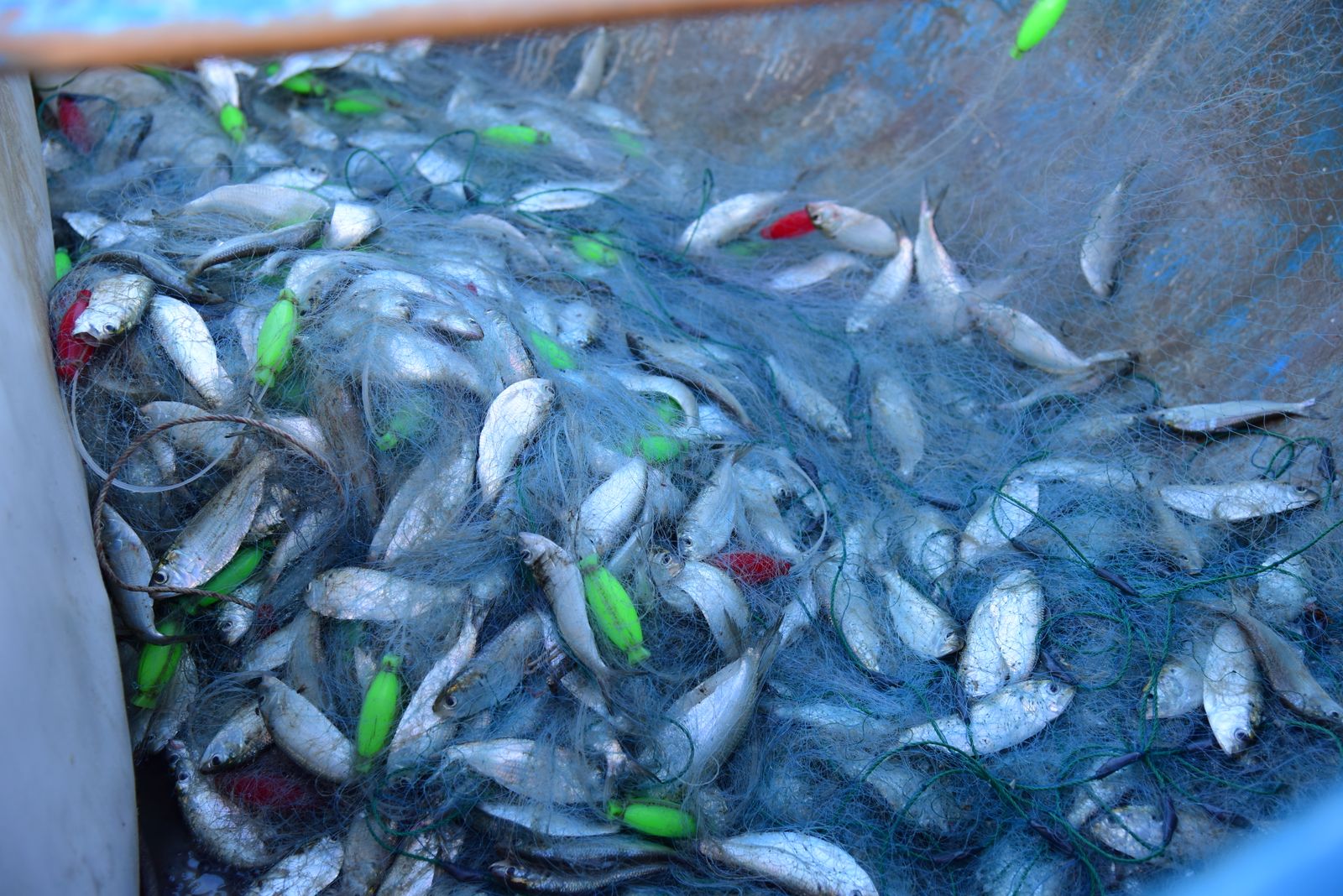
On 22 December 1938, Marjorie Courtenay-Latimer took a taxi to the docks at East London, a port on South Africa’s east coast, to look through a trawler’s discarded catch. In the pile she found a heavy, steel-blue fish about 1.5 metres long, with thick fins that moved more like limbs than fins. She did not know what it was. She was certain it mattered, and she was right: the fish belonged to a group science had known only from fossils and had assumed died out around the time of the dinosaurs.
The fish was a coelacanth. Its discovery is one of the most quoted moments in twentieth-century natural history, and like most quoted moments, the popular version has picked up some embellishments worth stripping back.
The fish in the taxi
Courtenay-Latimer was the curator of the East London Museum, a job she had taken in 1931 with no formal training in zoology. She had asked local fishermen to tell her when something unusual turned up in their nets. On that December morning a trawler operator phoned to say he had a deck full of rubbish fish, and she went down to look.
The blue specimen stood out at once. By the standard account it was about five feet long, with four limb-like fins and a strange, stubby extra lobe on its tail. She had it taken back to the museum and tried to reach the one person she thought could identify it, the ichthyologist J.L.B. Smith, in Grahamstown.
She could not get hold of him. Smith was away over the holidays, and as the days passed the fish began to spoil. With no cold storage able to take something that size, she was forced to have it mounted by a taxidermist, and its internal organs were thrown out. That detail matters, because it meant the first coelacanth known to science was reduced to a skin and a skeleton before anyone could study its anatomy.
What Smith recognised
When Smith finally saw Courtenay-Latimer’s drawing in early January, he suspected what it was almost immediately, and the suspicion alarmed him. Coelacanths were supposed to be extinct. They appear in the fossil record going back hundreds of millions of years and then vanish from it around 66 million years ago, at the end of the Cretaceous, in the same broad window that closed the age of the non-bird dinosaurs.
Smith confirmed the identification and published it in the journal Nature in 1939, under the plain title “A living fish of Mesozoic type”. He named the animal Latimeria chalumnae, the genus after Courtenay-Latimer and the species after the Chalumna River, near where the trawler had been working.
A lineage assumed gone for tens of millions of years had turned up in a fishing net.
That is the part of the story that survives intact.
The “living fossil” that keeps being oversold
The phrase that attached itself to the coelacanth, “living fossil”, is where the retellings tend to overreach.
The animal Courtenay-Latimer found is not the fish in the Cretaceous rocks. Coelacanths are an old group, with a fossil history stretching back roughly 400 million years, but the living genus is its own thing, and fossil coelacanths were far more varied in shape and habitat than the two surviving species. The body plan has been conservative, which is not the same as frozen.
More recent work makes the point sharper. When researchers sequenced the coelacanth genome, reported in Nature in 2013, they found a genome that has kept changing rather than one stalled since the Mesozoic. The fish looks ancient. It has not stopped evolving.
And not the fish that walked onto land
A second common claim is that the coelacanth is the creature that crawled out of the water, a snapshot of our own first step onto land.
It is not.
Coelacanths are lobe-finned fish, and that group is related to the ancestors of four-limbed land animals, which is interesting in itself. But the living coelacanth is a cousin on that family tree, not a direct ancestor, and divers who have watched them in deep water have never seen them walk on those leg-like fins. The fins are used for fine, controlled movement through the water, not for clambering.
What the discovery actually showed
Strip away the embellishments and the 1938 find still carries a real lesson, and it is a lesson about evidence rather than about wonder.
“Extinct” had been read straight off the fossil record. The coelacanth’s absence from rocks younger than the Cretaceous was taken to mean the group was gone, when it meant only that none had been found and preserved. A deep-water animal living off remote coastlines can leave almost no trace and still be there. Absence of evidence had been mistaken for evidence of absence.
It took until 1952, and a second specimen from the Comoro Islands, before anyone could examine a coelacanth’s soft anatomy, the organs that had been thrown out in East London fourteen years earlier. Courtenay-Latimer never made another discovery on that scale, and did not need to. She had looked at a pile of rubbish fish and recognised that one of them did not belong, which is the part of the work no amount of expertise can do for you.
